Replacing all missing teeth: which denture and implant options are available?
Having no natural teeth left can make eating, speaking and social situations more difficult. Many people wear removable dentures for years while becoming increasingly dissatisfied with their stability or comfort.

At a glance
- Conventional complete dentures can be made without implants.
- Implants can retain a removable denture or support a fixed bridge.
What to consider
- The condition of your jawbone and the stability you want.
- Cleaning at home and manual dexterity.
- The treatment time and budget you can commit to.
Overview
Others want to understand their options before losing their teeth, in case their existing teeth can no longer be retained.
There are several ways to replace all missing teeth. Options include conventional removable dentures, implant-retained removable dentures and fixed full-arch implant bridges.
Choosing an appropriate solution requires more than knowing how many teeth are missing. We also need to assess the jawbone, how important stability is to you and what treatment you would prefer.
What are the main options for replacing all missing teeth?
The main options when all teeth are missing are:
- A conventional removable complete denture, which does not require implants.
- An implant-retained removable denture, using attachments such as studs or a bar.
- A fixed full-arch bridge supported by several implants, which the patient does not remove at home.
All three options have benefits and limitations. Fixed implant rehabilitation is not necessary or appropriate for every patient.
1. Conventional removable complete dentures
A conventional complete denture rests on the gums and relies on the anatomical shape of the toothless jaw for support.
With appropriate design and favourable anatomy, many patients are satisfied with this option. It does not require implant placement, so it may also suit people who do not wish to have, or cannot undergo, implant surgery.

Benefits
Making the denture does not require implant surgery. It can be easily removed for cleaning, and the total treatment cost is generally lower than that of implant-based options.
Limitations
Significant jawbone shrinkage can reduce denture stability. Wearing a lower complete denture can be particularly challenging, as movements of the tongue and floor of the mouth also affect how well it stays in place.
Over time, changes in the jawbone and soft tissues may mean that the denture needs relining or replacement.
2. Implant-retained removable dentures
With this option, attachments on implants help hold the denture in place, so it does not rely on the gums alone for support and retention.
You remove the denture for cleaning, but with appropriate design it can be much more stable during speech and eating than a conventional denture.
Stud-type attachments
Some implant-retained removable dentures use individual attachments fitted to the implants.
In certain cases, this type of restoration can be stabilised with relatively few implants, particularly in the lower jaw.
The attachments may need maintenance or replacement over time.
Bar-retained dentures
With a bar-retained denture, a reinforcing bar connects the implants. The denture is retained by attachments that fit onto the bar.
This can provide good stability and allows you to clean the denture and the bar remaining in your mouth separately at home.
Learn more: Bar-retained dentures.
Bar-retained dentures
3. Fixed teeth on four or six implants
A fixed full-arch implant restoration is a bridge attached to several implants.
You do not remove the restoration in daily life, which is an important consideration for many patients.
The number and position of the implants are determined by the available bone, the final restoration and the forces it will need to withstand.
Four implants may be sufficient in some cases, while six or more may be recommended in others.
Temporary fixed teeth
Temporary fixed teeth may be possible soon after surgery if the bone conditions are suitable and adequate primary stabilityThe initial mechanical stability of an implant in the bone. can be achieved.
With PureDental’s full-arch treatments, a temporary fixed restoration may be provided within 48–72 hours of surgery in suitable cases.
This is not possible for every patient, and the temporary restoration is different from the final bridge made later.
Learn more: Full-arch and NeoArch fixed tooth replacement.
Comparing the options for replacing all missing teeth
Factor | Conventional denture | Implant-retained removable denture | Fixed full-arch implant bridge |
|---|---|---|---|
Removable at home? | Yes | Yes | No |
Are implants required? | No | Yes | Yes |
Support and retention | Soft tissues and anatomical support | Assisted by implant attachments | Fixed to several implants |
Stability | Depends on individual anatomy | Typically better than a conventional denture | A fixed restoration |
Cleaning at home | After removal | After removal; attachments also need cleaning | Cleaning beneath the bridge and around the implants |
Surgical requirements | No implant surgery | Implant surgery | Implant surgery |
Cost | Generally lower | Intermediate or substantial cost, depending on the system | Often a higher total treatment cost |
What if I have had no teeth for many years?
Long-standing complete tooth loss is often accompanied by significant remodelling of the jawbone.
This can make it harder to support a conventional denture and may also affect the options for placing implants.
Planning suitable treatment requires an assessment of bone height and width, together with the position of relevant anatomical structures.
Implants can be placed without bone grafting in some cases. In others, additional surgery or a different type of restoration may be needed.
Having had no teeth for many years does not automatically mean that implant-based tooth replacement is no longer possible.
What if only one jaw has no teeth?
The two jaws do not always need to be treated with the same method.
For example, if all the upper teeth are missing but the lower teeth are still in good condition, the upper restoration needs to be designed to work with the existing lower teeth.
In another situation, a fixed implant bridge may be used in one jaw and an implant-retained removable denture in the other.
The aim is to achieve an appropriate bite, comfortable chewing and a restoration that can be maintained over the long term.
What should guide the decision?
Five questions are particularly important when making this decision.
Removability
Are you willing to wear a removable denture? If daily removal is unacceptable to you, fixed options may take priority, provided they are clinically feasible.
Available bone
How much has the jawbone shrunk? This affects implant placement and the design of the restoration.
Cleaning at home
How good is your manual dexterity, and what cleaning can you manage? The cleaning methods for a fixed bridge and a bar-retained denture differ considerably.
Treatment time
What treatment time and extent of surgery can you commit to? Different options may require different numbers of procedures.
Budget
What budget are you planning for? Consider the initial treatment cost as well as expected check-ups and maintenance.
Frequently asked questions about complete tooth loss
If I have no natural teeth left, do I have to get implants?

No. Conventional removable complete dentures can be made without implants.
Is a bar-retained denture the same as a fixed bridge?
No. A bar-retained denture can be held securely, but you remove it for cleaning. A fixed bridge cannot be removed at home.
Can I always have fixed implant teeth instead of removable dentures?
Not in every case. Available bone, general health, the ability to maintain oral hygiene and the treatment plan affect which options are possible.
Which option is easier to get used to?
Adaptation varies from person to person. The size and stability of the restoration, your bite, speech and previous experience all matter. The same wearing experience cannot be promised in advance for every patient.
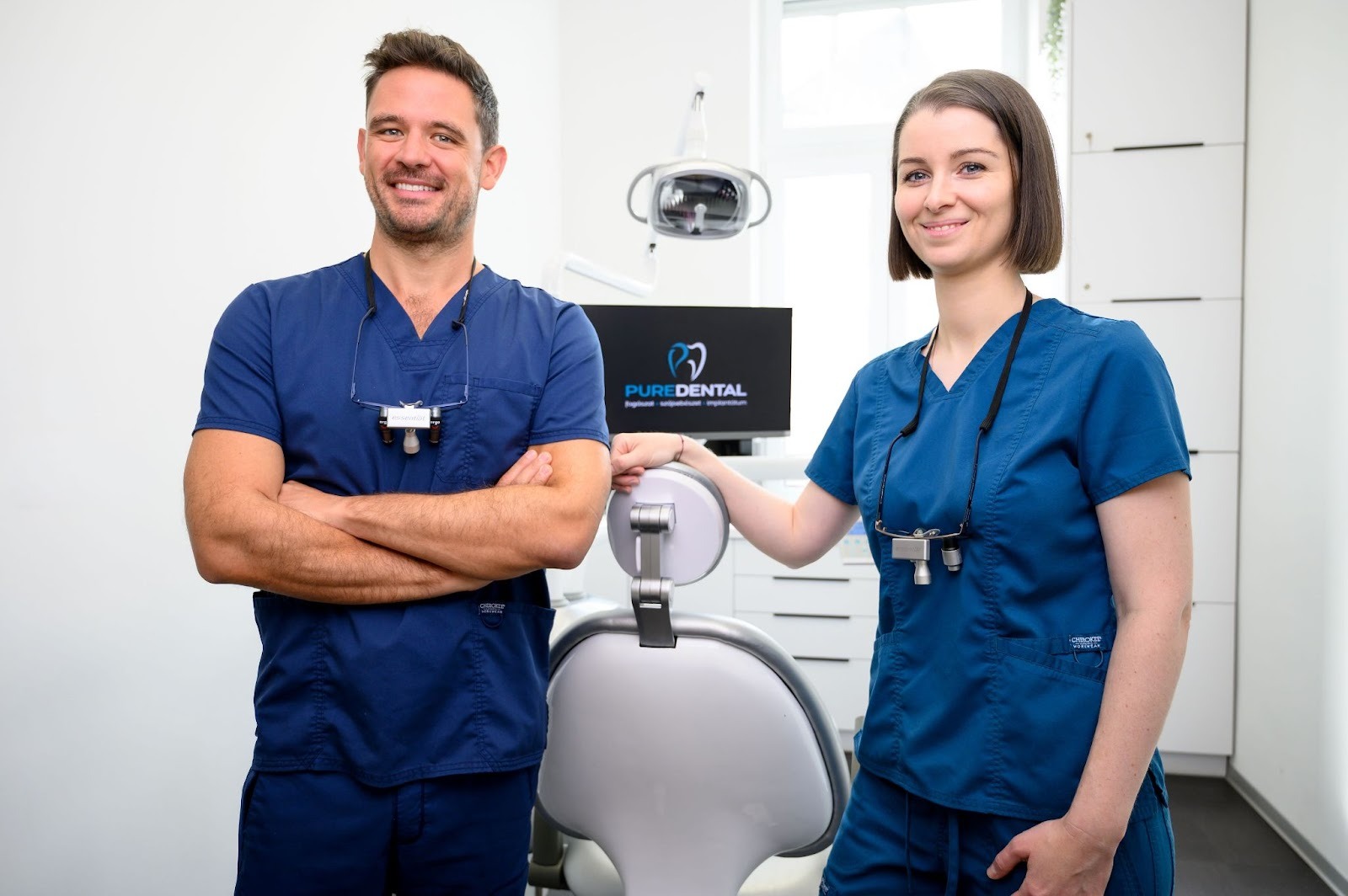
 Personal consultation
Explore your own options
If you have no natural teeth left or are unhappy with your current denture, PureDental can help you compare the available restorations through a detailed examination and an individual treatment plan.
The aim is to achieve appropriate stability, chewing function, ease of cleaning and long-term maintainability, rather than offer one solution for everyone.
Book a consultation → About the Medical Reviewer