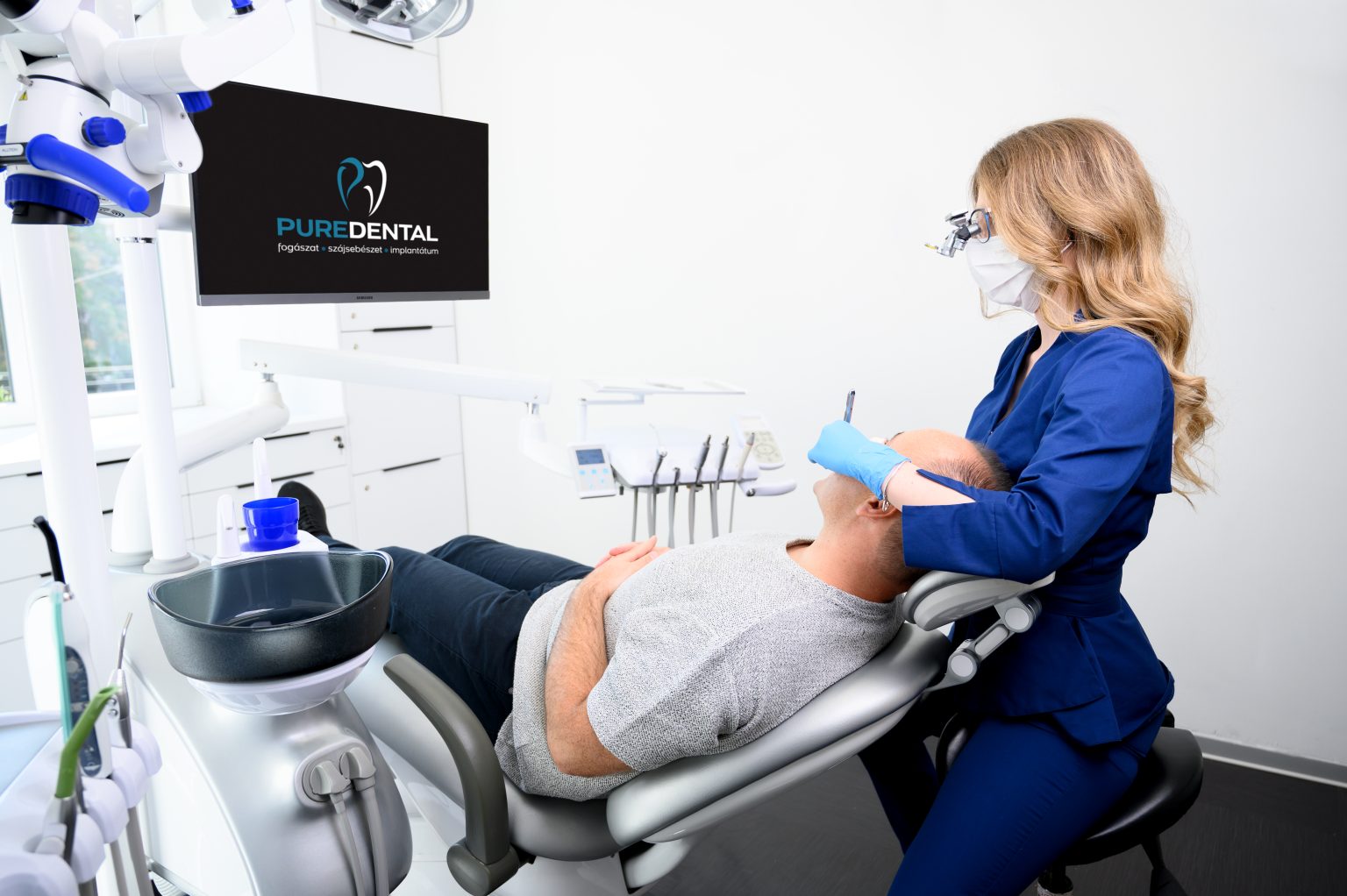
Dentist and assistant during a treatment at the PureDental clinic in Budapest
3crown typesmetal-ceramic, zirconia, pressed ceramic
Digital impressionsprecise dental-lab fabrication
Dental crown · Bridge · On implants too

Dental crowns and bridges

Restore your smile with durable and aesthetic crowns!

A dental crown is a restoration made on your own tooth or on an implant that covers it, and restores the shape, function and strength of a damaged, weakened or aesthetically disturbing tooth. A bridge, by contrast, is a restoration made of several connected crowns that replaces one or more missing teeth, relying on the neighboring teeth or implants.

A damaged, broken, discolored or missing tooth affects not only how your smile looks, but also chewing, speech, your bite and everyday comfort. At the PureDental clinic in Budapest’s 2nd district we make natural-looking crowns and bridges using modern materials, digital planning and a personalized treatment plan.

  • Natural-looking, aesthetic smile with modern materials
  • Metal-ceramic, zirconia and pressed ceramic crowns
  • Crown on your own tooth or on an implant
  • Bridge for one or more missing teeth
  • Digital impressions and precise dental-lab fabrication
  • Painless treatment with modern local anesthesia
2visitsusually preparation, then fitting and final cementation
1–2weeksto make the restoration in the dental lab
10–15yearsor longer a metal-ceramic crown can last
3typesmetal-ceramic, zirconia and pressed ceramic crowns
Quick overview

In short: when do you need a crown, and when a bridge?

The tooth can be kept
01On an existing tooth

Dental crown

CoversYour damaged or weakened natural tooth

You may need a crown when a tooth can still be kept, but its visible part is already damaged, broken, badly decayed, root-canal treated, discolored or weakened by a large filling. The crown then covers and protects the existing tooth while restoring its shape and chewing function.

The tooth is missing
02In place of a missing tooth

Bridge

ReplacesOne or more missing teeth

You may need a bridge when one or more teeth are completely missing and you want to replace the gap with the help of the neighboring teeth or implants. A bridge consists of several crowns: the end units sit on abutment teeth or implants, while the middle unit (pontic) fills the place of the missing tooth.

An individual exam decides

We always determine the right solution based on an individual examination, taking into account the condition of the tooth, the location of the gap, your bite, your aesthetic wishes, the bone and long-term load-bearing capacity.

Video · 2:17

A dental crown that protects and restores your smile. Learn about the process!

A damaged or root-canal treated tooth? At PureDental we make your personalized crown with precise, painless treatment, for a lasting result and a natural, individual look.

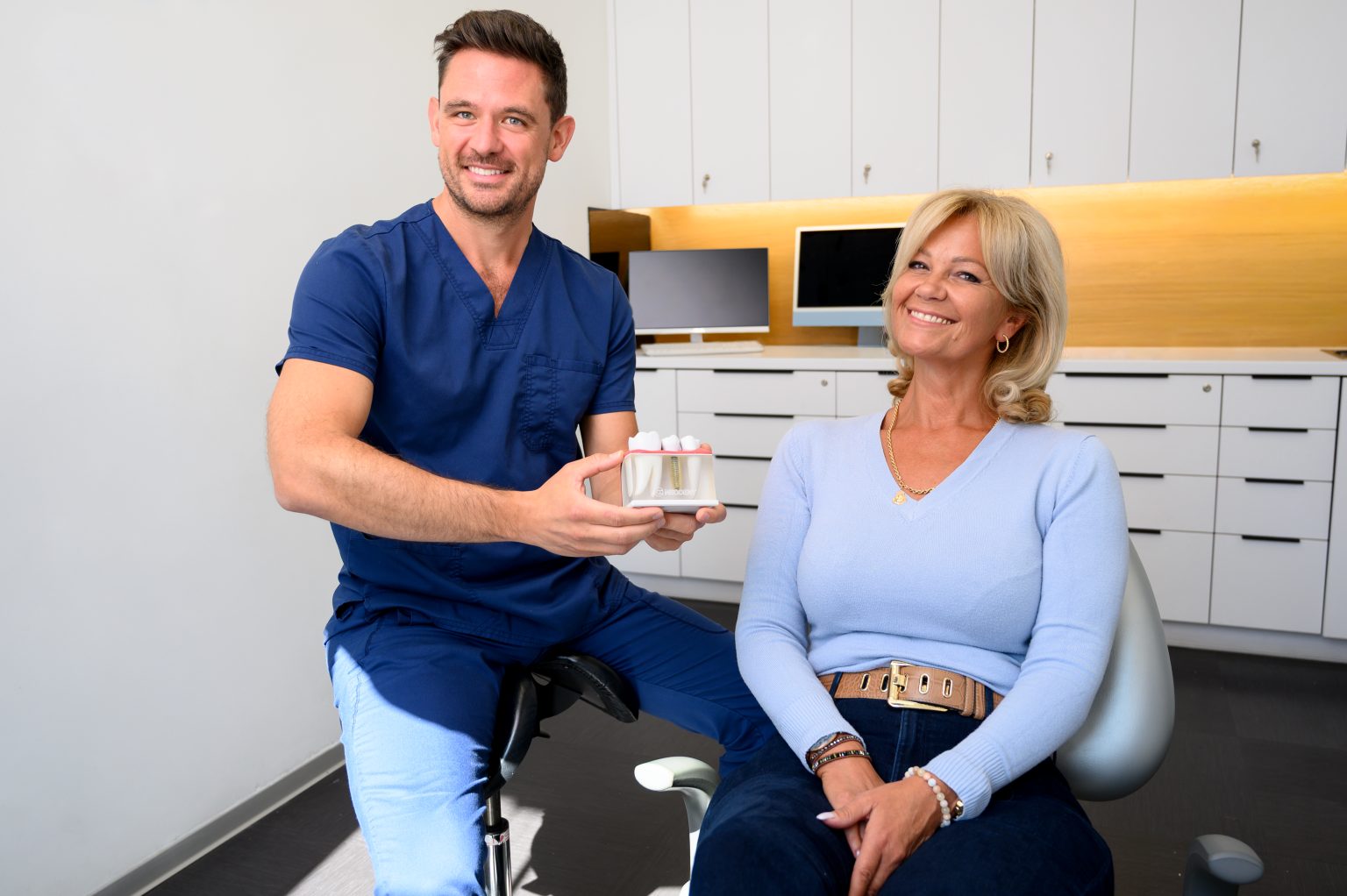
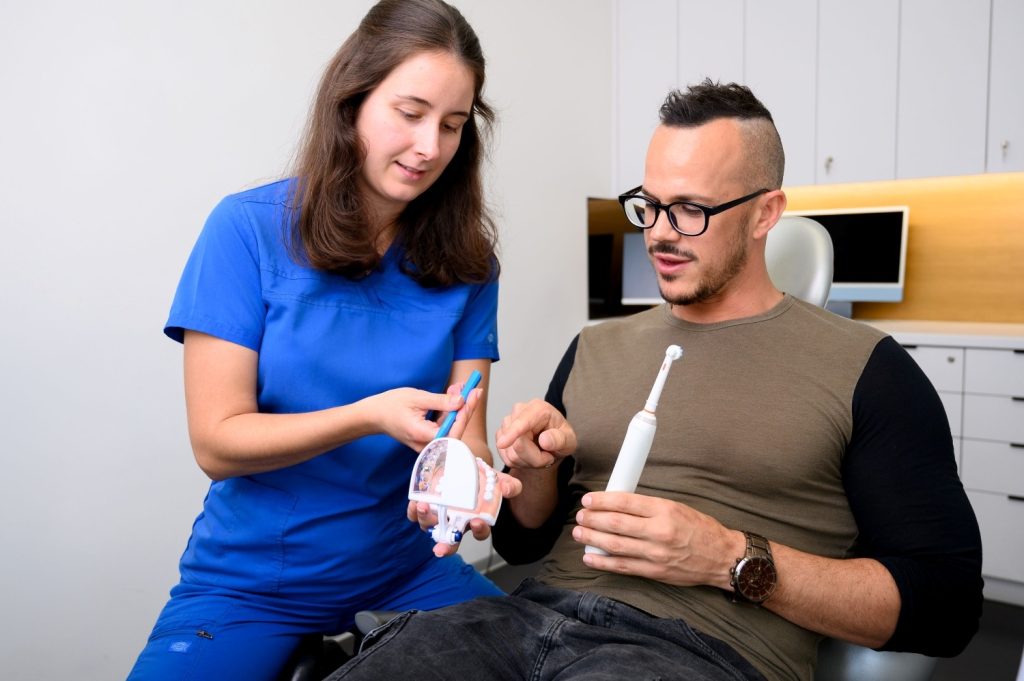
Dentist showing a tooth-replacement model to a patient during a consultation
When is it recommended?

When do you need a crown or a bridge?

Crowns and bridges are not made for aesthetic reasons alone. They can help restore chewing function, protect weakened teeth, replace missing teeth, improve the bite, and create a more natural, harmonious smile.

A simple rule: if a tooth is damaged or weakened, but its root and a sufficient amount of natural tooth structure can still be kept, a crown may be an option. If one or more teeth are completely missing, a bridge or an implant-supported restoration may be the right solution.

A crown or bridge may be especially recommended if you:
  • have a damaged, broken or badly decayed tooth,
  • want to strengthen a root-canal treated tooth for the long term,
  • want to replace an old, large filling with a more durable solution,
  • want to replace one or more missing teeth,
  • want to replace an old, discolored or aesthetically disturbing crown,
  • want a crown, bridge or full restoration made on implants,
  • want a more natural, more uniform smile.
Crown, bridge or implant?

Dental crown or bridge – what is the difference?

Crowns and bridges often come up together, yet they are used in different situations. The most important difference is that a crown covers an existing tooth or implant, while a bridge replaces one or more missing teeth.

When is a crown enough?The natural tooth can be kept

A crown can be made if the root of the tooth can be kept and there is enough natural tooth structure to give the restoration a stable base. The crown is then made on the existing tooth, covering and protecting the weakened tooth.

A crown can be made, for example, on:
  • a root-canal treated tooth,
  • a weakened tooth with a large filling,
  • a broken or cracked tooth,
  • a heavily discolored tooth,
  • an implant,
  • for aesthetic correction.

When do you need a bridge?One or more missing teeth

You may need a bridge if one or more teeth are completely missing and you want to replace the gap with a fixed restoration. A traditional bridge rests on the abutment teeth next to the gap, so crowns have to be made on these teeth.

A bridge can also be made on implants. In that case the restoration is held not by natural teeth but by implants.

When is an implant better than a bridge?The neighboring teeth are healthy

If the teeth next to the gap are healthy, an implant is often the more tooth-preserving solution, because the neighboring teeth do not need to be ground down. However, if the neighboring teeth already need crowns anyway, or an implant is not ideal for some reason, a bridge can also be a good solution.

The decision is always individual

The decision is always individual. We have to consider the condition of the neighboring teeth, the amount of bone, the bite, aesthetic needs, treatment time and the expected costs.

You can read more about dental implants here: Dental implant – PureDental

Crown types

Premium dental crowns at PureDental

The material of a crown determines the restoration’s aesthetics, durability, price and long-term behavior. There is no single best crown type for every situation: a different solution may be ideal for a back molar, an incisor in the smile zone, a crown on an implant or a multi-unit bridge.

The crown types we use most often at PureDental are:

01

Metal-ceramic crown

  • Reliable
  • Durable
  • Affordable

A reliable, durable and affordable solution, a dental material proven over decades. The combination of a stable metal framework and a porcelain covering gives a natural look.

Details: metal-ceramic crown
02

Zirconia crown

  • Metal-free
  • Premium
  • For front and back teeth

A premium, metal-free restoration that offers outstanding aesthetics and long-term durability, especially for front teeth.

Details: zirconia crown
03

Pressed ceramic crown

  • All-ceramic
  • Metal-free
  • Smile zone

One of the most natural-looking solutions in the smile zone. Made of all-ceramic material, it offers uncompromising aesthetics.

Details: pressed ceramic crown

We always choose the right material based on the position of the tooth, the bite, aesthetic needs, any metal sensitivity, the type of planned restoration and your individual considerations.

Metal-ceramic crown: a metal framework with a porcelain covering, fitted onto the prepared tooth stump
Crown type 01 · Metal framework + porcelain

Metal-ceramic crown

  • Reliable
  • Durable
  • Affordable

A metal-ceramic crown is a long-established, reliable tooth-replacement solution. Its inner framework is made of metal, which provides stability and load-bearing capacity, while the outer surface is a porcelain covering that imitates the natural look of the tooth.

A metal-ceramic crown often comes into question for back teeth, areas exposed to greater chewing force, multi-unit bridges, or more cost-effective tooth-replacement solutions.

Video: Metal-ceramic crown and bridge

When is it recommended to choose a metal-ceramic crown?

A metal-ceramic crown can be a good choice if:
  • a badly decayed or broken tooth has to be restored,
  • we want to strengthen a root-canal treated tooth,
  • a bridge is being made,
  • the crown is made on an implant,
  • durability and a lower price are important,
  • a stable restoration is needed in a back, less visible area.

What are the advantages of a metal-ceramic crown?

One of the main advantages of a metal-ceramic crown is its stability and versatility. It is a material proven over a long time that can be used as a single crown, as a bridge and as a restoration on implants.

Advantages:
  • can bear load well,
  • a proven solution used for a long time,
  • made with an aesthetic porcelain covering,
  • often used for back teeth and bridges as well,
  • can be lower in price than fully metal-free crowns.

How durable is a metal-ceramic crown?

With proper oral hygiene, regular check-ups and favorable bite conditions, a metal-ceramic crown can work well for many years, in many cases 10–15 years or even longer. However, the lifespan is affected by the condition of the tooth, the load, home cleaning, teeth grinding and regular dental check-ups.

Is the metal framework visible?

Normally the metal framework is covered by a porcelain layer, so the crown looks tooth-colored from the outside. However, in certain lighting, with very thin gums or with gums that recede over time, a crown with a metal framework can look less natural, especially on the front teeth.

That is why a zirconia or pressed ceramic crown can often give a more aesthetic result in the smile zone.

When is a metal-ceramic crown not ideal?

If metal sensitivity or a metal allergy is suspected, a metal-free solution, such as a zirconia or pressed ceramic crown, may be recommended. It is also not the first choice if the goal is maximum natural light transmission and the highest aesthetic result on the front teeth.

Indicative price: metal-ceramic crown

The price of a metal-ceramic crown can be determined based on the current price list and your individual treatment plan. At the consultation we always give a detailed, written quote.

Real results

Metal-ceramic crown references – before / after

Drag the slider to see the result. Every case is a photo of a real patient of ours, made with metal-ceramic restorations.

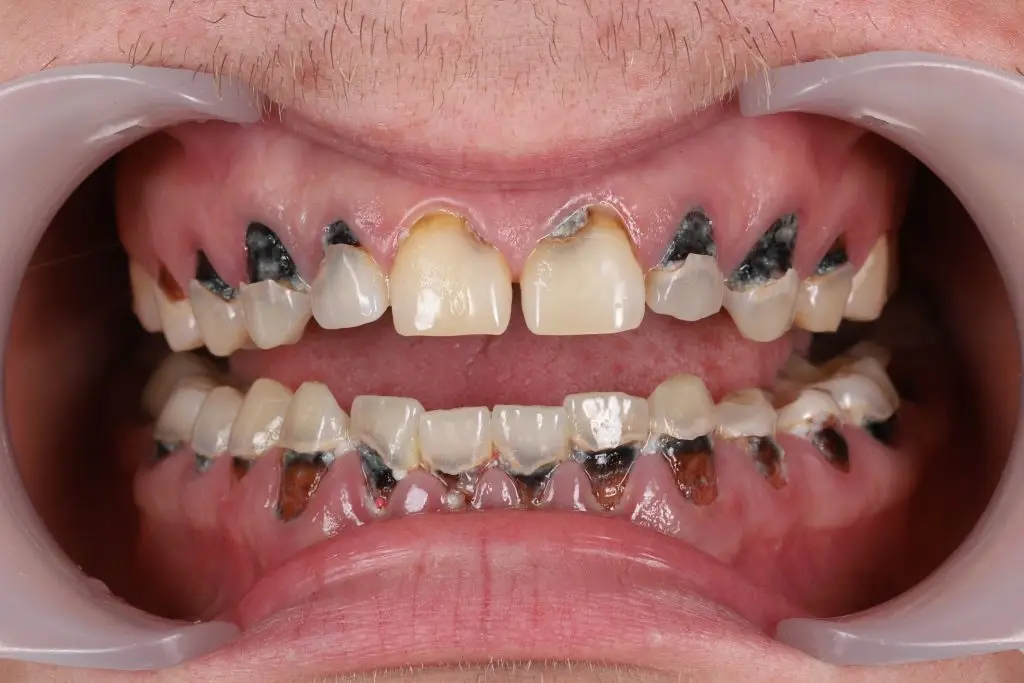
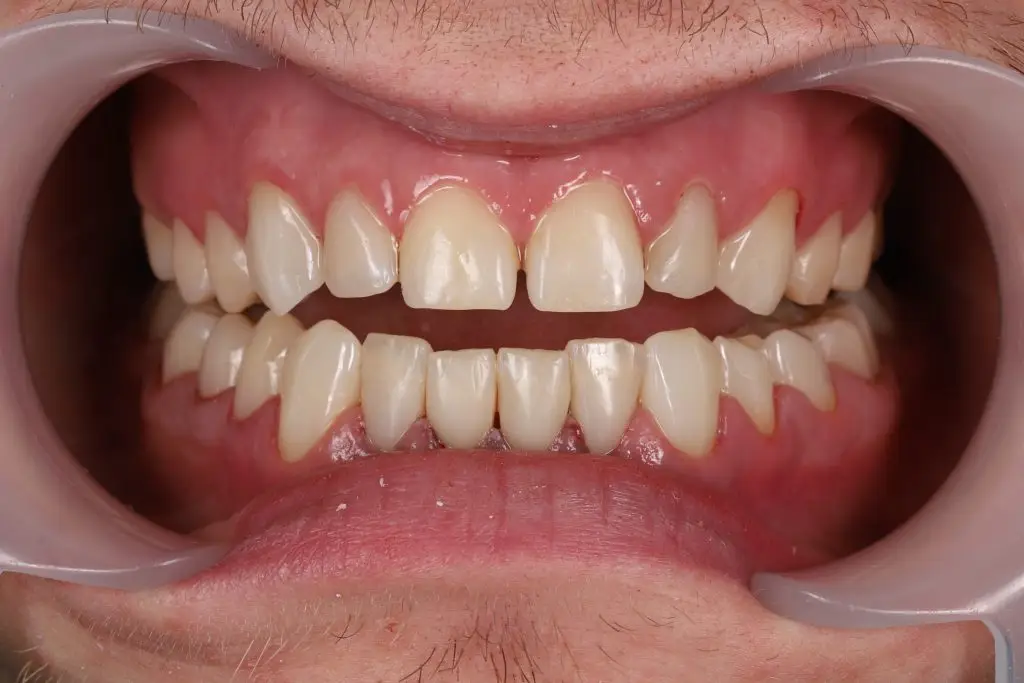
Before – worn, neglected teeth
After – full-mouth rehabilitation with metal-ceramic restorations
BeforeAfter
Full-mouth rehabilitation with metal-ceramic restorations

We restored the entire dentition with a combined denture on top and a metal-ceramic bridge on the bottom, improving both chewing function and the aesthetics of the smile.

  • Treatment: Metal-ceramic restoration
  • Solution: Combined denture on top, bridge on the bottom
Before – decayed, neglected teeth
After – restored teeth with fillings and metal-ceramic crowns
BeforeAfter
Restoring decayed teeth with fillings and metal-ceramic crowns

We restored the neglected, decayed teeth with fillings and metal-ceramic crowns, with a natural look and a load-bearing chewing surface.

  • Treatment: Filling and metal-ceramic crown
Zirconia crown: a metal-free, tooth-colored crown fitted onto the tooth stump
Crown type 02 · Metal-free

Zirconia crown

  • Metal-free
  • Premium
  • For front and back teeth

A zirconia crown is a metal-free, aesthetic and high-strength restoration. It can be a modern solution for a single crown, a bridge or a restoration on implants.

The advantage of zirconia is that it has no metal framework, so it can look more natural than a traditional metal-ceramic crown. It can be especially advantageous when aesthetics, being metal-free and a durable, stable restoration are important.

Video: Zirconia crown and bridge

Who is a zirconia crown recommended for?

A zirconia crown can be a good choice:
  • for replacing front and back teeth,
  • for a natural-looking, metal-free crown,
  • if metal sensitivity or a metal allergy is suspected,
  • for a crown on an implant,
  • for making a multi-unit bridge,
  • for replacing an old, aesthetically disturbing crown,
  • for patients who are looking for a premium, durable solution.

What are the advantages of a zirconia crown?

A zirconia crown is strong, aesthetic and versatile. Thanks to its metal-free structure it is especially popular where patients want a more natural, more modern solution.

Advantages:
  • metal-free design,
  • natural, aesthetic look,
  • good load-bearing capacity,
  • can be used on front and back teeth,
  • can also be made on implants,
  • can also be considered for multi-unit bridges,
  • does not cause a metallic grayish discoloration at the gum line.

What is the difference between a zirconia and a metal-ceramic crown?

The inner framework of a metal-ceramic crown is made of metal, covered with porcelain. A zirconia crown, by contrast, is metal-free, so it can give a more natural look aesthetically, especially on the front teeth and in the smile zone.

A metal-ceramic crown is in many cases lower in price and can be a stable solution that works well in the back areas. A zirconia crown is generally a more aesthetic, more modern and metal-free alternative, so it is often the better choice when aesthetic demands are higher.

How durable is a zirconia crown?

With the right indication, precise planning, good oral hygiene and regular check-ups, a zirconia crown can be a long-lasting, durable solution. Its lifespan, however, is affected by the condition of the tooth, the bite, teeth grinding, the type of restoration and home cleaning.

When is a zirconia crown not ideal?

A zirconia crown is not necessary in every case. If the restoration is made in a back area, on a less visible tooth, and a lower price is more important to you, a metal-ceramic crown can also be a suitable solution.

For front teeth with very high aesthetic demands, a pressed ceramic crown or veneer can in certain cases give more natural light transmission. We always choose the right material based on an individual examination and smile-design considerations.

Indicative price: zirconia crown

The price of a zirconia crown can be determined based on the current price list and your individual treatment plan. The exact cost is affected by the condition of the tooth, any preliminary treatments needed, the type of restoration and the choice of material.

Real results

What results can I expect?

A natural-looking, aesthetic appearance. See our patient’s before-and-after photos.

Drag the slider to see the result. Every case is a photo of a real patient of ours, made with zirconia crowns.

Before – discolored, uneven teeth
After – restored lower and upper teeth with zirconia crowns
BeforeAfter
Restoring the lower and upper teeth with zirconia crowns

We restored the discolored, uneven teeth on both the bottom and the top with zirconia crowns, with a uniform tooth shape and natural light transmission.

  • Treatment: Zirconia crown
  • Solution: Lower and upper teeth
Before – worn, discolored front teeth
After – aesthetic teeth with zirconia crowns
BeforeAfter
Restoring discolored teeth with zirconia crowns

We restored the worn, discolored front teeth with zirconia crowns, achieving a balanced, white tooth color and proportionate tooth shape.

  • Treatment: Zirconia crown
Pressed ceramic crown: an all-ceramic crown with natural translucency
Crown type 03 · All-ceramic

Pressed ceramic crown

  • All-ceramic
  • Metal-free
  • Smile zone

A pressed ceramic crown is a metal-free restoration made of all-ceramic material that can provide outstandingly natural light transmission and aesthetic impact. It can be especially advantageous in the smile zone, on front teeth, and in cases where the most important goal is a natural, harmonious look.

Pressed ceramic crowns can be matched very nicely to your own teeth in color, shape and translucency, so they often play a key role in aesthetic dental treatments.

Video: Pressed ceramic crown

Who is a pressed ceramic crown recommended for?

A pressed ceramic crown mainly comes into question if:
  • we want to restore a front tooth aesthetically,
  • a crown is needed in the smile zone,
  • we want to correct a discolored, damaged or unfavorably shaped tooth,
  • the goal is maximally natural light transmission,
  • we are looking for a metal-free, highly aesthetic solution.

What are the advantages of a pressed ceramic crown?

The main advantage of a pressed ceramic crown is its natural tooth-like look. Its material imitates the light transmission of your own teeth well, so it can give a very beautiful result in aesthetically important areas.

Advantages:
  • completely metal-free,
  • natural translucency,
  • very aesthetic in the smile zone,
  • color and shape can be customized,
  • blends harmoniously between your own teeth,
  • in some cases it can be made with gentler preparation.

When is a pressed ceramic crown not ideal?

We use pressed ceramic crowns mainly in aesthetically important areas. For back teeth, with high chewing force, unfavorable bite conditions or heavy teeth grinding, another material, such as zirconia or metal-ceramic, is often more advantageous.

This does not mean that pressed ceramic can never be used for back teeth, but that choosing the right material always requires an individual examination and load analysis.

How durable is a pressed ceramic crown?

With the right indication, precise fabrication and careful oral hygiene, a pressed ceramic crown can be an aesthetic and well-functioning solution for many years. Its durability is affected by the position of the tooth, the bite load, the material thickness, the bonding technique, teeth grinding and regular check-ups.

Indicative price: pressed ceramic crown

The price of a pressed ceramic crown can be determined based on the current price list and your individual treatment plan. At PureDental every patient receives a personalized quote after the consultation.

Comparison

Which crown type is the best choice? Comparison table

There is no single best crown type for every patient. The right material always depends on which tooth it is for, how much load it takes, how visible the tooth is when you smile, whether there is metal sensitivity, whether a bridge is being made, and which aesthetic and financial factors matter to you.

The table below gives you a quick overview of the most important features of the three crown types.

Swipe the table sideways for the full comparison →

Feature Metal-ceramic Zirconia Pressed ceramic
Aestheticsgood, slightly less naturalexcellent, natural light transmissionthe most natural, maximum translucency
Durability (years)10–15 yearsdecadesmany years (on front teeth)
Metal-free / allergy-friendlyno (metal framework), a hypoallergenic version is also availableyes, completely metal-freeyes, completely metal-free
Price categoryaffordablemedium – premiumpremium
Mainly recommended forback teeth, high chewing force, price-conscious patientsfront and back teeth, maximum aesthetics and durabilityfront teeth only, aesthetic correction of the smile zone

We always make the final decision based on the dentist’s recommendation and your needs.

Request an appointment →We call you back within 3 hours during opening hours
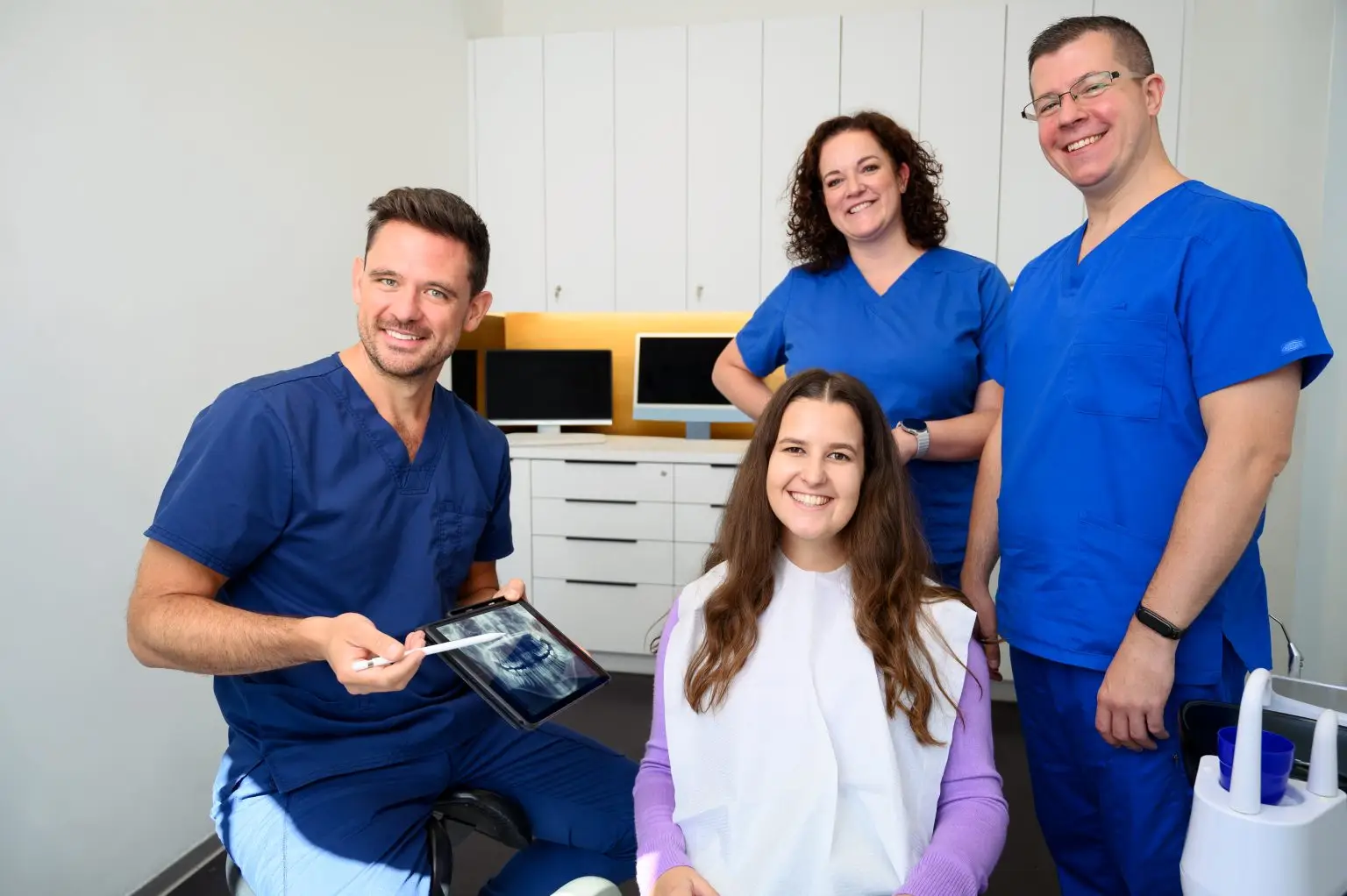
Dentists showing a patient the plan for a bridge restoration on a tablet
Bridge restoration

Tooth replacement with a bridge

If one or more adjacent teeth are missing, the bridge is one of the traditional fixed tooth-replacement solutions. A bridge consists of several connected crowns: the end crowns sit on abutment teeth or implants, while the middle units fill the place of the missing teeth.

The purpose of a bridge is to restore chewing function, improve speech, replace the missing teeth aesthetically, and help restore the unity of the dental arch.

When do you need a bridge?

A bridge can be a good solution if one or more teeth are missing and you want a fixed restoration. With a traditional bridge we rely on the teeth next to the gap, so we shape them into abutment teeth.

A bridge may be a logical choice especially if:
  • the teeth next to the gap already need crowns anyway,
  • you do not want or cannot have an implant,
  • a faster solution with less surgery is needed,
  • the bone is not suitable for an implant and you do not want bone grafting,
  • a multi-unit restoration on implants is needed.

It is important to know that to make a traditional bridge, the abutment teeth have to be ground down. So if the neighboring teeth are completely healthy, it is worth considering an implant as well.

How many teeth can a bridge replace? How many abutment teeth are needed?

The most common solution is the three-unit bridge, which replaces a single missing tooth resting on two abutment teeth. The two end crowns sit on the abutment teeth, and a pontic in the middle fills the place of the missing tooth.

If several adjacent teeth are missing, a longer bridge can be made, but the longer the bridge, the more load falls on the abutment teeth. In such cases it is often worth considering an implant solution too, because implants can relieve your natural teeth and give the restoration a more stable base.

What material can a bridge be made of?

A bridge can be made of metal-ceramic or zirconia, and in some cases other materials may also be an option. When choosing the material we consider the length of the bridge, the condition of the abutment teeth, the bite load, your aesthetic needs and your individual considerations.

You can read more about the crown types in the sections above.

How is a tooth replacement with a bridge made?

Making a bridge usually takes several steps.

  1. 1

    Examination and planning

    First we examine the gap, the condition of the abutment teeth, the bite and the gums. If needed, an X-ray or 3D diagnostics may also be done.

  2. 2

    Preparing the abutment teeth

    The neighboring teeth that will hold the bridge are ground to the right shape for the crowns. The procedure is done under local anesthesia, so you do not feel sharp pain.

  3. 3

    Digital scan or impression

    We take a digital scan or a traditional impression of the prepared teeth. Based on this, the dental lab makes the bridge individually.

  4. 4

    Temporary bridge

    Until the final bridge is ready we place a temporary bridge. It protects the prepared teeth, makes speaking and eating more comfortable, and also gives a temporary aesthetic solution.

  5. 5

    Try-in and final cementation

    We try in the bridge made in the lab and check the fit, color, shape, bite and cleanability. If everything is right, we cement the bridge permanently.

Bridge or implant: which should I choose?

The decision between a bridge and an implant is always made based on an individual examination.

Bridge

The advantage of a bridge is that it is usually a faster solution, does not necessarily involve surgery, and is especially logical if the neighboring teeth already need crowns. The disadvantage is that with a traditional bridge the abutment teeth have to be ground down.

Implant

The advantage of an implant is that the healthy neighboring teeth do not need to be ground down, and it replaces the root of the missing tooth on its own. The disadvantage is that it is a multi-step treatment, may involve a longer healing time, and in some cases bone grafting may also be needed.

You can read more about implants here: Dental implant – PureDental

The treatment process

How is a dental crown/bridge made? The steps of treatment

In short

Making a crown and a bridge follows a similar process. The difference is mainly that with a crown we restore one tooth, while with a bridge we also plan the replacement of one or more missing teeth.

Dentists planning the crown or bridge treatment based on the X-ray
1First visit

Examination, preparation and impression

1

1. Examination and treatment plan

The first step of treatment is a detailed examination. We assess the condition of the teeth, the existing fillings, the gums, the bite and the aesthetic zone. If needed, an X-ray or other diagnostic examination may also be done.

Based on this we determine whether a crown, bridge, implant, inlay/onlay or another restoration would be the safest solution.

2

2. Preparation and tooth grinding

For a crown or bridge, the tooth has to be prepared to the right shape. This means the dentist removes the decayed, damaged or weak parts, then creates the shape onto which the crown or bridge can fit precisely.

Tooth grinding is done under local anesthesia, so the procedure can be carried out painlessly.

3

3. Digital scan or impression

We take a digital scan or a traditional impression of the prepared teeth. This records the shape of the teeth, the bite conditions and the details needed to make the restoration.

Based on the impression or the digital model, the dental lab makes the individual crown or bridge.

4

4. Temporary crown or bridge

Until the final restoration is ready, we protect the prepared teeth with a temporary crown or bridge. This helps reduce sensitivity, protects the teeth, and also provides a temporary aesthetic solution.

With the temporary restoration you need to chew more carefully and avoid very hard or sticky foods, because the temporary cementation is not as strong as the final one.

1–2 weeksthe dental lab makes the crown or bridge individually
The dentist tries in and checks the finished crown in the patient’s mouth
2Second visit

Fitting and final cementation

5

5. Try-in

We try in the crown or bridge made in the lab. At this point we check the fit, color, shape, bite and whether you feel comfortable with the restoration.

If necessary, we make small corrections, or send the restoration back to the dental lab for modification.

6

6. Final cementation

If the crown or bridge is right in every respect, we cement it permanently. After cementation we check the bite, the cleanability and your comfort.

The final crown or bridge can be used shortly after treatment, but while the anesthetic is still working, it is worth being careful when eating.

Making a crown or bridge usually takes two visits and 1–2 weeks – in more complex cases more visits may be needed.

Oral hygiene advice for the long life of the crown and bridge
Metal-ceramic crown 10–15years or longer in many cases, with proper oral hygiene and regular check-ups
Lifespan

How long does it last, how long can a crown or bridge hold up?

A well-made crown or bridge, with proper oral hygiene and regular check-ups, can be a stable, aesthetic and well-functioning solution for many years. The expected lifespan depends on the material, the condition of the tooth or abutment tooth, the bite, teeth grinding, home cleaning and regular dental check-ups.

In general, metal-ceramic crowns can in many cases work well for 10–15 years or longer. Zirconia and pressed ceramic crowns, with the right indication and careful fabrication, can also be a long-lasting solution.

The lifespan of a bridge depends not only on the chosen material, but also on the condition of the abutment teeth. If the teeth under or next to the bridge decay, the gums weaken, or the restoration cannot be cleaned properly, this can also affect the durability of the bridge.

If you grind or clench your teeth, wearing a night guard may be recommended to protect the crown, the bridge and your own teeth.

Transparent prices

How much do dental crowns and bridges cost?

The price of a crown and a bridge depends on several factors, so an exact quote can only be given after an examination and a treatment plan. A single crown, a multi-unit bridge, a crown on an implant or a more complete restorative rehabilitation each cost differently.

Metal-ceramic crown300EUR
Zirconia crown375EUR
Pressed ceramic crown397EUR
Metal-ceramic crown on an implant321EUR
Zirconia crown on an implant407EUR

Indicative prices per crown, in euros: metal-ceramic crown €300, zirconia crown €375, pressed ceramic crown €397; metal-ceramic crown on an implant €321, zirconia crown on an implant €407. A bridge consists of several connected crowns, so its price depends on the number of units and the material – we give the exact amount in a written quote after the examination.

Detailed, written quote

At PureDental every patient receives a detailed, written quote at the consultation, so you can see exactly what steps the treatment involves, how long it takes and what costs to expect.

You can find our current prices here: puredental.hu/en/prices/

The final price depends on:

  • 01what material the crown or bridge is made of,
  • 02how many teeth the restoration involves,
  • 03whether prior root canal treatment, a post build-up or filling replacement is needed,
  • 04whether the restoration is made on a natural tooth or on an implant,
  • 05whether a temporary crown or temporary bridge is needed,
  • 06which aesthetic and functional requirements have to be met.
Questions and answers

Frequently asked questions

We have collected the questions our patients most often ask about dental crowns, bridges and tooth replacements.

Dr. Zsolt Majtényi Professionally reviewed by Dr. Zsolt Majtényi Prosthodontist, digital dentistry

Does making a dental crown or bridge hurt?

Preparing and grinding the tooth is done under local anesthesia, so the treatment can be carried out painlessly. During the procedure you may feel pressure or vibration, but not sharp pain.

When the anesthetic wears off, temporary sensitivity may occur, especially if the tooth was already sensitive, had deep decay, or a larger procedure was done. This usually decreases within a few days.

How long does it take to make a crown or bridge?

Making a crown or bridge usually takes two visits and 1–2 weeks, because the final restoration is made individually in a dental lab. At the first visit the examination, preparation and digital scan or impression take place. At the second visit we try in and permanently cement the finished crown or bridge.

In more complex cases, such as a longer bridge, a restoration on implants, several teeth involved or aesthetic try-ins, more visits may be needed.

What happens if the crown falls off or gets damaged?

If the crown loosens, falls off or gets damaged, it is worth booking a dental appointment as soon as possible. Until then, do not try to glue it back at home, because this can damage the tooth or reduce the chances of later cementation.

If you have found the crown that fell off, bring it with you to the clinic. In some cases it can be re-cemented, but this can only be decided based on the condition of the crown, the tooth and the bonding surfaces.

Dental crown or implant: which is better for me?

It depends on whether your own tooth can be kept. If the root of the tooth and the remaining tooth structure are in good condition, it can often be restored by making a crown. If the tooth can no longer be saved or is completely missing, an implant or a bridge may come into question.

An implant is used to replace a missing tooth, while a crown covers an existing tooth or an implant. The decision requires an examination, an X-ray and a personalized treatment plan.

What can I eat after the crown or bridge is placed?

After the final crown or bridge is cemented, the restoration can be used within a short time. Even so, it is worth waiting until the anesthetic has completely worn off, because when numb it is easy to accidentally bite your lip, tongue or cheek.

With a temporary crown or bridge you should avoid very hard, sticky or very chewy foods, because the temporary cementation can come loose more easily. When the final restoration is handed over, every patient receives personalized eating and cleaning advice.

How painful is tooth grinding?

Tooth grinding is done under local anesthesia, so you do not have to feel pain during the treatment. After the procedure temporary sensitivity may occur, mainly to cold, heat or biting. If the sensitivity is lasting, gets stronger, or the crown feels high, a check-up is recommended.

Which is better: a metal-ceramic or a zirconia crown?

The choice between a metal-ceramic and a zirconia crown depends on which tooth the restoration is for, how much load it takes, how important aesthetics are, and what budget you have in mind.

A metal-ceramic crown can be a lower-priced, durable and well-proven solution, especially for back teeth or bridges. A zirconia crown is metal-free, more aesthetic and a premium solution, so it is often the better choice in the smile zone or when aesthetic demands are higher.

Which crown is the most beautiful for the front teeth?

For front teeth, a pressed ceramic or a highly aesthetic zirconia crown can usually give the most natural result. The choice depends on the color of your own tooth, how much tooth structure is left, whether greater masking is needed, whether there is discoloration, and what the aesthetic picture of the whole smile looks like.

For front teeth it is especially important to plan the color, shape, light transmission, gum line and symmetry precisely.

When does a root-canal treated tooth need a crown?

A root-canal treated tooth may need a crown if a lot of its own tooth structure is missing, it has a large filling, the tooth walls have weakened, or the risk of fracture is higher. Root-canal treated teeth can in many cases be more fragile, so for back teeth it is often recommended to strengthen the chewing surface and the tooth walls.

Not every root-canal treated tooth automatically needs a crown, but with a greater loss of tooth structure a crown can be the safer solution in the long term.

Can an old crown be replaced?

Yes. An old crown is worth replacing if it no longer seals properly, decay has developed underneath, the gum line has become discolored, the porcelain covering is damaged, it is aesthetically disturbing, or the condition of the tooth under the crown has changed.

Before replacing a crown we always examine the tooth, the gums and the bite, and if needed we take an X-ray. Only then can it be decided whether a new crown can be made or whether other treatment is also needed.

Is there social insurance support for dental crowns?

As a private dental clinic, PureDental gives a personalized, written quote for crowns and bridges. If you would like information about social insurance support or hardship options, it is worth checking the current NEAK rules and your individual eligibility conditions.

Consultation

Restore your smile with durable and aesthetic crowns

The right dental crown or bridge is not just an aesthetic matter. A well-planned restoration can help restore chewing function, protect weakened teeth, replace missing teeth, and give you a more natural, confident smile.

Book a consultation and we will help you choose the solution that suits you best.

Call us, or request an appointment online!

  • Metal-ceramic, zirconia and pressed ceramic crowns
  • Crown on your own tooth or on an implant
  • Bridge for one or more missing teeth
  • Digital impressions and precise dental-lab fabrication
  • Personalized treatment plan and written quote
  • Painless treatment with modern anesthesia