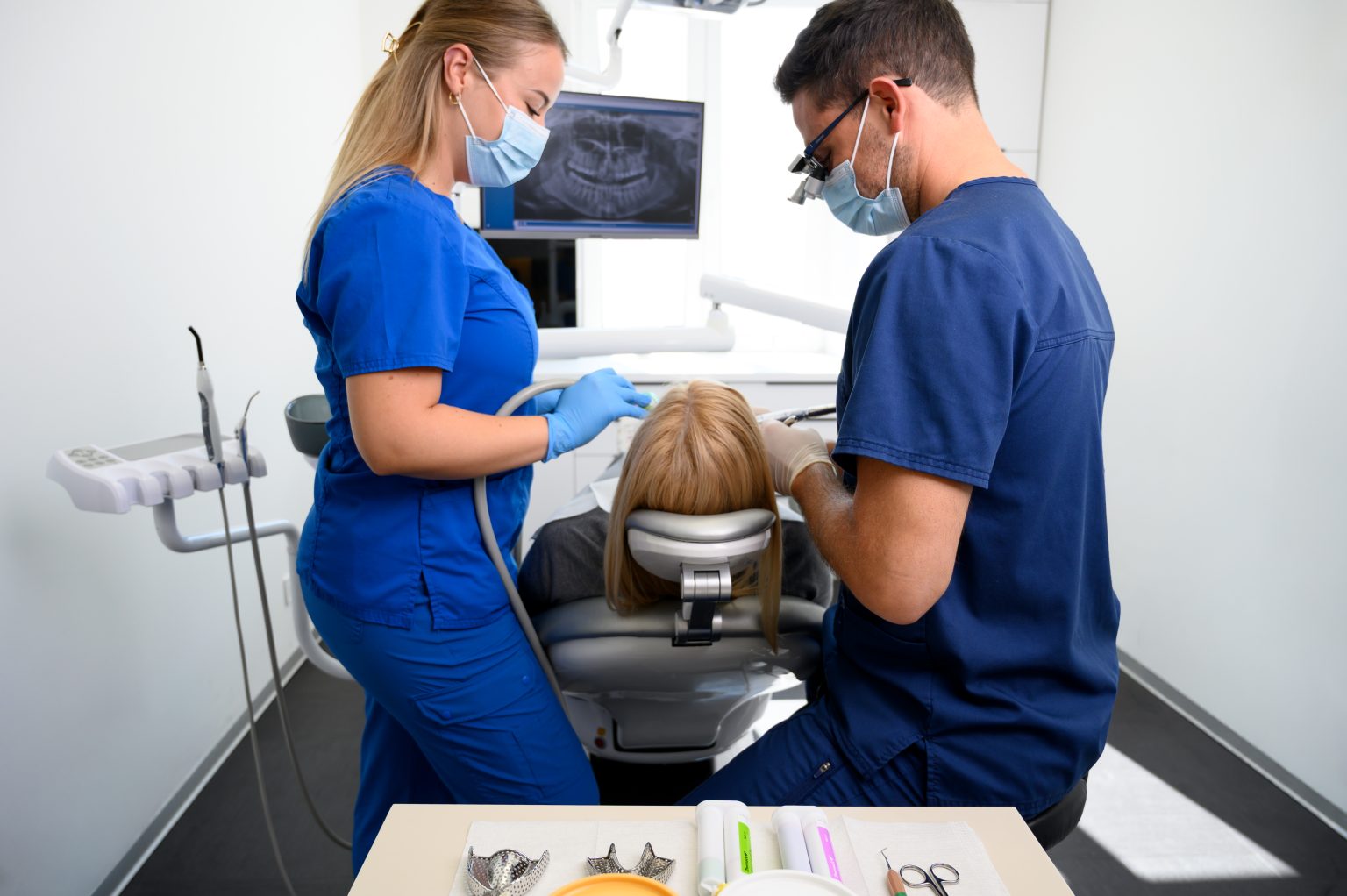
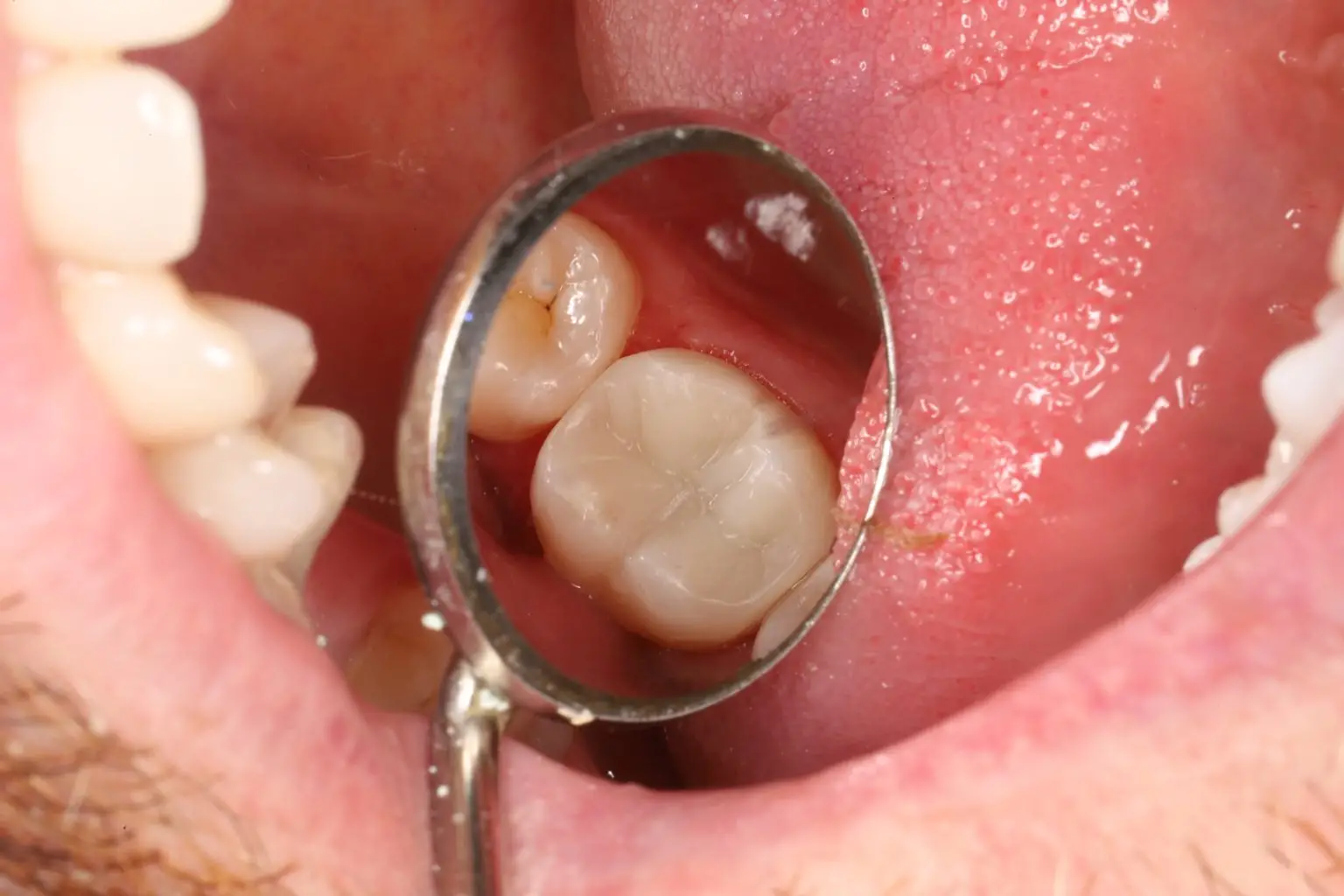
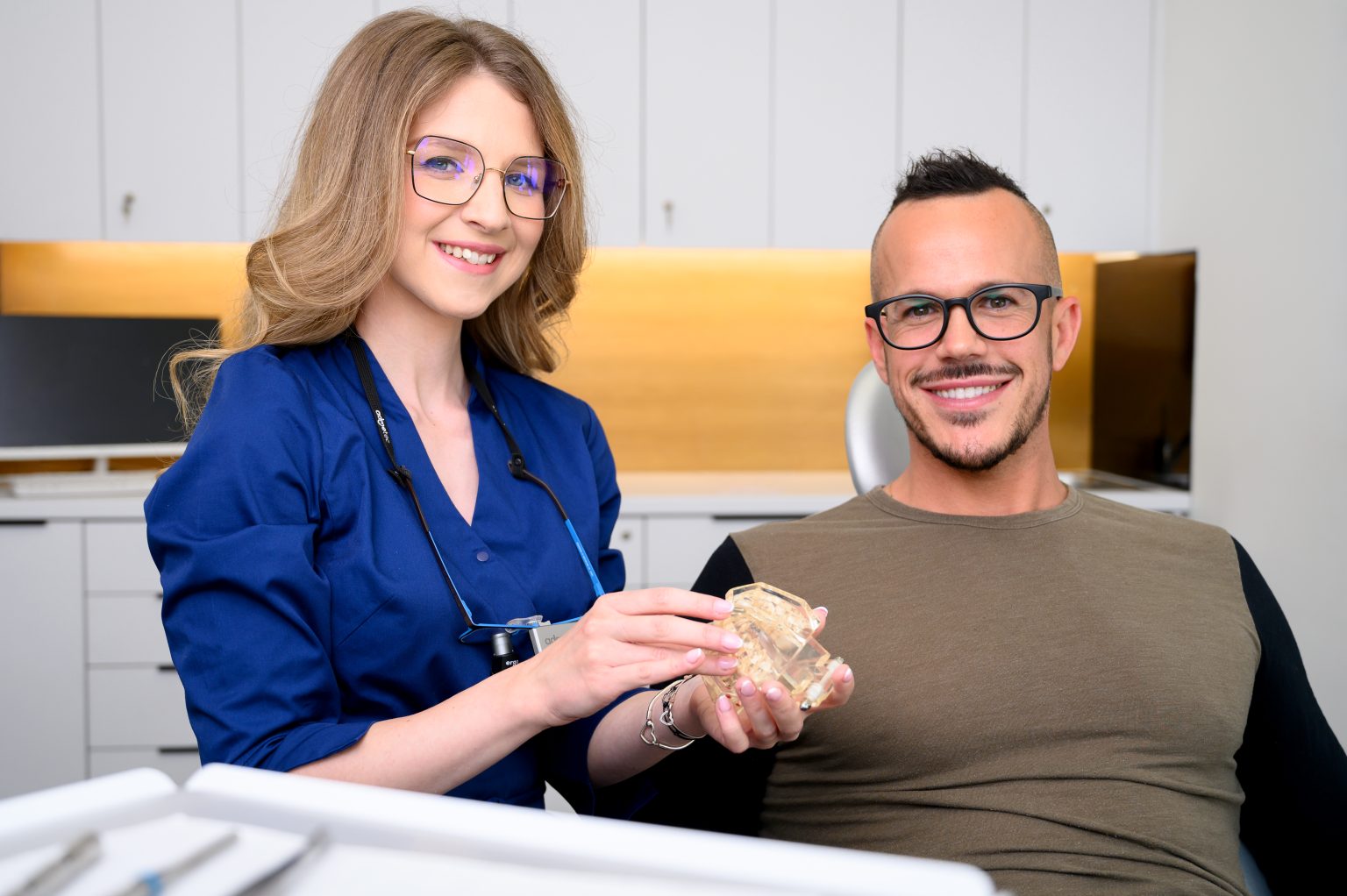
At the second appointment the temporary filling is removed, and the inlay, onlay or overlay made in the dental laboratory is tried in. At this point we check whether the restoration fits precisely, and whether its colour, shape, seal and position in the bite are all correct.
Before final bonding, the tooth and the inner surface of the restoration are prepared according to a special bonding protocol. When the clinical situation allows, a rubber dam is used to isolate the site, so that bonding takes place in a dry, well-controlled environment. This is especially important because modern bonding techniques are sensitive to moisture, and precise isolation can contribute to the restoration's durability and a good marginal seal.
After the restoration is permanently bonded, the bite is checked again, and any necessary fine adjustments and polishing are carried out. The goal is for the finished inlay, onlay or overlay to be comfortable, to blend naturally into the row of teeth, and to restore the tooth's function stably in the long term.
After bonding, the restoration becomes usable within a short time, but while the anaesthetic is still working, it is worth being careful when eating, so the patient does not accidentally bite their lip or cheek.