PureDental - Services
Painless, safe oral surgery procedures with rapid healing
Problem wisdom teeth, stubborn root tip inflammation, or teeth that need to be removed? At PureDental oral surgery, we use state-of-the-art diagnostics, modern anesthesia, and empathetic specialists to ensure that the procedure is gentle and healing is quick.
Oral surgery is the surgical specialty of dentistry that deals with the surgical treatment of the teeth, oral cavity and jawbones. This includes complicated tooth extractions, wisdom tooth removal, root tip removal (apicoectomy), the treatment of cysts, and preparation for dental implants (e.g. bone grafting, sinus lift).
Usually your treating dentist refers you to an oral surgeon, but there are a few situations where it's worth requesting a specialist consultation right away.
When it grows at an angle, has only partially erupted, the gum around it repeatedly becomes inflamed, or it presses against the neighbouring tooth.
When the crown of the tooth has broken off, the root has remained in the bone, or the tooth lies close to the nerve canal.
Ongoing throbbing pain, facial swelling, gum swelling, a bad taste in the mouth, possibly fever.
After an unsuccessful root canal treatment, surgical removal of the inflamed root tip (apicoectomy) can save the tooth.
A shadow seen on an X-ray, or a persistent lump or tissue growth appearing on the oral mucosa.
When there isn't enough bone for the implant, bone grafting or a sinus lift is needed.
If swelling from an inflammation spreads towards the neck or eye socket, if you have difficulty swallowing or opening your mouth, or if it is accompanied by fever — this cannot wait until the next available appointment. In these cases, call us directly; during opening hours we will try to arrange an emergency appointment.
→ Emergency dentistryWorried about oral surgery? See how our specialist team uses advanced technology and a gentle, patient-focused approach to make the experience calm and comfortable. Watch the video to find out what to expect.
We guide you through five clearly defined steps, from consultation to full recovery — transparently and within a predictable timeframe.
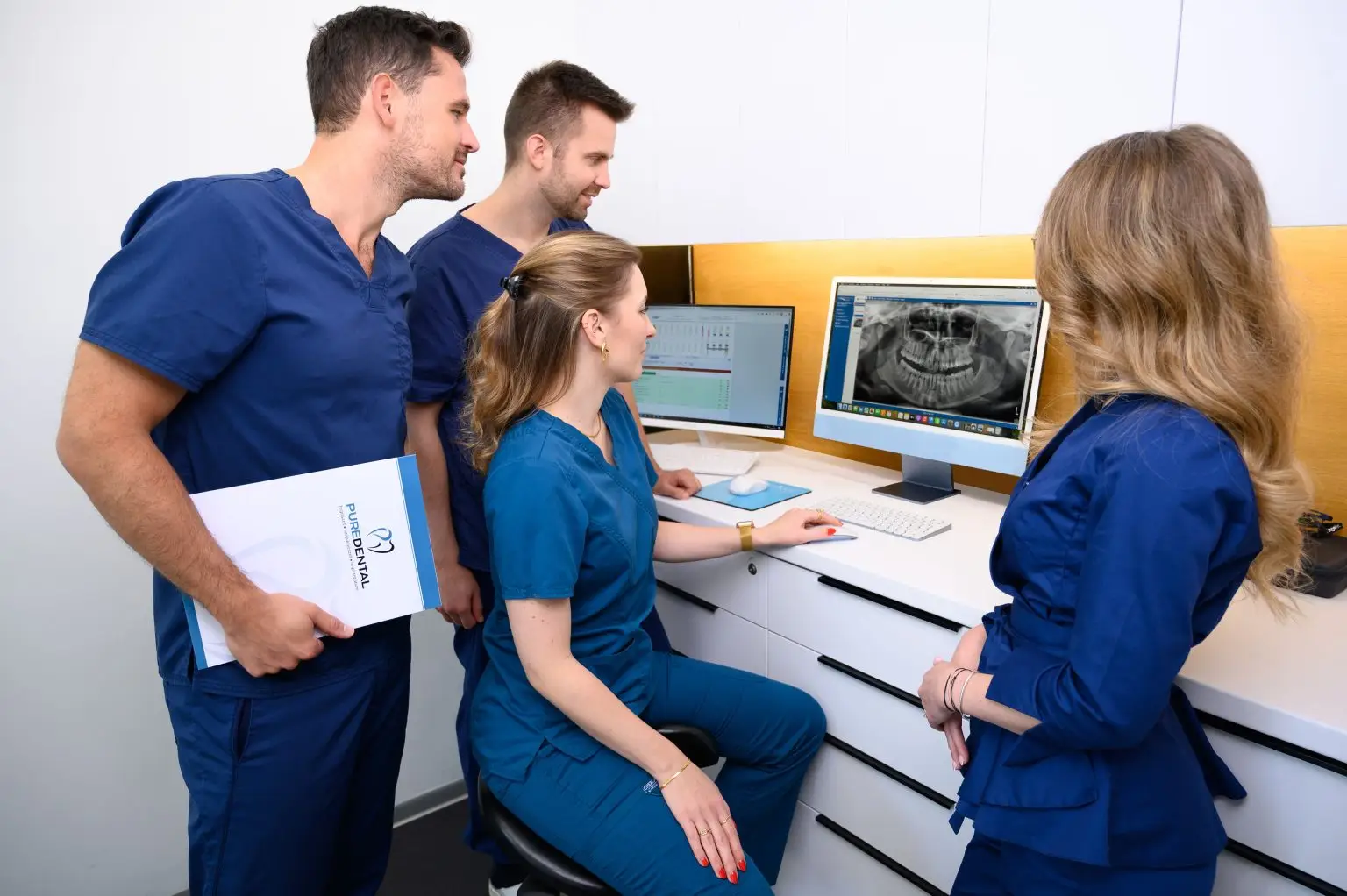
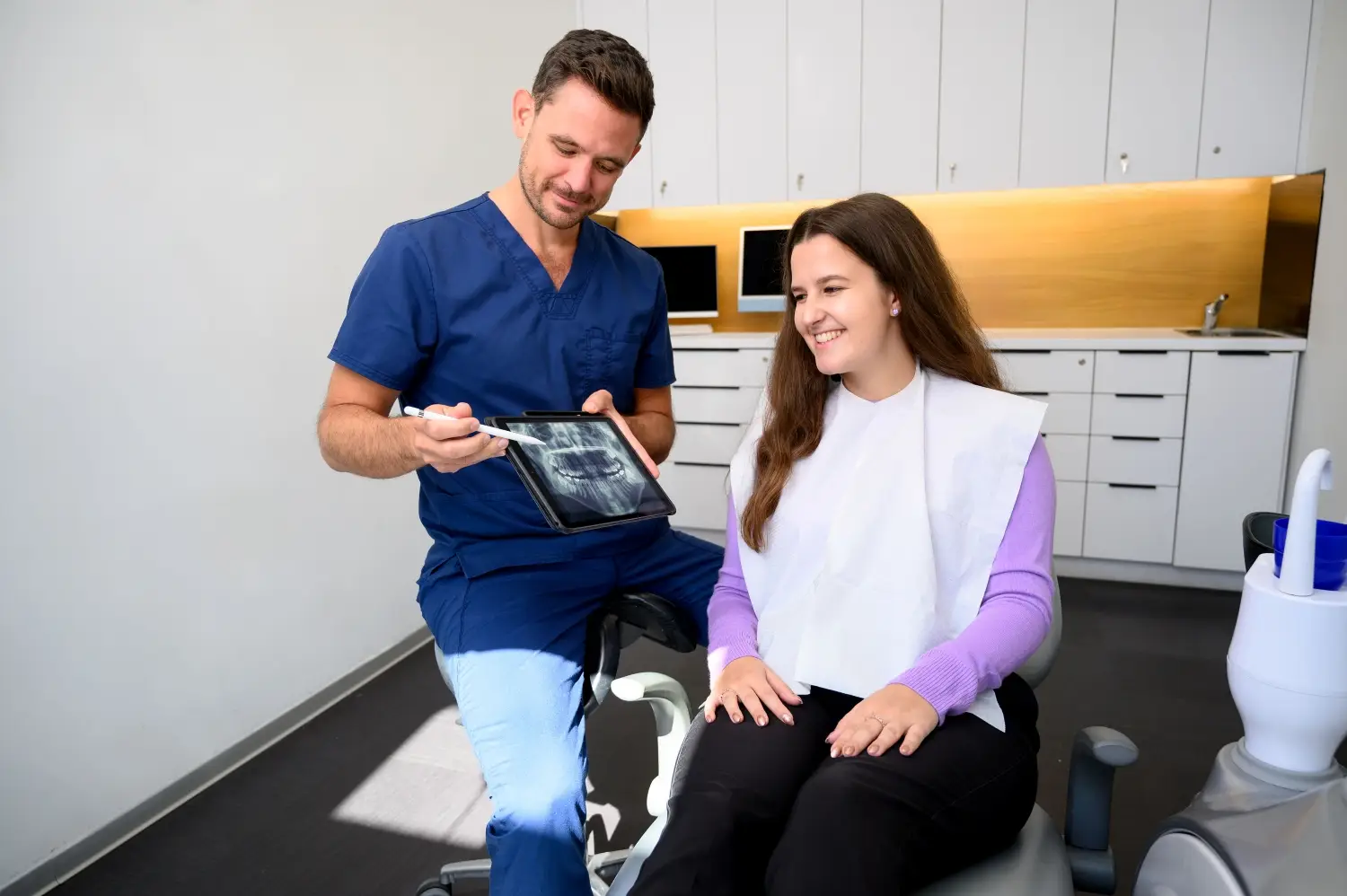
At the first visit we discuss your complaint, examine your mouth, and take a 3D CBCT scan. This lets us see the exact condition of the roots, the nerve canal, the sinus and the bone, so the procedure can be planned in advance.
The specialist explains the steps of the procedure, its expected duration, cost, and the course of recovery to you in writing. We can go through any questions you have.
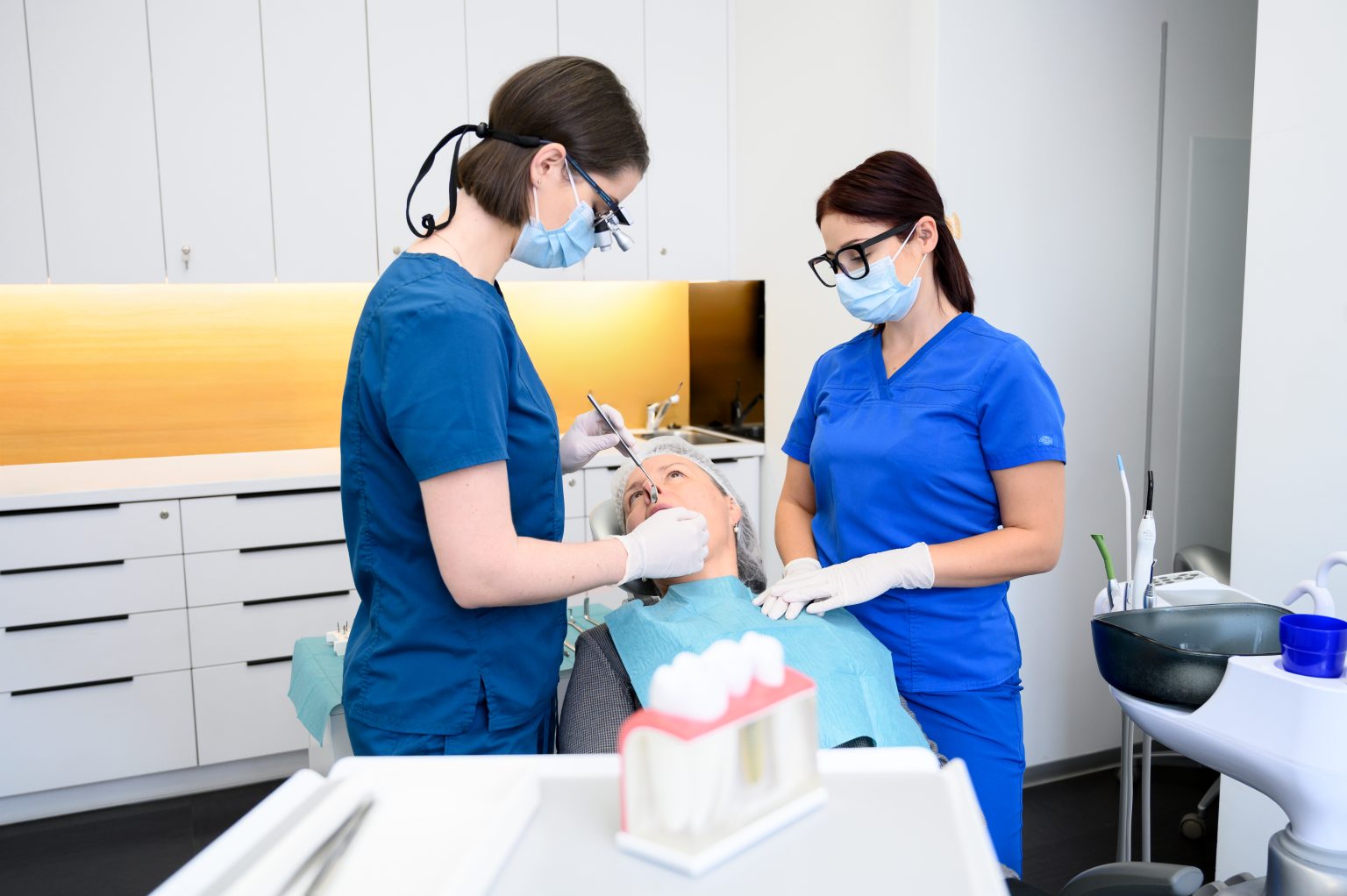
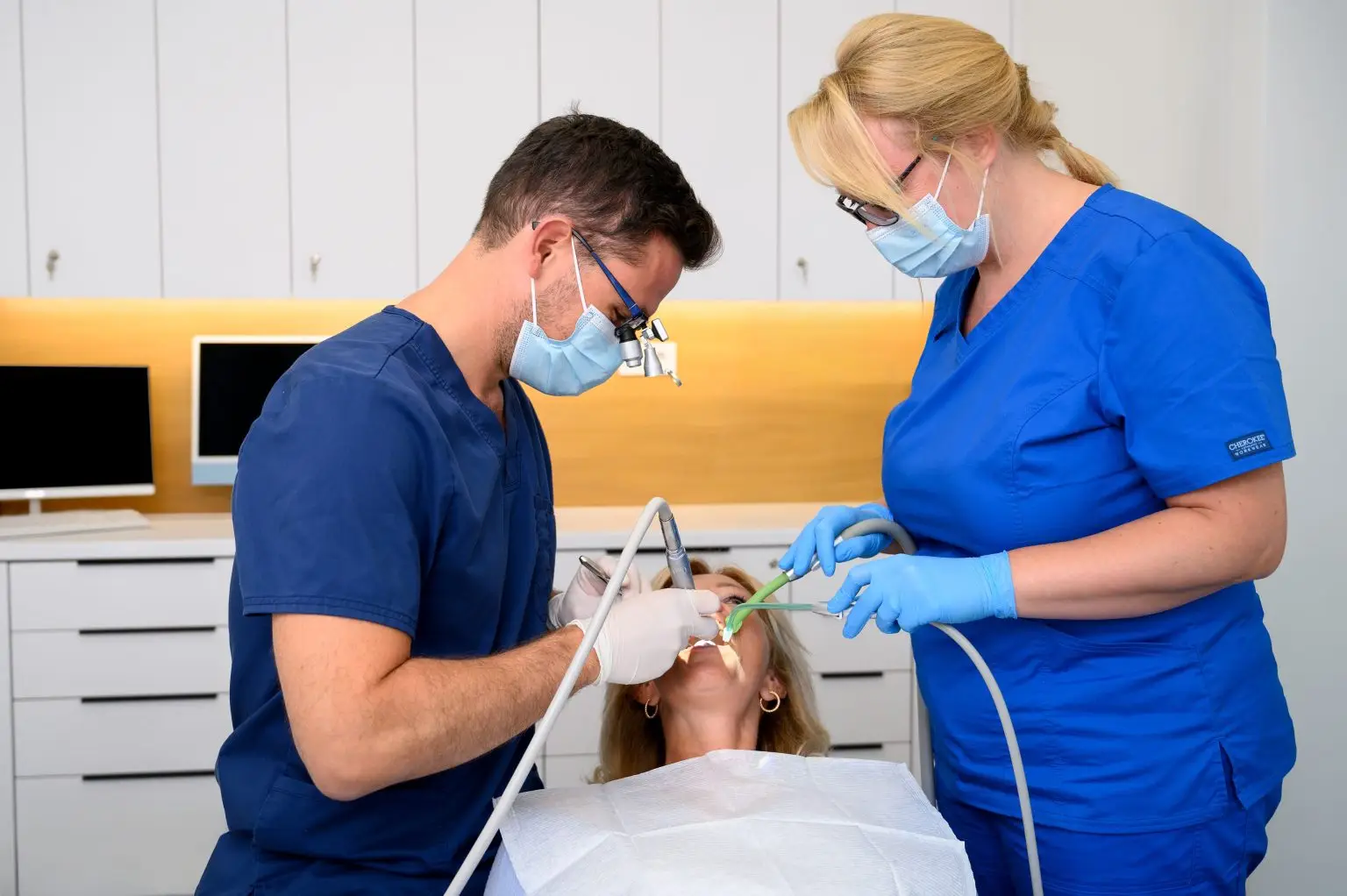
We use local anaesthesia or, if requested, conscious sedation or general anaesthesia. The surgery is performed under a sterile protocol, with microscopic or magnified visualisation. A simple extraction takes 20–30 minutes, a deeply positioned wisdom tooth 45–60 minutes, and complex oral surgery procedures 60–90 minutes.
You receive written post-operative instructions covering cooling, eating, brushing and medication. We also give you an on-call phone number for the recovery period, and support your speedy recovery with a healing kit (soft-bristle toothbrush, ice pack, mouthwash, etc.). If needed, we also provide the necessary medication.
We check the healing of the wound and, if necessary, remove the sutures (our clinic provides this free of charge). We're also happy to answer any further questions.
With modern technology, experienced specialists, and personalized aftercare, we ensure that the surgery is safe, quick, and successful in the long term.
Thanks to our 3D CBCT-based planning, we can see the exact position of the roots and nerves, allowing us to plan the treatment in advance and ensure it is safe.
With modern anesthesia, our treatments are completely painless and recovery is quick.
You know every step, cost, and duration in advance, so you can be confident in the process.
We will accompany you throughout your recovery with a written to-do list and telephone support.
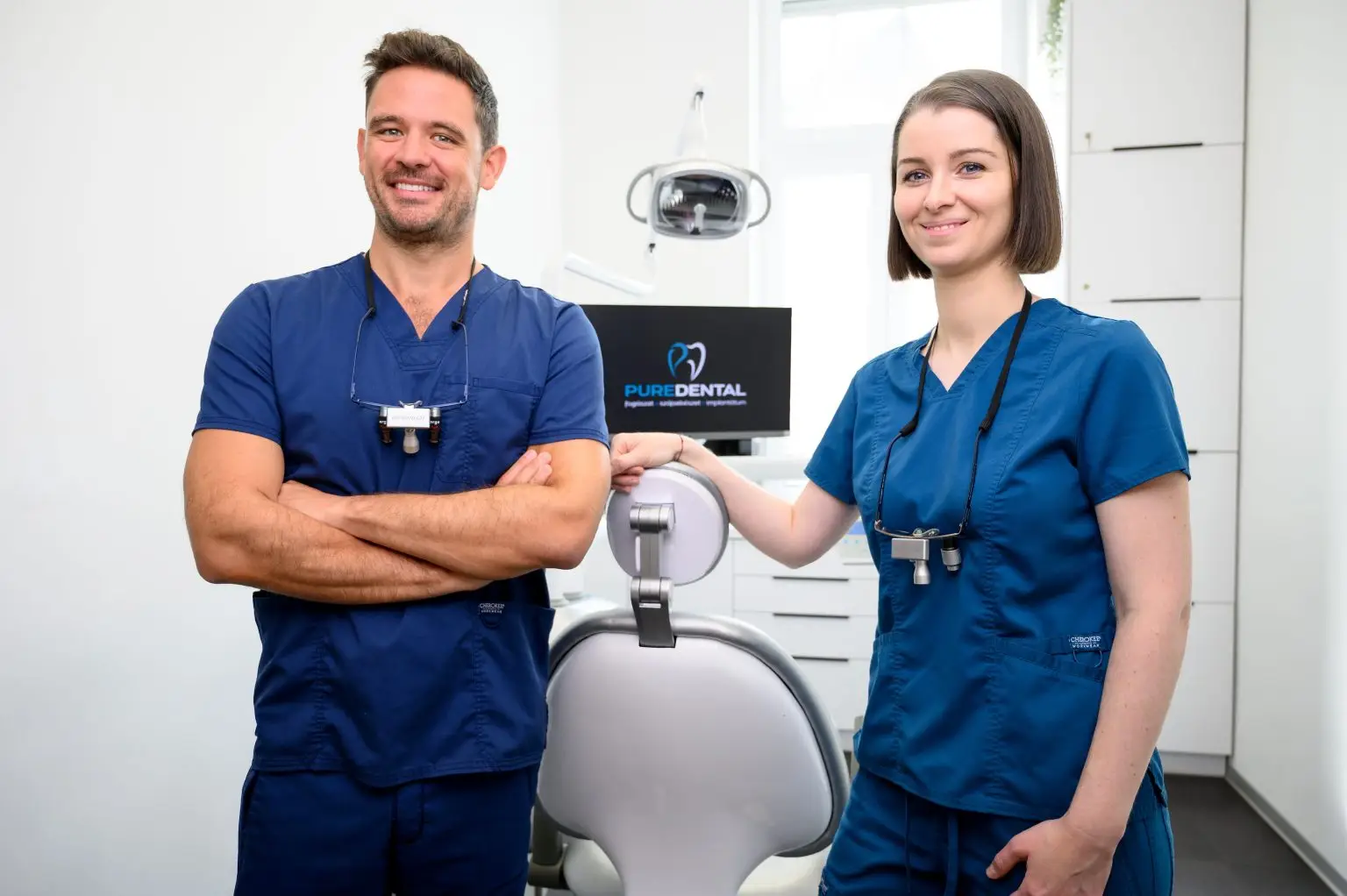
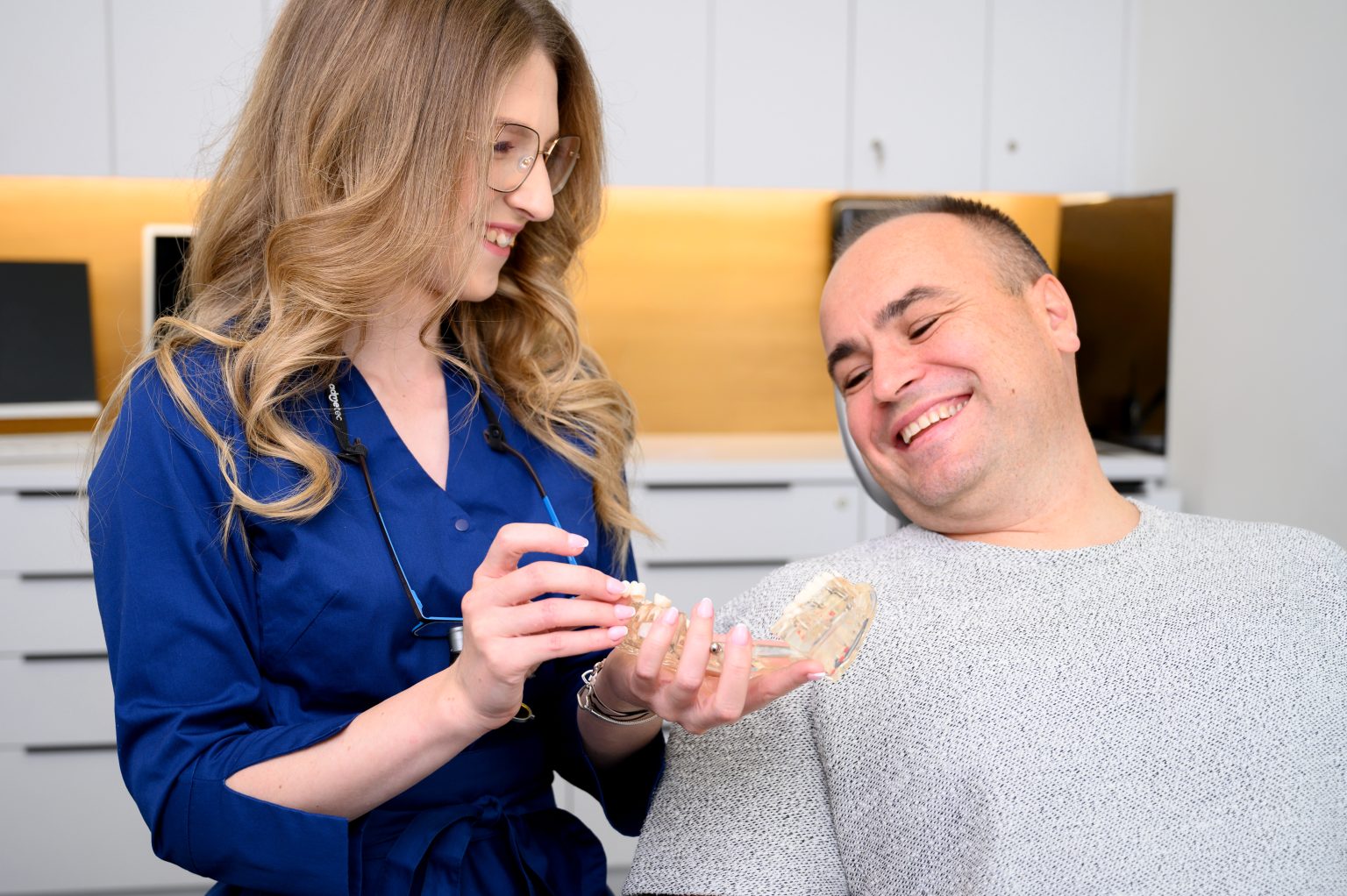
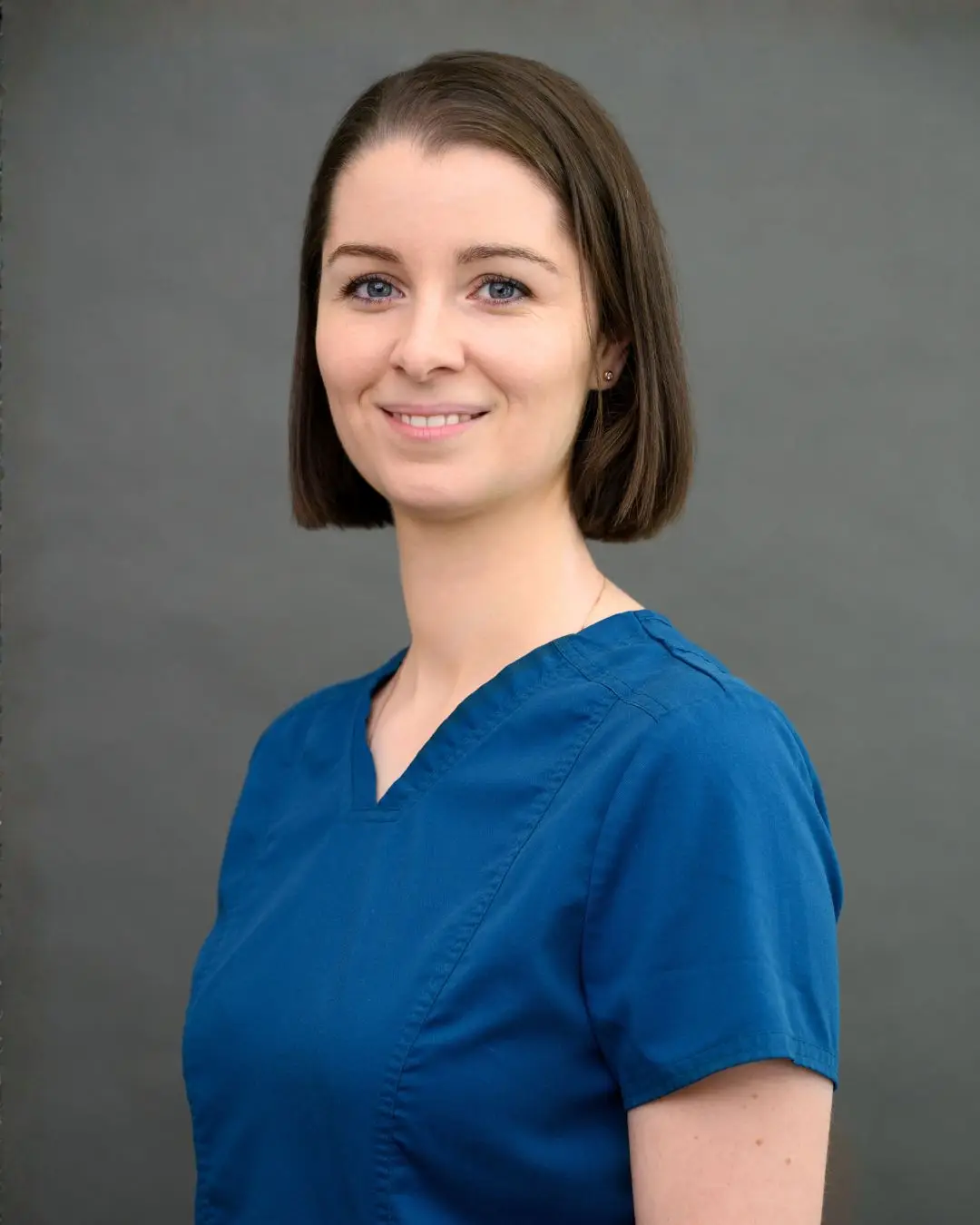
Oral surgery procedures are performed by Dr. Boka Nóra, oral and maxillofacial surgeon and implantologist. She has been practising for 15 years and has performed thousands of oral surgery procedures to date. Her areas of expertise include wisdom tooth removal, complicated extractions, apicoectomy, and preparation for dental implants (bone grafting, sinus lift).
At our clinic, we do everything we can to preserve teeth, but if a tooth cannot be saved—for example, in the case of a deep fracture, severe decay, or unsuccessful root canal treatment—tooth extraction is a quick and painless procedure. If necessary, it can also be performed on children’s baby teeth.
Wisdom tooth removal is one of the most common dental procedures. Wisdom teeth can often cause pain, congestion, inflammation, or cysts. Our professional oral surgeons remove wisdom teeth completely painlessly, with maximum empathy and attention, using state-of-the-art diagnostics and gentle procedures.
It is not only tooth extraction or wisdom tooth removal that may be necessary. Our oral surgeons can also help with other problems:
The timeline below helps you understand what counts as a normal healing process, and when it's worth calling us.
Mild bloody discharge, facial swelling and numbness are normal. External cooling is needed (20 minutes cold / 20 minutes break). Avoid rinsing, spitting, drinking through a straw, dairy products and small-seeded foods.
Swelling is at its strongest at this point, then subsides. Gentle, lukewarm saltwater rinsing can begin. Avoid coffee, alcohol, dairy products, hot and spicy food, and smoking.
Swelling and discomfort significantly ease. Soft, lukewarm foods can gradually be reintroduced. Physical exertion (sport, sauna) should still be avoided.
Check-up and free suture removal, if needed — our clinic uses dissolvable sutures in most cases.
Soft tissue healing is complete. The deeper layer of bone healing takes 4–6 months, but this no longer affects daily life.
If you're afraid of dental procedures, or you're facing a more complex, longer surgery, we can also perform the oral surgery treatment under conscious sedation or general anaesthesia.
The exact price always depends on the type and complexity of the procedure. After the 3D CBCT-based consultation, we provide a written quote — with no hidden costs.
| Procedure | Indicative price |
|---|---|
| Specialist consultation | €50 |
| CBCT – 3D CT scan | €89 |
| Single-rooted tooth extraction | €102 |
| Multi-rooted tooth extraction | €128 |
| Surgical tooth extraction | €167 |
| Complicated tooth extraction (dissection) | €135 |
| Wisdom tooth extraction (partially erupted) | €135 |
| Surgical wisdom tooth removal (impacted) I. | €161 |
| Surgical wisdom tooth removal (impacted) II. | €193 |
| Apicoectomy, front tooth | €171 |
| Apicoectomy, posterior tooth | €221 |
| Sinus closure | €113 |
| Cystectomy (cyst removal) – small | €156 |
| Cystectomy (cyst removal) – medium | €203 |
| Cystectomy (cyst removal) – large | €257 |
| Conscious sedation (1st hour) | €321 |
| Deep anaesthesia, with anaesthesiologist (1st hour) | €725 |
After the 3D CBCT-based consultation, you will always receive a written, itemised quote — with no hidden costs, so you know exactly what to expect.
Prices are shown in euro (EUR) and are for information only; they include VAT. We reserve the right to change prices.
We have compiled answers to the questions most frequently asked by our patients before oral surgery procedures.
You don’t have to worry about pain. We use modern anesthesia, sterile protocols, and 3D planning to make the procedure comfortable and safe.
No. Thanks to modern anesthesia, the treatment is completely painless; you may feel pressure at most.
After the procedure, we provide detailed post-operative instructions to ensure a quick and painless recovery. Avoid smoking, alcohol, dairy products, and hot foods and drinks for 3-4 days.
External icing is recommended for the first 24 hours.
It is definitely recommended in cases of pain, inflammation, congestion, suspected cysts, partially erupted teeth, or teeth with poor alignment.
If root canal treatment is not sufficient, the inflamed root tip is removed surgically.
When removing upper molars, the maxillary sinus may rarely open. This should be closed immediately to prevent infection and sinusitis.
Our experienced specialists use modern technology to help solve your problem quickly and painlessly. Call now or register online, and we will contact you within 3 hours during business hours.
Január 5-től, újra a megszokott nyitvatartási időben várjuk kedves pácienseinket.