All my teeth are in poor condition and several are loose: can they still be saved, or will I need all my teeth replaced?
“I was told that almost all my teeth need to be removed. Is there really no other option?”

At a glance
- A loose tooth is not necessarily beyond saving.
- Each tooth needs its own assessment of whether it can be retained.
When to seek an assessment
- If several teeth are loose or you find chewing difficult.
- If you have advanced gum disease.
- If you have been advised to have all your teeth removed.
Overview
This question often comes from patients who have had gum disease for a long time, have several loose teeth or can chew properly with only a few remaining teeth.
This can be a particularly difficult decision. No one wants to lose their natural teeth, yet many people are worn down by repeated treatments, pain and uncertainty.
The good news is that advanced gum disease does not necessarily mean losing every tooth. However, there are situations in which a durable, well-functioning replacement may offer a more predictable solution.
When can teeth still be saved?
A loose tooth or a tooth with significant bone loss is not necessarily beyond saving. Whether it can be retained depends on the degree of inflammation, the surrounding bone, its mobility, your bite and its expected long-term prognosisAn assessment of the likely long-term condition of a tooth and whether it can be retained..
Some teeth can be retained long term with periodontal treatment, appropriate cleaning and, where necessary, surgery or restorative treatment.
Other teeth may have such a poor prognosis that removal is justified.
The key is to base the decision on the prognosis of each tooth and a treatment plan for the whole mouth.
Why do teeth become loose?
One common cause of loose teeth is advanced gum disease, also known as periodontitis.
Chronic inflammation can gradually damage the tissues and bone that hold teeth in place. As a tooth loses more of its bony support, it may become loose.
Other causes of tooth mobility include excessive biting forces, a root fracture or local inflammation.
The degree of mobility alone is therefore not enough to decide whether a tooth should be removed.
What do we assess before recommending extraction?

Periodontal health
During a periodontal examination, we measure the depth of gum pockets and check for bleeding, tooth mobility and the condition of the tissues surrounding the teeth.
Where necessary, X-rays help us assess the extent and pattern of bone loss.
Restorability
Even if its supporting tissues can be treated, a tooth may not be retainable if its crown is deeply decayed or severely fractured, or if its root is damaged beyond repair.
We therefore need to assess the entire tooth as well as its supporting tissues before making a decision.
Bite and loading
When many teeth are missing, the remaining teeth may be subjected to unfavourable forces.
If several teeth are missing and those that remain are poorly positioned, treating a single tooth is not enough to achieve rehabilitation. The overall bite and tooth replacement plan need to be assessed.
Health and aftercare
The long-term outcome of periodontal treatment is also affected by home oral hygiene, smoking, certain medical conditions and attendance at regular check-ups.
The treatment plan must take these factors into account.
What does a questionable prognosis mean?
A dental prognosis describes how likely a tooth is to remain functional and be retained over the longer term with appropriate treatment.
A questionable prognosis is not the same as a hopeless prognosis.
For example, the condition of a tooth affected by advanced gum disease may improve once inflammation is reduced. In other cases, there is so little remaining support or such severe structural damage that keeping the tooth is no longer realistic.
This is why a decision to remove all teeth should not be based on a single panoramic X-ray without an in-person examination.
How can periodontal treatment help?
The first aim of treatment is to reduce inflammation and control the progression of the disease.
This may include oral hygiene instruction, removing plaque and tartar above and below the gum line, cleaning the root surfaces with instruments and addressing relevant risk factors.
Periodontal surgery or regenerative treatment may also be considered in certain cases.
We evaluate the response at a follow-up examination and adjust the long-term plan where necessary.
Complete regeneration of lost bone cannot be expected in every case, but many teeth can be stabilised with appropriate treatment.
Learn more: Periodontology.
When might several teeth still need to be removed?
Removing several teeth may be justified when they can no longer be retained with an acceptable prognosis, or when the remaining teeth as a whole cannot provide reliable long-term support for the required restoration.
Some teeth may appear treatable individually but be so unfavourably positioned that they cannot offer reliable support within the overall rehabilitation plan.
This does not automatically mean that every tooth must be removed. In some cases, a partial denture, a bridge that preserves natural teeth or a combination involving implants may be possible.
What are the options if the teeth cannot be saved?
If none of the teeth in an arch can be saved, several tooth replacement options are available.
Conventional complete denture
A conventional complete denture is a removable restoration supported by the oral soft tissues and the shape of the jaw.
Implant-retained removable denture
An implant-retained removable denture, such as an overdentureA removable denture retained by dental implants. retained by a bar or other attachments, can substantially improve stability.
Fixed full-arch bridge
A fixed full-arch implant bridge is attached to several appropriately positioned implants and is not removed by the patient at home.
The extent of tooth loss is only one factor in choosing the right option. Available bone, general health, ease of cleaning, treatment time and cost also matter.
Can I have fixed teeth soon after multiple extractions?
In certain cases, yes.
If suitable implant positions and adequate primary stabilityThe initial mechanical stability of an implant in the bone. can be achieved after removing the teeth that cannot be saved, a fixed temporary restoration may be provided within a short time.
However, this is not automatic. Without the necessary stability and other clinical conditions, loading the implants later may be safer.
The final bridge is usually made after the healing period.
Learn more: Full-arch rehabilitation.
Frequently asked questions
If my teeth are loose, do they all need to be removed?

Not necessarily. The cause of the mobility and the prognosis of each tooth need to be established first.
Is periodontal treatment worthwhile if I have already lost a lot of bone?
Yes, it can offer substantial benefits in certain cases. However, whether treatment is feasible depends on your individual condition.
What if I do not want a removable complete denture?
We assess the options for fixed restorations and implant-retained removable dentures. The final decision is based on the available bone, the condition of your teeth and your preferences.
Can I seek a second opinion if I have been advised to have all my teeth removed?
Yes. Before such a significant, irreversible decision, reassessing the teeth through an in-person examination may be appropriate.
 Personal consultation
Plan the future of your teeth as well as any extractions
If several teeth are loose, you have advanced gum disease or you have previously been advised to have all your teeth removed, arrange a detailed dental assessment.
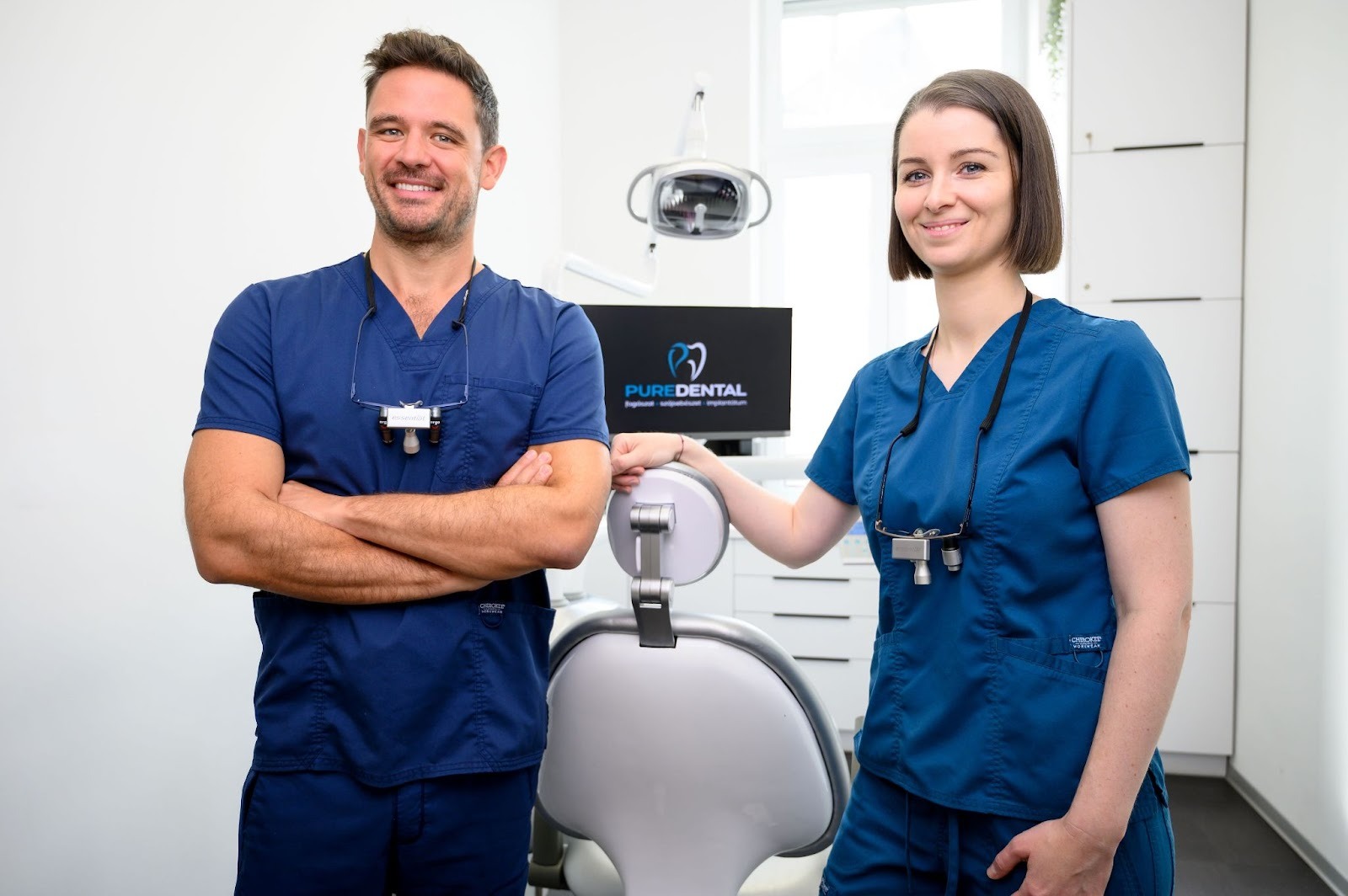
At PureDental, we assess which teeth can be saved and, if replacements are needed, which long-term options may be suitable.
Book a consultation → About the Medical Reviewer