Bar-retained denture or fixed implant bridge: which should I choose?
If you no longer have any natural teeth, or find your current denture difficult to use, two implant-based options may be suitable: a removable, bar-retained implant denture and a fixed full-arch bridge screwed onto implants.

At a glance
- A bar-retained denture can be removed at home for cleaning.
- A fixed full-arch bridge can be removed by your dentist if necessary.
What to consider
- Available bone and bite conditions.
- Ease of cleaning and your preference about removability.
- Total treatment and maintenance costs.
Overview
Both can offer greater stability than conventional removable dentures. However, they work differently, and the same option will not suit every patient.
The differences go beyond price and the number of implants. Ease of cleaning, available bone, chewing function, the design of the restoration and whether you are willing to wear a removable denture all matter.
What is the main difference?
A bar-retained denture is an implant-retained restoration that you can remove for cleaning. A fixed full-arch bridge cannot be removed by the patient; your dentist can remove it if necessary.
Both options may be suitable for replacing all the teeth in a jaw.
A bar-retained denture may provide easier access to the surfaces that need cleaning. A fixed bridge may appeal more to people who do not want a removable restoration.
However, this preference alone does not determine which option is appropriate.
How does a bar-retained denture work?
In a bar-retained denture, the implants are linked by a custom-made bar that also provides structural support.
Attachments on the bar hold the removable denture securely in place. You can remove the denture at home for cleaning and then put it back in.
This can substantially reduce the rocking associated with conventional dentures, especially when implant support and denture design are appropriate.
A bar-retained denture is still a removable restoration. Its feel, size and cleaning requirements differ from those of a fixed bridge.
How does a fixed full-arch implant bridge work?
With a fixed full-arch restoration, a single fixed bridge is made to fit onto several implants.
You do not remove it each day. The bridge is usually screwed onto special abutments and can be removed by your dentist if necessary.
The number of implants depends on the individual treatment plan. Four implants may be sufficient in some cases; in others, five, six or more may be appropriate.
Chewing forces and access for cleaning at home are particularly important when designing a fixed bridge.
All-on-4 implant treatment
Comparing the two options
Factor | Bar-retained denture | Fixed full-arch implant bridge |
|---|---|---|
Removable? | Yes, you remove it for cleaning | Not removable by the patient |
Retention | A bar and attachments connected to implants | A bridge fixed to implants |
Stability | Very good with appropriate planning | A stable, fixed restoration with appropriate planning |
Number of implants | Depends on the jaw and treatment plan | Usually at least four for a single-piece fixed full-arch bridge |
Cleaning at home | More surfaces can be accessed directly once the denture is removed | Special cleaning is needed beneath and around the bridge |
Maintenance | Attachments may wear and need replacement | Checks of screws, bridge materials and the tissues around the implants |
How it feels | Stable, but still removable | Fixed in place for the patient |
Cost | Varies; may often be more affordable | Usually a more complex and costly rehabilitation |
How many implants are needed?
In the lower jaw, a removable denture retained by two implants can be a suitable option in many cases. The specific attachment system, such as a bar or individual stud-type attachments, depends on the available bone, the forces involved and the planned denture. Three or four implants may be appropriate in some cases.
In the upper jaw, at least four well-distributed implants are generally recommended for an implant-retained removable denture. Bone quality, anatomy and the way forces act on the restoration differ from those in the lower jaw.
For a conventional fixed full-arch bridge, at least four well-distributed implants are needed in either jaw. Five or six implants may be beneficial in the upper jaw where the anatomy allows.
The number of implants should therefore not be determined by a single rule applied to every patient.
Which option is better for chewing?
Both implant-based options can provide a substantial improvement over a poorly fitting conventional complete denture.
A fixed full-arch implant bridge feels less like a conventional denture: it does not need to be removed each day, and the replacement teeth are fixed to the implants.
With appropriate retention, a bar-retained denture can also be stable during meals. However, the denture base, how support is shared between the implants and gums, and the design of the chewing surfaces all affect how it feels to wear.
Chewing function depends on more than the type of restoration. The condition of the chewing muscles, adaptation, your bite and the teeth in the opposing jaw also matter.
Which is easier to clean?
For many patients, this is one of the most important practical differences.
A bar-retained denture can be removed at home, providing direct access to the inner surface of the denture, the bar and the areas around the implants. This may suit patients who prefer to clean surfaces they can see and reach clearly.
A fixed bridge is not removed each day. Special interdental brushes, suitable dental floss or other individually recommended aids are needed to clean around the implants and beneath the bridge.
However, it would be inaccurate to say that bar-retained dentures are always easy to clean and fixed bridges are necessarily difficult. The specific design of the restoration also has a major effect on access.
Which may be better with significant jawbone loss?
When the jawbone has shrunk considerably, the restoration may need to replace the appearance of lost soft tissue and bone volume as well as the missing teeth.
The base of a bar-retained denture may help restore lost lip support in some cases. However, there must still be enough bone to place the necessary implants safely.
A fixed full-arch bridge may also be possible with significant tissue loss, but achieving appropriate lip support, cleanability, speech and a natural-looking transition between the restoration and surrounding tissues may require more complex planning.
There is no single best solution for every jaw affected by bone loss. Choosing an option requires a clinical examination and, when implants are being planned, usually a CBCT scan.
What do they cost, and what maintenance costs should I expect?
The total treatment cost of a bar-retained denture may often be lower than that of a complex fixed bridge. However, prices should always be compared using complete treatment plans.
PureDental’s price list includes a prosthetic fee of HUF 521,000 for the bar-retained denture. This should not automatically be taken as the total rehabilitation cost including implants and all surgical procedures.
The cost of fixed full-arch rehabilitation is determined through an individual treatment plan.
Future costs should also be considered. A bar-retained denture may need replacement attachments or relining. A fixed bridge may require maintenance of screws, prosthetic components or the restoration itself. Regular checks of the tissues around the implants are important with both options.
When might we recommend each option?
A bar-retained denture may be particularly suitable if you want greater stability but accept a removable restoration; if easy access for cleaning is important to you; or if you are looking for an appropriately stable alternative to full fixed rehabilitation at a different cost.
A fixed bridge may be preferable if you specifically want a fixed restoration, your bone and bite conditions are suitable, and thorough, regular cleaning at home can be maintained.
The best plan may differ between the two jaws. For example, you might have a fixed bridge in the upper jaw and an implant-retained removable denture in the lower jaw.
Frequently asked questions
Can a bar-retained denture move when chewing?

When properly made, it can be considerably more stable than a conventional denture. Some movement may still occur depending on the design and support of the restoration, and the attachments can wear over time.
Does a fixed bridge never need to be removed?
You do not need to remove it at home, but your dentist may need to remove it during a check-up or repair.
Is bone grafting necessary for both options?
Not necessarily. It depends on the planned implant sites, the available bone and the intended restoration.
Which lasts longer?
Both designs can function long term, but their technical maintenance requirements may differ. A specific lifespan cannot be guaranteed in every case based solely on the type of restoration.
 Personal consultation
We can help you compare your options
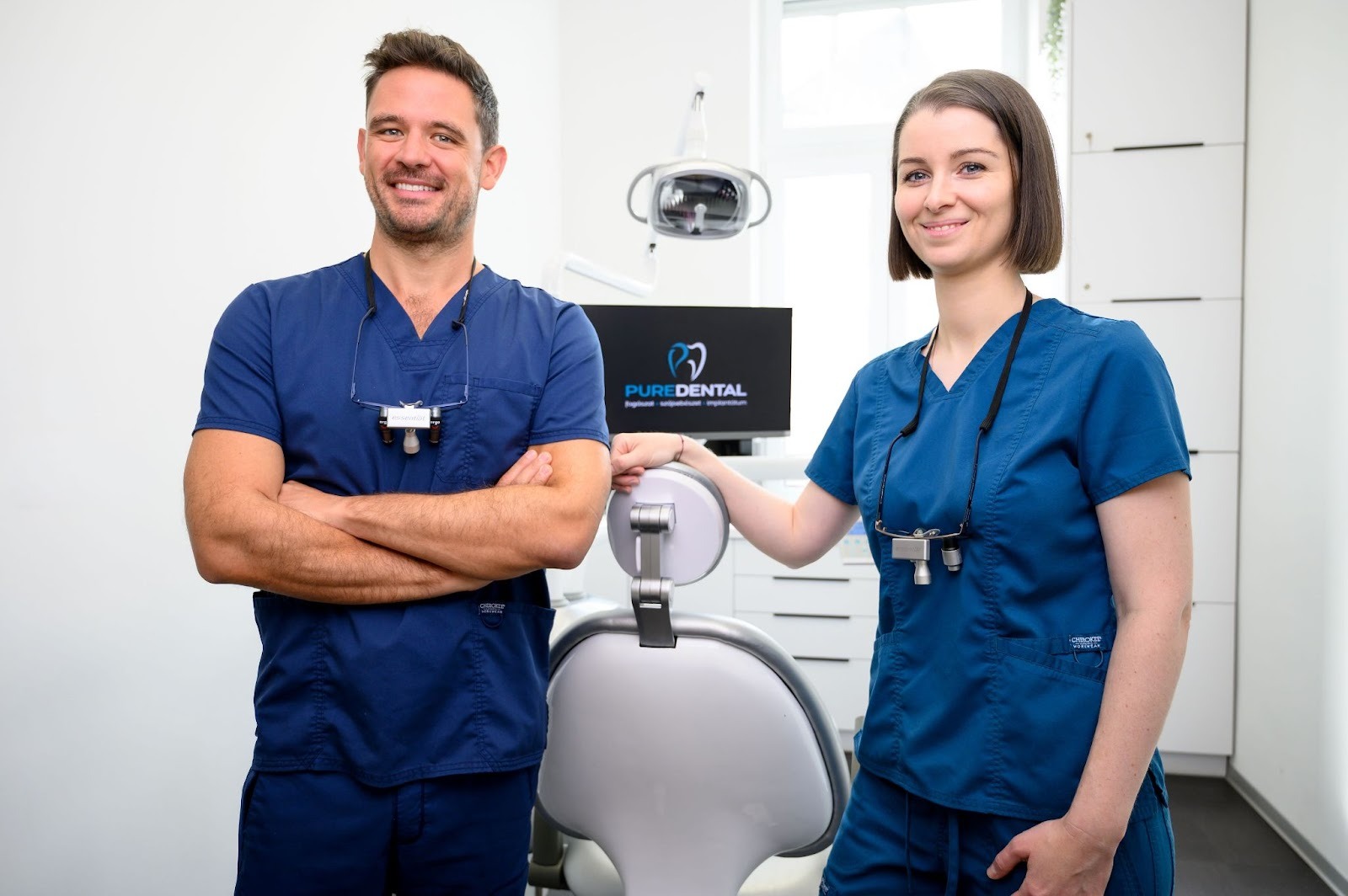
At PureDental, we do not aim to provide the same preselected restoration for every patient. We first assess which options can be carried out safely and which of these best meets your needs.
During your consultation, we discuss the benefits, limitations, cleaning requirements, treatment time and total cost of a bar-retained denture and a fixed bridge.
Book a consultation → About the Medical Reviewer