01
The accurate diagnosis
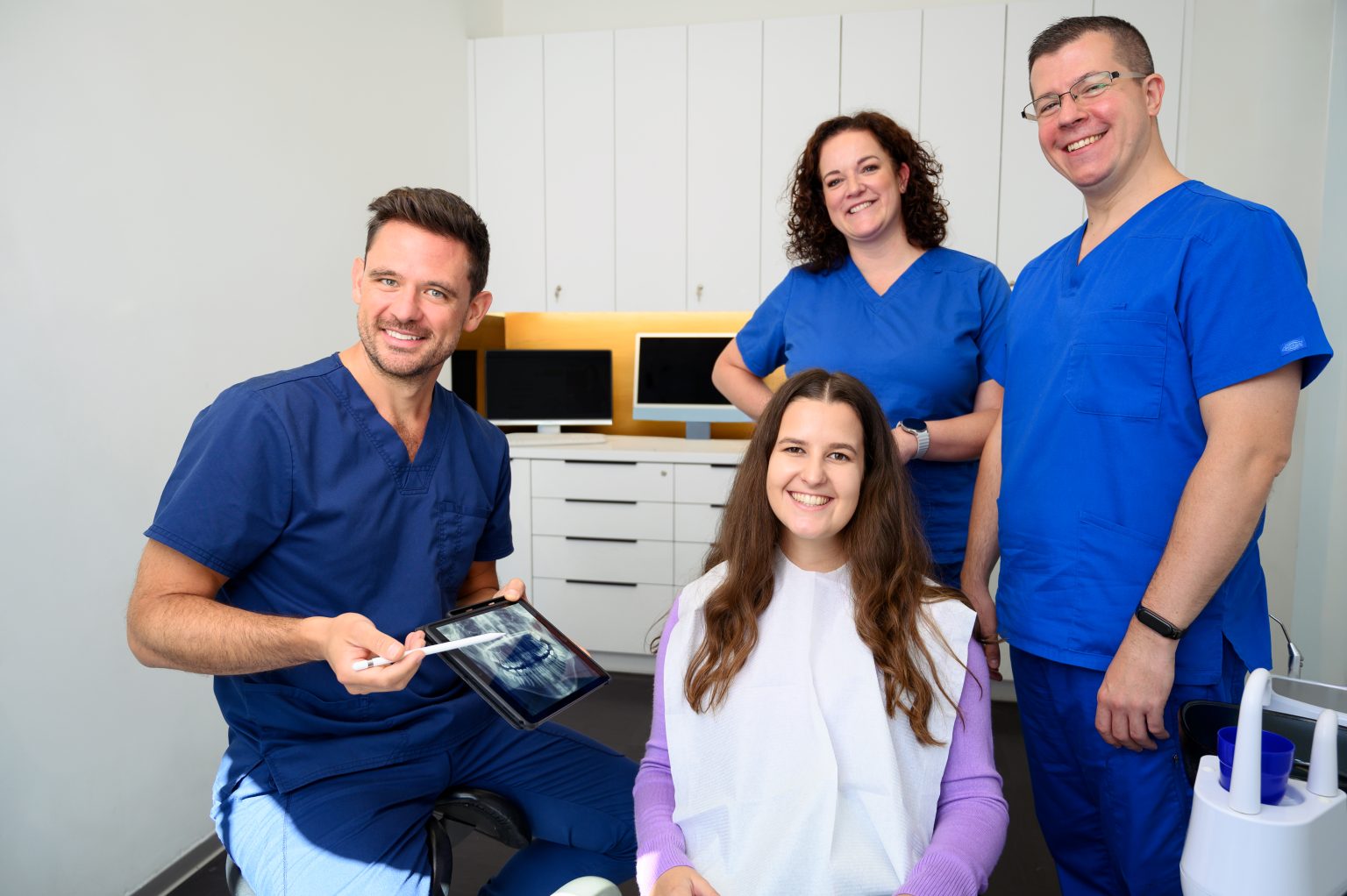
We describe in plain language what we found during the examination: which tooth is affected, what the cause of the problem is and what happens if it is not treated.

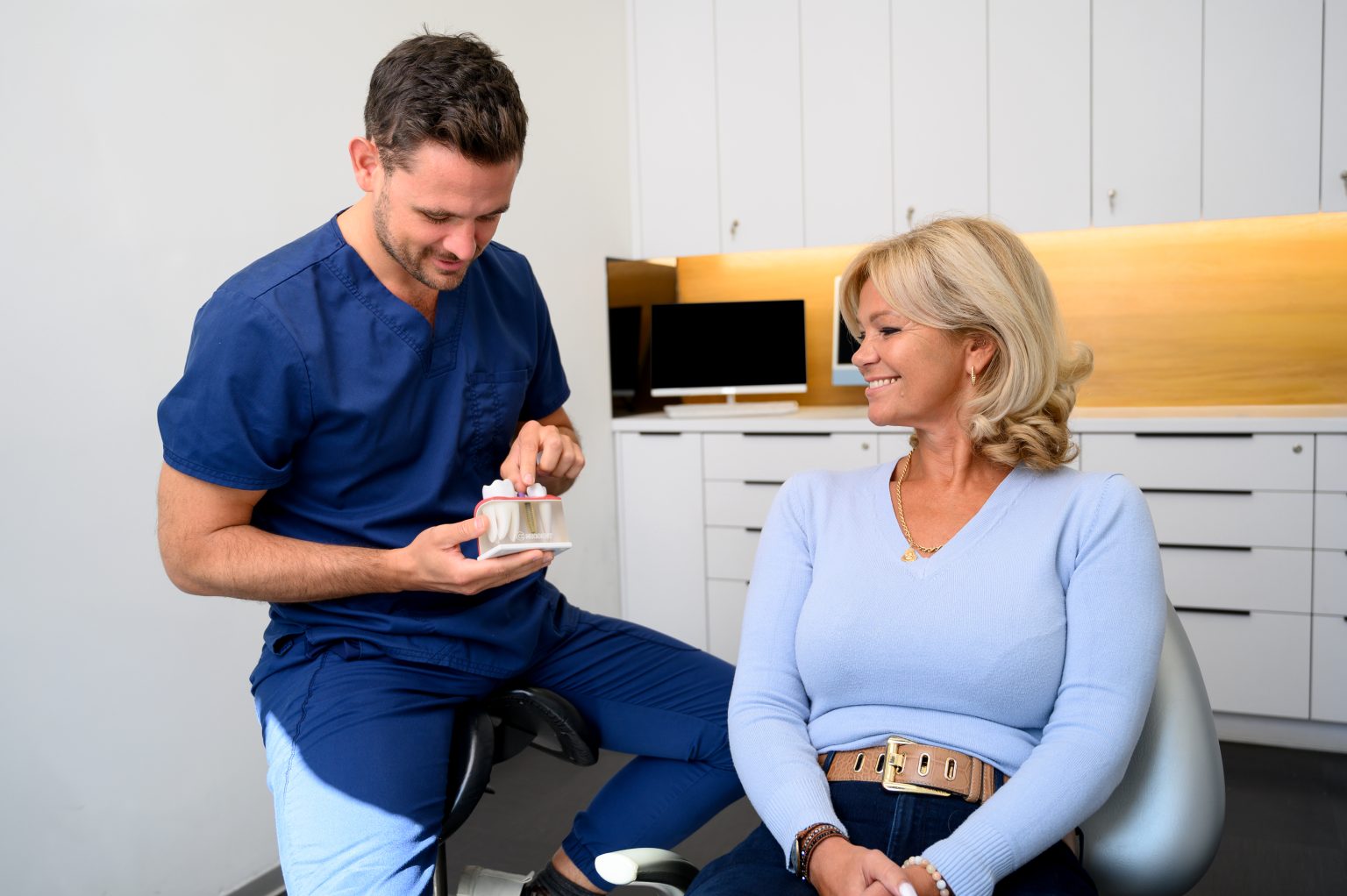
The first step towards a confident, carefree smile
Would you like to know exactly what is causing your dental complaints, what condition your teeth are in and which treatment options you can choose from? At the PureDental clinic in Budapest's 2nd district, we help you see your situation clearly with a thorough dental assessment, digital imaging diagnostics where needed and an easy-to-understand consultation.
The purpose of the first examination is not to make you decide straight away. It is rather to help you understand what is happening with your teeth, which problems need treatment, what can wait, and in what order it makes sense to build up the treatment plan. At the end of the consultation you receive a personalised recommendation that also takes into account your general health, your complaints, your aesthetic wishes, your schedule and your budget.
We write in more detail about detailed imaging diagnostics, that is panoramic X-rays and 3D CBCT, on a separate page.
At PureDental, the assessment includes examining your teeth, gums, existing fillings and dental restorations, your bite, your jaw joint and the oral mucosa.
A dental assessment is a detailed first examination whose aim is to give us an accurate picture of the condition of your teeth, gums, tooth-supporting tissues, bite, existing restorations and mouth. The examination helps to identify tooth decay, gum disease, inflammation around root-treated teeth, bite problems, wear, problems with old fillings or crowns, and suspicious changes in the oral mucosa.
After the consultation you will not only know which treatments you need, but also why each one matters and in what order it makes sense to proceed, which alternatives are possible and what costs you can expect. This is especially useful if you have been putting off dental treatment for a long time, have several problems at once, are planning an implant, dental restoration or aesthetic treatment, or another specialist has asked for a focus-infection check.
If it is your first time at the PureDental dental clinic, your first visit begins with a calm, personal consultation. You can tell us what complaints you have, what bothers you most, what you are afraid of and what result you would like to achieve. This is especially important because a good treatment plan is made up not only of dental findings, but also of understanding your goals and expectations.
During the consultation the dentist examines your teeth, gums, existing fillings, crowns, bridges and implants, your bite and the oral mucosa in detail. If it is necessary for an accurate diagnosis, a digital panoramic X-ray, a targeted intraoral image or a 3D CBCT scan can also be taken. The image is ready within minutes, and the dentist goes through it with you during the same visit. You can read more about panoramic X-rays and CBCT here.
After the examination we go through together what we found, which problems are worth treating first and which solutions you can choose from. The first consultation carries no obligation whatsoever. This is your chance to ask questions, think over the proposed treatments and decide on how to continue only when you feel secure.
If the treatment plan earns your trust, we can arrange an appointment for the necessary procedures right after the consultation.
The most important part of a dental assessment is the clinical examination. The dentist goes through the whole mouth step by step, not only the tooth that is currently causing a complaint. This matters because many dental problems are painless at first. An early cavity, an old filling that no longer seals well, an inflamed gum pocket or an overloaded tooth can often only be recognised in time through a thorough examination.
The dentist examines your teeth one by one. They check for tooth decay, cracks, wear, chipping or discolouration. They check the marginal seal of existing fillings, crowns and bridges. Under an old, poorly sealing filling, tooth decay can start again unnoticed.
We also check the condition of old crowns and bridges. Here it is not only aesthetics that matter, but also whether the edge of the restoration seals well, whether it can be cleaned properly, and whether there is secondary decay or inflammation underneath.
Previously root-treated teeth get special attention, because they can remain free of complaints for a long time even if inflammation develops around the root tip.
The condition of your gums reveals a lot about the health of your mouth. The dentist checks whether the gums are red, swollen or bleeding, whether there are pockets, whether the teeth are mobile, and whether tartar or gum recession is visible.
If gum disease is suspected, we may recommend a periodontal examination.
With a periodontal probe we measure the depth of the pockets between the gum and the tooth and check whether the teeth are mobile. These are early signs of gum disease that can be treated well if recognised in time. If gum disease is suspected, our periodontology colleague carries out a more detailed examination.
Gum disease is especially important because it can be painless for a long time, yet it can lead to the gradual destruction of the bone that holds the teeth and to loose teeth. If recognised in time, however, the process can in many cases be treated well and slowed down.
The dentist does not only look at the teeth one by one, but also at how they work together. They check how the dental arches close, whether the teeth are loaded evenly and whether there are overloaded, worn surfaces. They also check the movement of the jaw joint: whether it clicks, whether it hurts and whether the mouth opens without obstruction.
These irregularities are often behind headaches, face or neck pain, and night-time teeth clenching and grinding. A planned dental restoration or crown will only last if the bite is in order.
At PureDental, the assessment also includes a check of the oral mucosa. The dentist examines the lips, the inside of the cheeks, the gums, the palate, the tongue and the floor of the mouth, and may also check the neck and the area under the jaw by palpation.
The aim of oral cancer screening is to detect oral tumours and the changes that precede them as early as possible. At an early stage they are much easier to treat. The examination takes a few minutes and is completely painless.
The dentist looks for signs such as a sore that does not heal, a white or red patch, a lump, a hardening or persistent roughness. If they find a suspicious change, they explain what they see and, if necessary, refer you for specialist investigation.
At PureDental, oral cancer screening is a natural, automatic part of the assessment. It is not a separate service with an extra charge. It is especially important for smokers, regular alcohol drinkers and patients over 40.
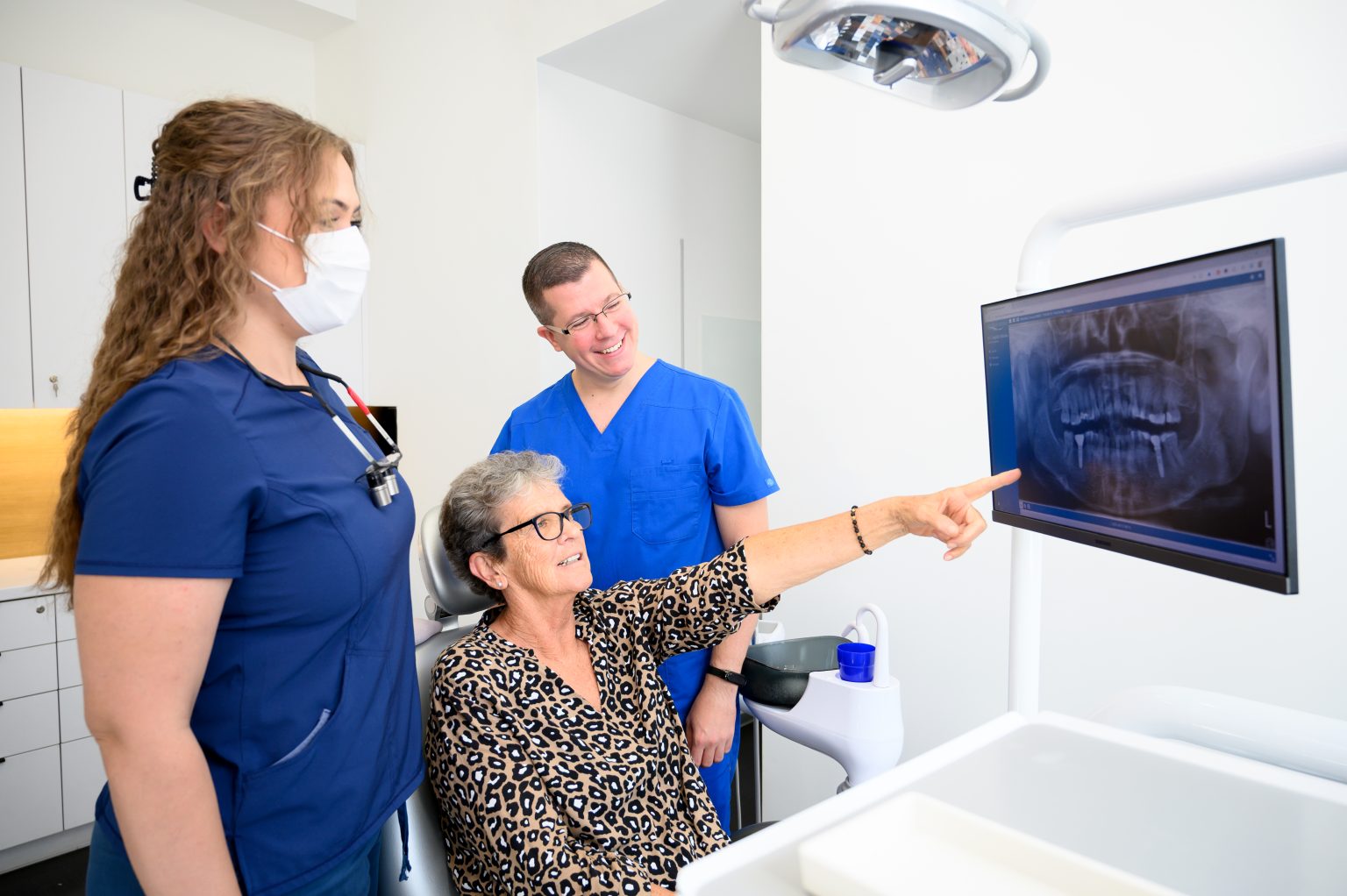
An accurate diagnosis is the basis of every successful treatment.
An accurate diagnosis is the basis of every successful dental treatment, but not every assessment requires the same imaging examination. Based on your complaint, the result of the clinical examination, earlier images and the planned treatment, the dentist decides whether an examination of the mouth is enough, whether a panoramic X-ray or a targeted intraoral X-ray is needed, or whether a 3D CBCT scan is justified.
The aim is always to obtain enough information for the diagnosis and the treatment plan with the lowest necessary exposure. That is why we do not take unnecessary images if the problem is clinically clear, or if the patient brings a recent, good-quality, usable X-ray or CBCT scan with them.
There are times when the dentist can make a reliable diagnosis even without an X-ray. Such situations can be, for example:
In such cases we do not take unnecessary images. If something comes up during the examination that can only be clarified with imaging, we tell you and decide together on the next step.
At the first, comprehensive assessment the dentist typically asks for a panoramic X-ray. The reason is that the whole dentition can be reviewed on a single image. The examination of the mouth gives information about the visible surface of the teeth, and the panoramic image complements it with what is happening in the bone and around the roots. Together they provide the starting point on which the treatment plan is built.
A panoramic X-ray is also taken if we are planning a treatment involving several teeth, or if a long time has passed since the last image.
You can read in detail here exactly what a panoramic X-ray shows.
The dentist recommends a CBCT scan if a safe decision cannot be made on the basis of the clinical examination and the panoramic X-ray. Typical signs and situations:
If the complaint is limited to a single tooth or a small area, a targeted small image is often enough. Examples are a specific painful tooth, a suspected cavity under a filling, or a check during root canal treatment. In such cases the targeted image gives a more detailed picture of that tooth than a full panoramic image.
A dental focus is a hidden inflammation that is located in the mouth but can also affect other parts of the body. It can be an old root-treated tooth, an inflammation at the root tip or a retained piece of root. A focus often does not hurt at all, so the patient does not even know about it. A focus check is often requested by another specialist, for example:
if there is a prolonged inflammation in the body and the treating doctor cannot find the cause.
a dermatologist may ask for dental foci to be ruled out, for example in the case of patchy hair loss.
before heart surgery, heart valve surgery, the implantation of a joint prosthesis or an organ transplant, the treating doctor typically asks for a certificate confirming that there are no foci.
in the case of recurrent inflammations or a fertility work-up, a gynaecologist may also ask for a dental focus check.
for example as part of a rheumatological, ophthalmological or cardiological work-up.
If your doctor has asked for a focus check, please tell us when you book. After the examination we give you a written certificate of the result, which you can take to your treating doctor.
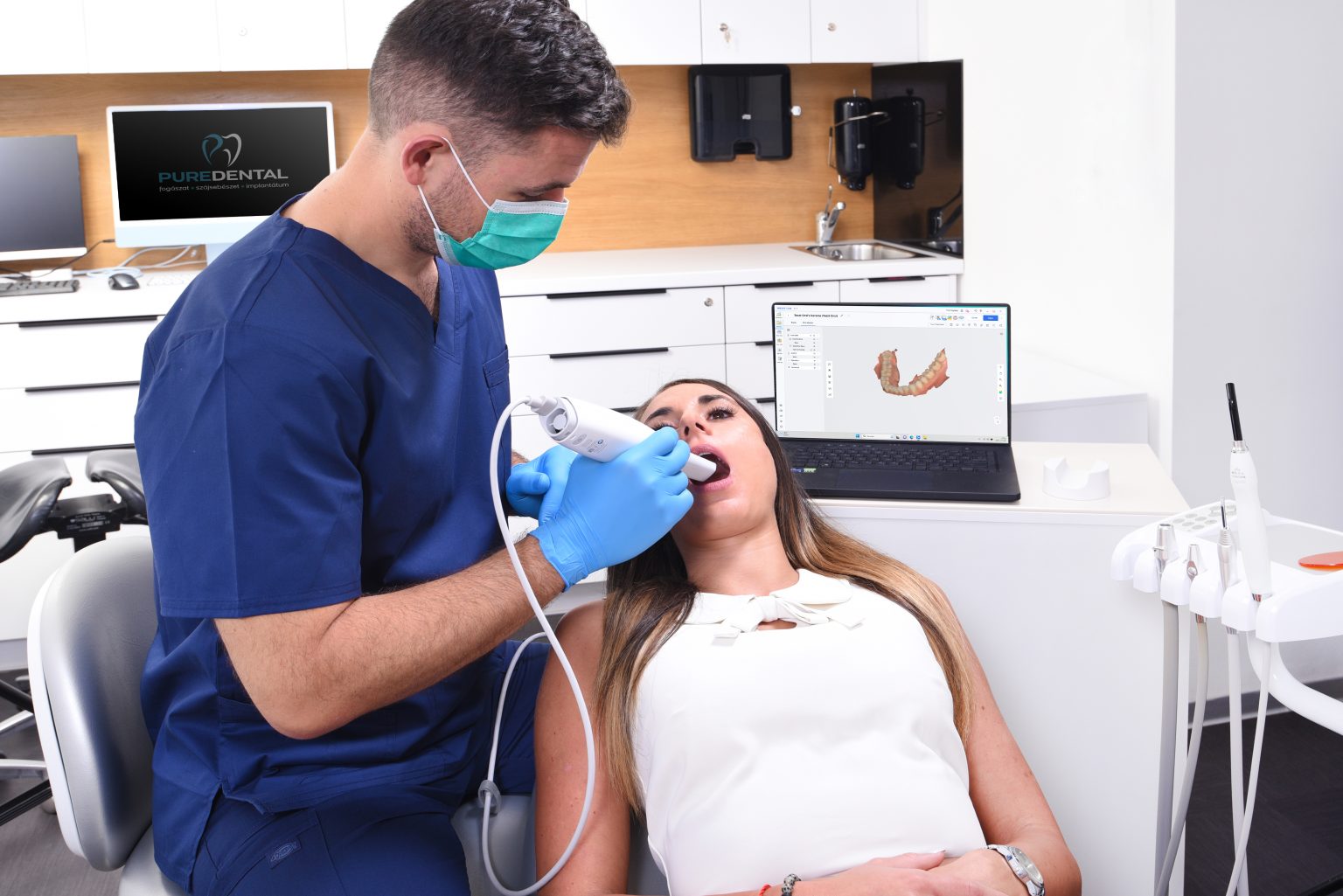
The aim of the assessment is that you receive not just a quick check, but truly understand what is happening with your teeth.
With digital X-ray and 3D imaging equipment we find the cause of the problems quickly and painlessly, so an accurate, personalised treatment plan can be made.
The process starts with a calm consultation: we talk through your complaints, previous treatments, fears, aesthetic wishes, and also which solution would be manageable for your lifestyle, your time and your budget.
Then comes the clinical examination. The dentist looks over your teeth, fillings, crowns, bridges, implants, gums, bite and oral mucosa.
If necessary, an imaging examination is also carried out: a panoramic X-ray, a targeted intraoral image or a 3D CBCT scan. The dentist decides which one is needed based on the result of the examination. You can read more about the image types here.
We do not treat the images as a separate, incomprehensible report. We show you what we see on them, explain which tooth is affected, what may be causing the problem and what the consequences of delaying treatment could be.
At the end of the consultation you receive a personalised treatment plan. It lists the recommended treatments, their order, their expected duration and cost. If several good solutions exist, we also go through the alternatives, so that you do not just accept a plan but can make a truly informed decision.
If you have no complaints, a dental check-up is usually recommended every six months or every year. During regular check-ups, tooth decay, gum disease and changes in the mucosa can be recognised at an early stage that is still easy to treat. This means shorter, gentler and cheaper treatment.
If your teeth are healthy and your oral hygiene is good, one thorough examination a year may be enough. It is worth combining the check-up with professional tartar removal. Your dentist will recommend the exact frequency after the assessment.
It is also worth scheduling an examination when planning a pregnancy or at the start of pregnancy.
At the end of the assessment you receive a written treatment plan, which the dentist goes through with you in detail. The aim of the plan is for you to understand exactly what the situation is, what is needed and which options you can choose from. The treatment plan contains the following.
We describe in plain language what we found during the examination: which tooth is affected, what the cause of the problem is and what happens if it is not treated.
The plan shows which procedures are needed and in what order. We always treat the problems that cause pain and inflammation first. Next comes the restoration of the teeth, and finally the aesthetic treatments.
We tell you how many visits and roughly how much time will be needed. If the treatment requires a healing period, for example in the case of an implant, we also tell you this in advance.
We plan the treatment in advance and explain it in detail, so you will know exactly what to expect, with no hidden costs.
The treatment plan includes an itemised quote. Our treatments are covered by the PureDental Guarantee, we accept health fund cards, and we give our pensioner patients a 10% discount.
For a dental problem there are often several good solutions. A missing tooth can be replaced, for example, with an implant, a bridge or a removable denture. In the plan we present the options, their advantages, disadvantages and price. This way you can decide which one best suits your needs and your circumstances.
The first consultation and the clinical assessment are free of charge. If an imaging scan is also needed, we tell you its fee in advance and only take it with your consent.
Indicative prices based on the public price list; we give the exact amount in writing in the treatment plan after the consultation. You can find our current prices here: puredental.hu/en/prices/
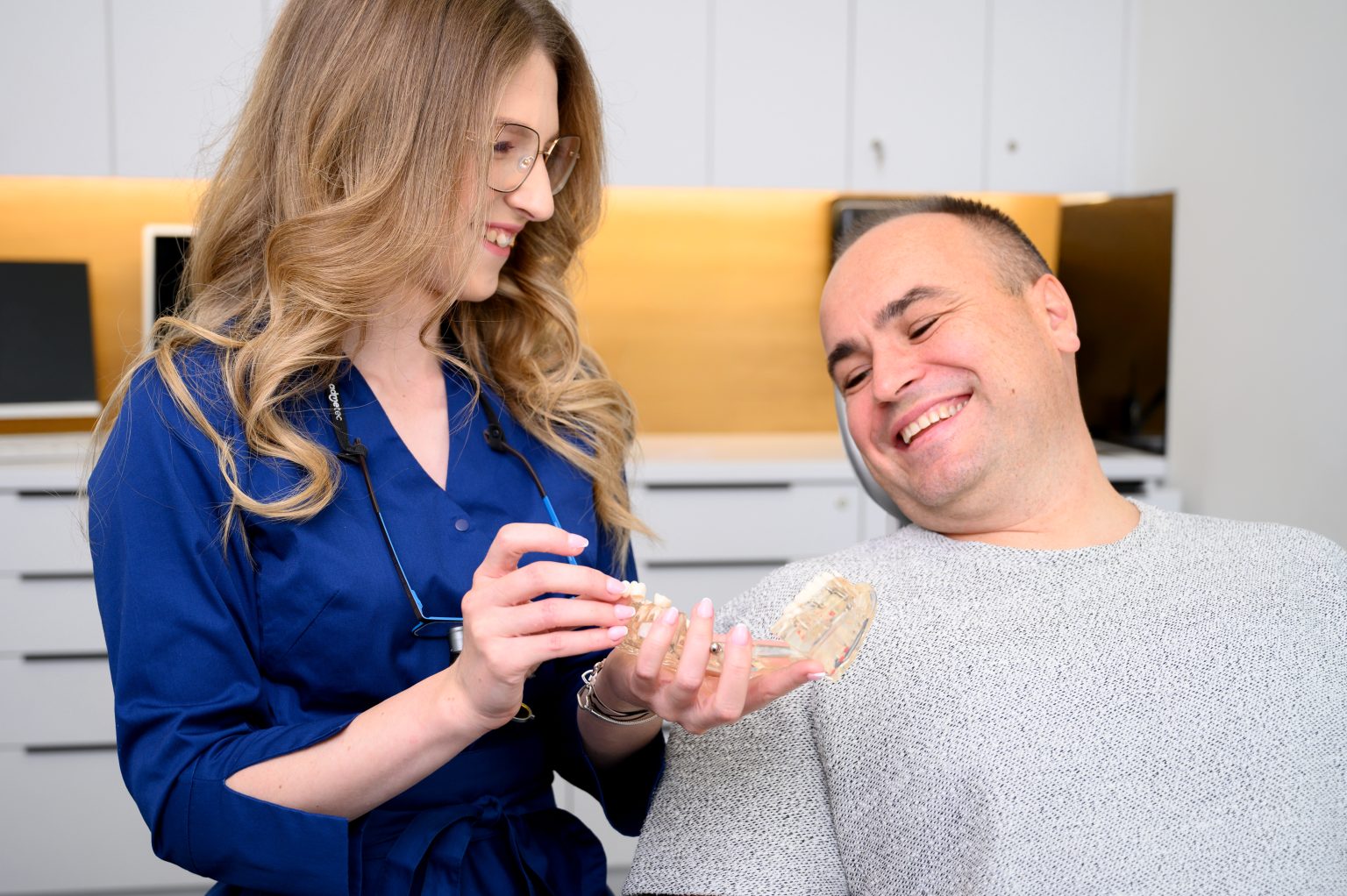
A dental assessment is the first step of almost every treatment. In the case of a simpler complaint it helps to decide whether a filling or tartar removal is enough. In more complex cases it lays the foundation for an implant, dental restoration, root canal treatment, orthodontics or full-mouth rehabilitation.
If you would like an implant, during the examination we check the site of the missing tooth, the bone, the bite, and whether a CBCT scan or bone grafting may be needed. If you are planning a crown or bridge, it is important to assess the condition of the existing teeth, the abutment teeth, the bite and the aesthetic zone. If recurring pain or inflammation around a root-treated tooth arises, a targeted X-ray or CBCT can help with the accurate diagnosis.
We have collected the questions and answers that come up most often about the dental assessment and diagnostic examinations.
 Professionally reviewed by Dr. Júlia Molnár Prosthodontist, digital dentistry, conservative dentistry
A full dental assessment and consultation usually takes 30–45 minutes. During this time the mouth is examined, including checking the teeth, gums and bite, and oral cancer screening. If needed, a digital panoramic X-ray or a 3D CBCT scan is also taken.
On the basis of the dental examinations we prepare a personalised treatment plan, present it and go through it with the patient. At PureDental the aim of every consultation is an accurate diagnosis and a long-lasting, durable solution, with personal attention and full information, so that you can make a confident decision.
No. The clinical examination is completely painless and does not require anaesthesia. The dentist examines with a mirror and a probe, and palpates the face and neck. When measuring the gum pockets, mild, passing sensitivity may occur if the gum is inflamed. This itself is an important sign for the dentist. If any area is sensitive, just tell us and we will continue more gently.
No special preparation is needed. It is worth brushing your teeth and bringing a few things with you, because they make the examination more accurate:
Please let us know if you are pregnant or suspect that you may be. It is also worth thinking through in advance what complaints you have and what you would like from the treatment.
During oral cancer screening (stomato-oncological examination) the dentist looks at and palpates the face, neck and lymph nodes. Then they examine the lips, the mucosa of the cheeks, the palate, the gums and the tongue. They look for early signs of tumours and the changes that precede them. The examination takes a few minutes and does not hurt at all. At our clinic it is part of the assessment, at no extra charge.
The first consultation and the clinical assessment, including oral cancer screening, are free of charge at our clinic. If an imaging scan is also needed during the examination, we tell you its fee in advance and only take it with your consent. You can find the current prices in our price list.
At PureDental you will find a solution for every dental problem, whether it is prevention, aesthetic improvement or complex rehabilitation. Our treatments include:
Every treatment is preceded by a personalised assessment and precise diagnostics, so you can be sure that the recommended procedures are tailored exactly to your needs and condition.
The most important criteria: