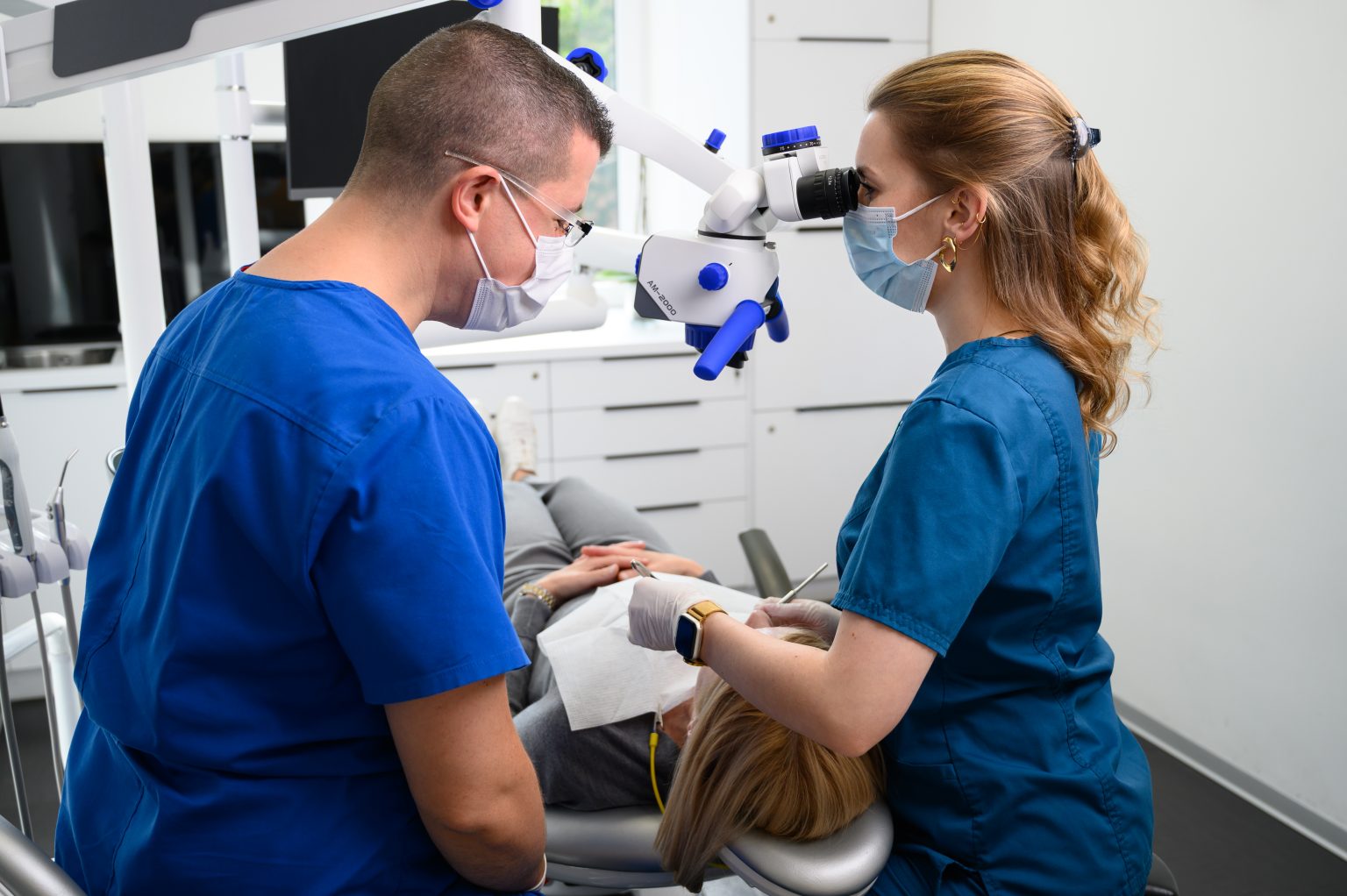
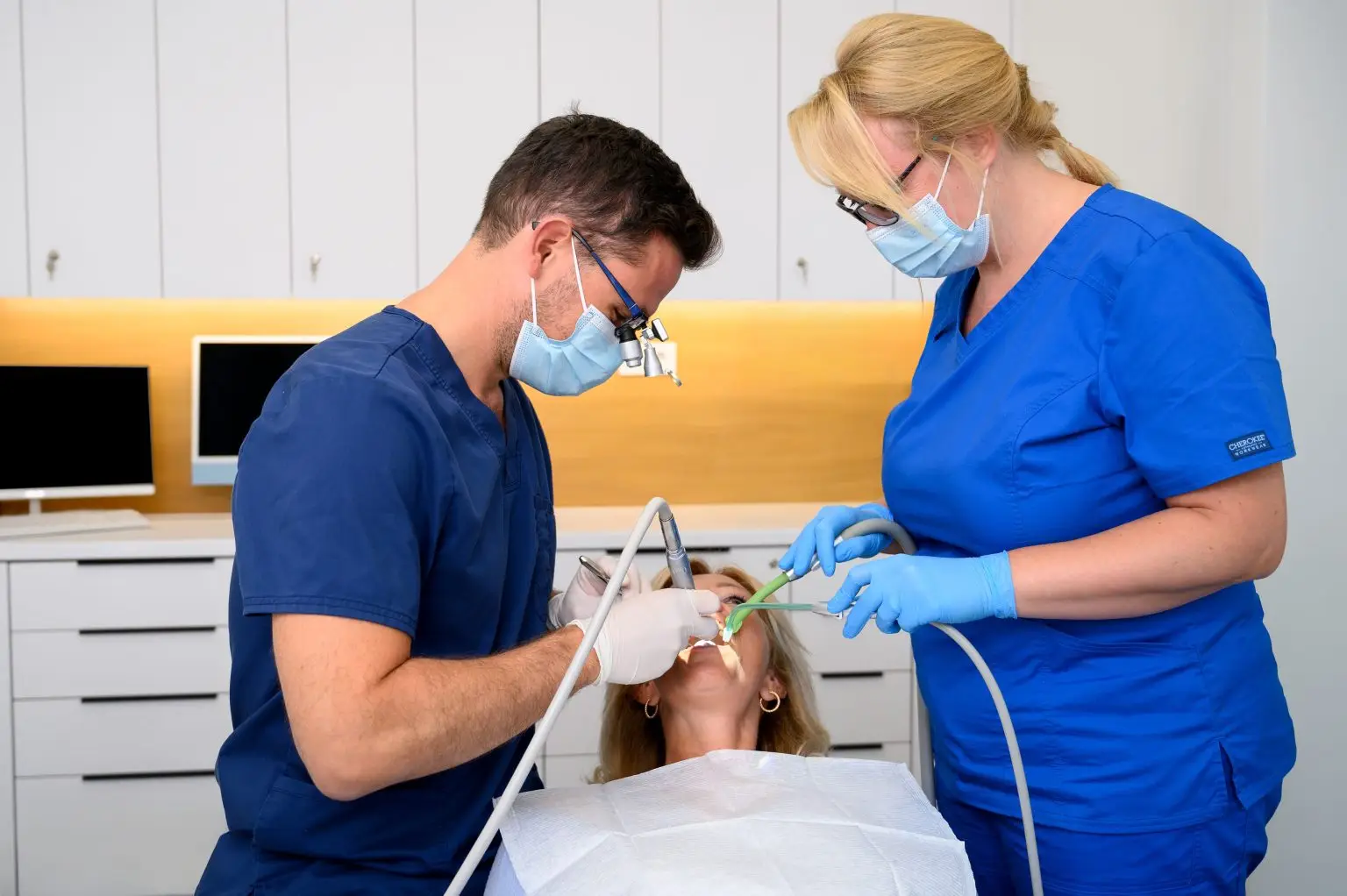
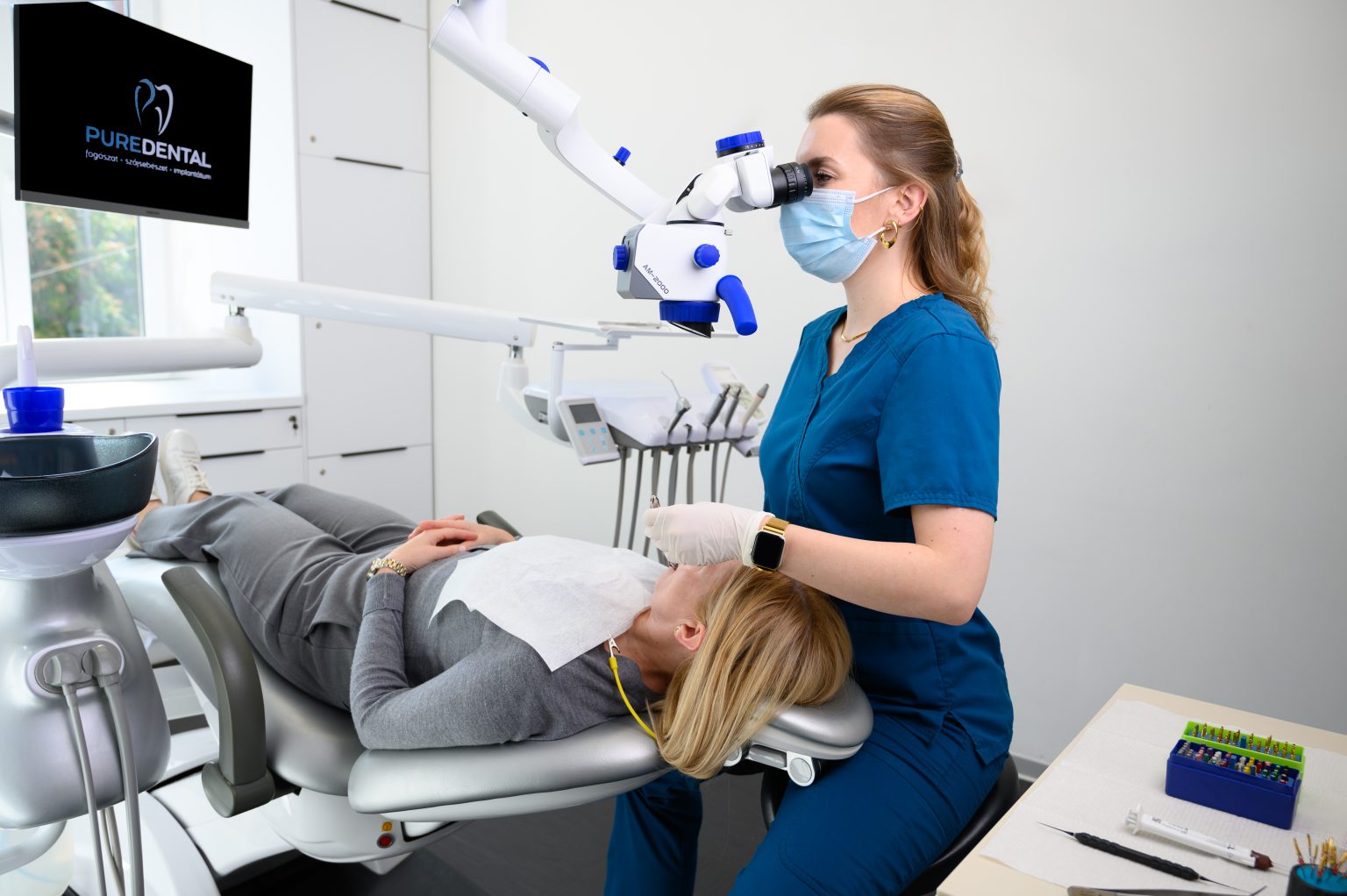
A dentist treating a tooth under a microscope at the PureDental clinic in Budapest
20×magnificationunder the microscope
Rubber dam isolationa cleaner working field
Tooth preservation · District II

Microscopic root canal treatment

At our clinic, microscopic precision is not a luxury but standard equipment

The aim of microscopic root canal treatment is to save an inflamed, infected or dead tooth wherever possible and avoid an extraction. During treatment we work under magnification, so the inner structure of the tooth, the entrances of the root canals, their course and any branches are far more clearly visible than with the naked eye.

At the PureDental clinic in District II we carry out root canal treatments with microscopic magnification, rubber dam isolation, modern machine-driven canal preparation and a personalised treatment plan. Our goal is to keep your own tooth as gently, safely and durably as possible.

  • Microscopic magnification for a more precise diagnosis and treatment
  • Rubber dam isolation for a safer, cleaner working field
  • Machine-driven root canal preparation with modern nickel-titanium instruments
  • Painless treatment with modern local anaesthesia
  • Treating hidden, narrow or branching root canals
  • An approach that aims to keep your own tooth
  • Now with a discount package
  • Consultation and treatment plan
  • Precise, microscopic accuracy in every treatment
  • A completely painless procedure with modern anaesthesia
At a glance

In brief: what is microscopic root canal treatment?

Microscopic root canal treatment is a precise tooth-preserving treatment in which the dentist cleans, disinfects and seals the root canals under magnification. It may be needed when the nerve or blood vessels inside the tooth are inflamed, dead or infected, or when inflammation has developed around the root tip.

The microscope helps to detect details that can easily stay hidden to the naked eye: extra root canals, narrowed canal entrances, obstructions left from an earlier treatment, a suspected crack, or the cause of a failed earlier root canal treatment.

Put simply: the aim of microscopic root canal treatment is not only to stop the pain, but to save the tooth as precisely and cleanly as possible, in a way that can be planned for the long term.

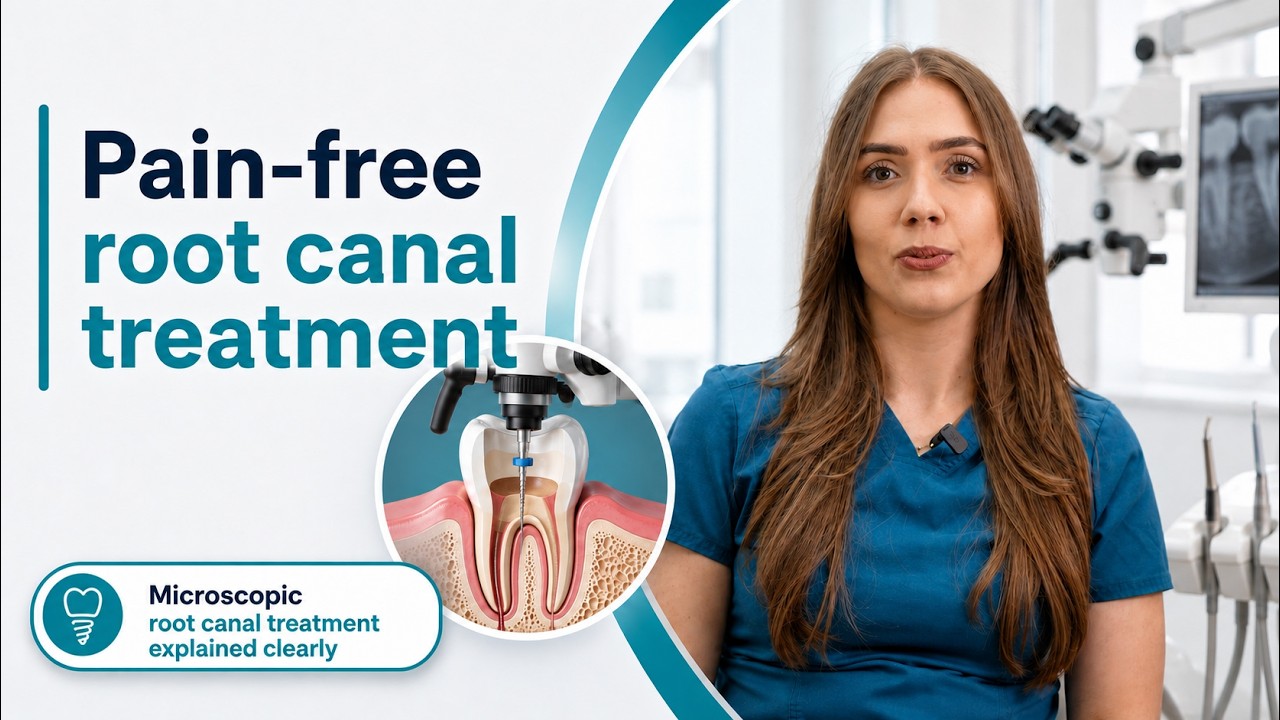
Video · 2:38

Microscopic root canal treatment – how we save your teeth

In this video we show how microscopic root canal treatment works at PureDental, step by step: from 3D CBCT diagnostics through cleaning and disinfecting the canals to the final reinforcement of the tooth.

A dentist and assistant working next to a microscope during a patient's treatment
The essence of the treatment

What is microscopic root canal treatment?

During root canal treatment we remove the inflamed or dead nerve tissue from inside the tooth, then clean and disinfect the root canals and seal them with a root filling. This is needed when inflammation or infection of the pulp can no longer be treated with a simple filling.

Microscopic root canal treatment differs from the traditional procedure in that we work under magnification and strong illumination. This is especially important because root canals are often very thin, curved, calcified or branched.

With the microscope the inside of the tooth can be seen at up to 20x magnification, so much more precisely:

  • the entrances of the root canals,
  • narrow or calcified canals,
  • extra canals,
  • remnants of an earlier root filling,
  • a broken instrument or obstruction in the canal,
  • a suspected crack or structural abnormality,
  • the individual anatomy inside the tooth.

The aim of the treatment is to eliminate the infection, seal the root canals and keep your own tooth in the long term.

We work with an outstanding success rate: precise access minimises the risk of reinfection.

Painless treatment thanks to our modern anaesthesia methods.

Free six-month and annual check-ups, because with complete aftercare the tooth can be preserved for decades.

Free first-year check-up CT scan: you can count on us after recovery too; we provide a free CT scan with the first-year check-up.

Microscopic or traditional root canal treatment: what is the difference?

Traditional method

Root canals are often thinner than a hair, curved and branching, and they lie deep in the tooth, in the dark. In traditional root canal treatment the dentist works with the naked eye or with loupes, so part of the canals is treated more by feel and on the basis of X-rays than by sight.

Microscopic method

The microscope provides strong, direct illumination and many times magnification. This way the dentist actually sees the entrance and walls of the canals. As a result, things that stay hidden to the naked eye are noticed:

  • hidden, extra root canals
  • for example the common fourth canal of the upper molars,
  • calcified, narrowed canal entrances,
  • hairline cracks running through the tooth, which can be the real cause of the complaint,
  • pieces of a broken instrument left behind from an earlier treatment.
  • remnants of an old root filling,
  • the cause of a failed earlier root canal treatment.

Bacteria can remain in a canal that was missed or not disinfected properly, and the inflammation returns months or years later. This is one of the most common causes of failed root canal treatments. Microscopic treatment can reduce this risk, especially in molars, retreatments and complex canal systems.

Technology

Machine-driven and microscopic root canal treatment: not the same, but they complement each other well

Machine-driven root canal treatment

  • Nickel-titanium instruments
  • Cleaning and shaping

Many people search for modern root canal procedures under the name “machine-driven root canal treatment”. This refers to the flexible, rotary nickel-titanium instruments used to clean and shape the root canals. They can help make the preparation of the canals more precise, even and controlled.

Microscopic root canal treatment

  • Magnification
  • Diagnostic accuracy

Microscopic root canal treatment, by contrast, improves vision and diagnostic accuracy: under magnification the inner structure of the tooth and the entrances of the canals are easier to see.

The two technologies are therefore not alternatives to each other. At PureDental we use microscopic magnification and modern machine-driven canal preparation together whenever the condition of the tooth and the treatment plan call for it.

Root canal treatment and root filling: not the same

Patients often use the terms “root canal treatment” and “root filling” interchangeably, but they do not mean the same thing.

Root canal treatment

  • The whole process

Root canal treatment means the whole process: removing the inflamed or dead pulp, opening, cleaning, disinfecting, shaping and sealing the root canals.

Root filling

  • One of the last steps

The root filling is one of the last steps of this process. Here the cleaned and prepared root canals are sealed with a special root filling material to reduce the chance of reinfection.

Final restoration

  • Filling, inlay, post, crown

After the root filling comes the final restoration of the tooth. This can be an aesthetic filling, an inlay/onlay, a fibreglass post build-up or a crown, depending on how much of your own tooth structure is left.

Discount package

Microscopic root canal treatment now with a discount package

In our clinic’s view, preserving teeth is of paramount importance. That is why, during microscopic root canal treatment, we focus not only on precise, high-standard care but also on full support for our patients.

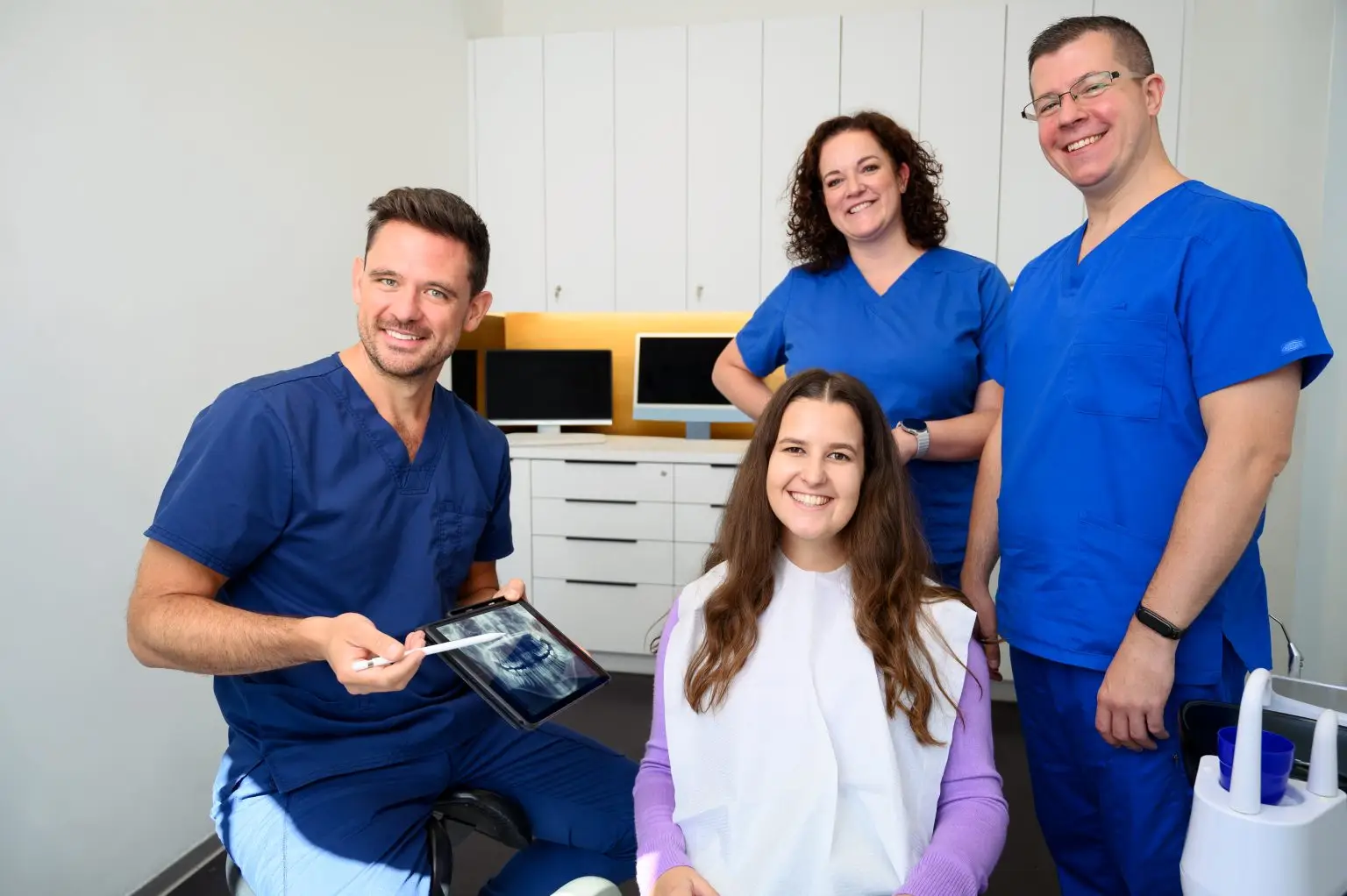
A dentist shows an X-ray to a patient on a tablet, with the clinic team beside them
Who is it recommended for?

When do we recommend microscopic root canal treatment?

Microscopic root canal treatment can be a good choice for those who want to save their own tooth and are looking for precise, thorough treatment that can be planned for the long term for an inflamed, dead or previously unsuccessfully treated tooth.

It may be especially recommended if you:
  • suffer from severe or recurring toothache,
  • have a tooth that is sensitive to cold, heat or biting,
  • have throbbing pain that also occurs at night,
  • have inflammation around the root tip visible on an X-ray or CBCT scan,
  • had an earlier root canal treatment that was unsuccessful,
  • have a root-treated tooth that is causing problems again,
  • have complex, curved, narrow or branching root canals,
  • a hidden canal, a broken instrument or an earlier root filling needs to be removed,
  • a dental focus examination has raised the suspicion of a tooth-related inflammation.

Microscopic root canal treatment may be justified even if the tooth does not hurt, when inflammation is visible around the root tip on an X-ray or CBCT scan. Symptom-free inflammation may also need treatment, because over time it can cause pain, swelling or a cyst around the root tip. Such symptom-free inflammation can also cause complaints in other parts of the body as a dental focus, so treating it is important even if the tooth itself causes no complaints.

Accurate diagnosis

When is a root canal treatment not necessarily needed?

Not every toothache automatically means a root canal treatment. An accurate diagnosis is especially important, because similar complaints can also be caused by deep decay, a cracked filling, a filling or crown that is too high, gum disease, gum-related inflammation, a sinus problem or even pain originating from the jaw joint.

Before a root canal treatment we therefore always decide on the basis of an examination, sensitivity tests and, where needed, an X-ray or CBCT scan.

If the pulp can still be preserved, in some cases a deep filling, a lining or another tooth-preserving treatment may be enough. If, however, the pulp is irreversibly inflamed or dead, root canal treatment can be the most important step in saving the tooth.

The course of treatment

Course of microscopic root canal treatment: step by step

Root canal treatment sounds frightening to many people, yet with modern anaesthesia, microscopic magnification, rubber dam isolation and modern instruments it can today be carried out far more precisely and comfortably than many patients imagine.

In brief

The aim of the treatment is to remove the inflamed or dead nerve tissue, disinfect and seal the root canals and preserve the tooth in the long term.

The dentist explains the result of the examination to the patient before the root canal treatment
1–3step

Diagnosis, anaesthesia and isolation

1.Examination and diagnosis

The first step of treatment is an accurate diagnosis. We examine the tooth, the surrounding gum, the bite and any existing fillings or crowns, and then, if needed, take an X-ray or a CBCT scan.

The aim is to decide whether root canal treatment is really needed, whether the tooth can be saved, and which treatment strategy can give a safe result in the long term.

2.Anaesthesia

We carry out root canal treatment under local anaesthesia, so the patient feels no sharp pain during treatment. With a heavily inflamed tooth the anaesthetic may take longer to work; in that case we use additional anaesthesia.

We only start the treatment when the tooth is properly numb.

3.Rubber dam isolation

We isolate the tooth being treated with a rubber dam. This is a thin, flexible rubber sheet that separates the tooth from the rest of the mouth.

The rubber dam is important for several reasons:

  • it keeps the treatment area dry,
  • it reduces the chance of bacterial contamination from saliva,
  • it protects the mouth from disinfecting solutions,
  • it prevents small instruments from being accidentally swallowed or inhaled,
  • it makes the treatment more comfortable and controlled.

In root canal treatment, rubber dam isolation is one of the basic elements of modern, safe endodontic care.

A dentist and assistant working on a patient's tooth during root canal treatment
4–6step

Access, cleaning and disinfection

4.Removing the inflamed or dead tissue

The dentist opens the tooth and removes the inflamed or dead pulp. With the help of the microscope, the entrances of the root canals are located, including narrow, calcified or extra canals that can easily stay hidden to the naked eye.

This step is especially important for molars and previously treated teeth.

5.Cleaning and disinfecting the root canals

We clean, shape and disinfect the root canals with manual and machine-driven instruments. The aim is to remove infected tissue remnants from the canal system and reduce the number of bacteria.

Irrigating and disinfecting the canals is one of the most important parts of the treatment, because the success of a root canal treatment depends to a great extent on how well the whole canal system can be cleaned.

6.Temporary medicated seal, if needed

Not every tooth can be sealed permanently at the first visit. In case of heavy inflammation, discharge, swelling or an earlier unsuccessful root canal treatment, a temporary medicated material may be placed in the canals and the tooth sealed with a temporary filling.

This helps reduce the inflammation and further disinfect the canals until the next visit.

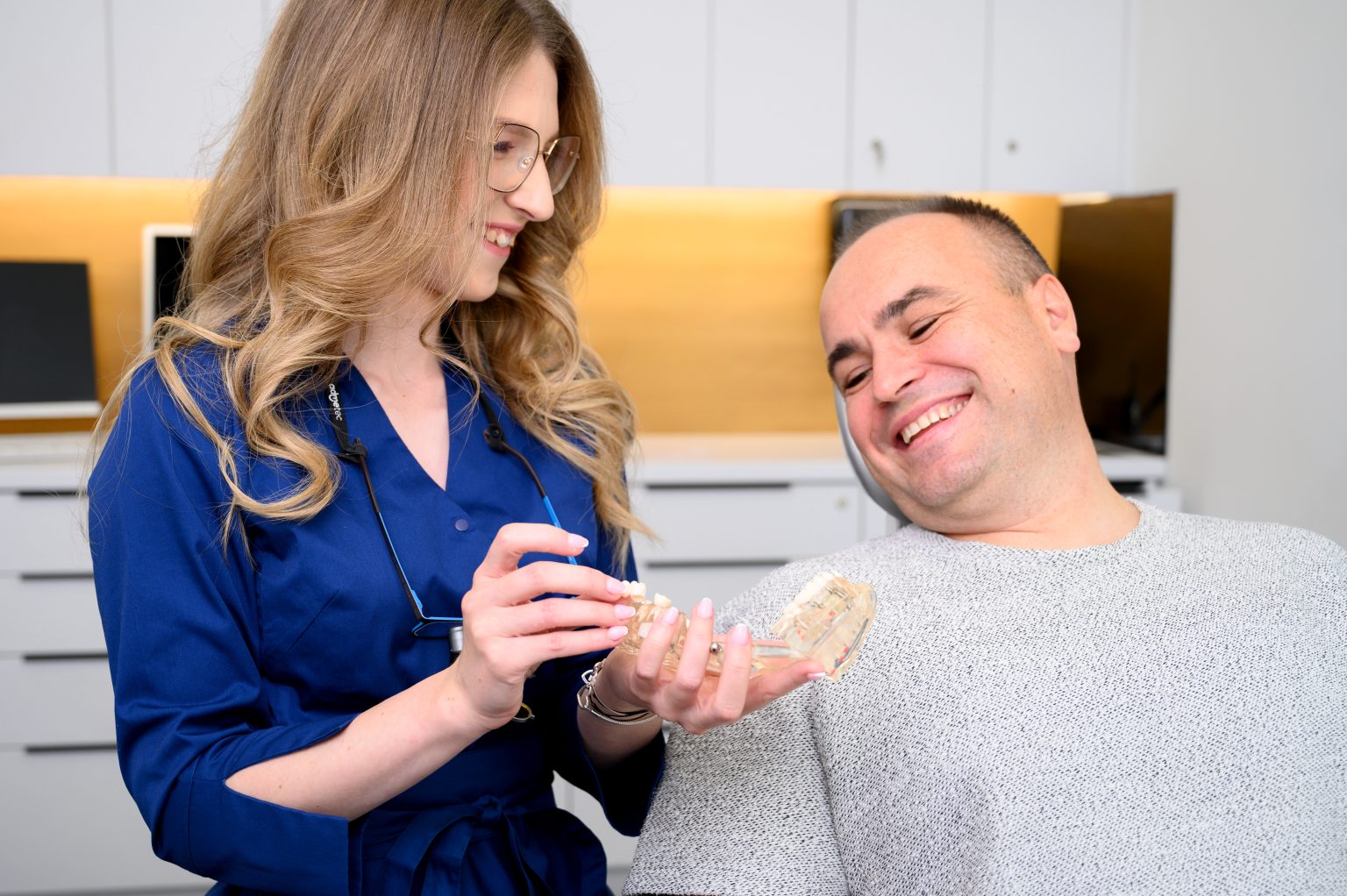
A dentist shows a tooth model to the patient to explain the final restoration of the tooth
7–8step

Root filling and final restoration of the tooth

7.Final root filling

When the tooth is symptom-free and the canals are clean and dry, we place the final root filling. We seal the root canals with a special root filling material to reduce the risk of reinfection.

After the root filling we can check its length and quality with a control X-ray.

8.Final restoration of the tooth

After treatment a root-treated tooth is often weakened, especially if it was previously affected by large decay, a large filling or a fracture. That is why the tooth needs to be permanently rebuilt after the root filling.

The final restoration can be:

  • an aesthetic filling,
  • an inlay, onlay or overlay,
  • a fibreglass post build-up,
  • a dental crown.

For back teeth exposed to heavy chewing forces, a crown or an inlay is often recommended, because these can better protect the weakened tooth walls from fracture.

Number of visits

How many visits are needed for microscopic root canal treatment?

The number of visits needed depends on the type of tooth, the number of root canals, the extent of the infection and whether it is a first root canal treatment or a retreatment.

In general:
  • for simpler, single-canal teeth one visit may be enough in some cases,
  • premolars often need one or two visits,
  • molars, multiple canals or heavy inflammation may typically require two to three visits,
  • retreating an earlier unsuccessful root canal treatment is often a longer, more complex process.

The aim is not for the treatment to be as fast as possible, but for the canal system to be thoroughly cleaned, disinfected and safely sealed.

A man suffering from toothache holds his cheek while brushing his teeth
Honestly about the pain

Pain and healing: what to expect during and after treatment?

Many people fear root canal treatment mainly because of the pain. In reality the treatment is exactly what stops the pain caused by the inflamed nerve. Below we honestly summarise what you may feel during treatment and in the days afterwards.

Does microscopic root canal treatment itself hurt?

No. We carry out the treatment under local anaesthesia, so you feel no pain during the procedure. What you may feel is pressure, the gentle vibration of the instruments, and that you have to keep your mouth open for a longer time. We isolate the tooth being treated with a rubber dam, a thin rubber sheet. This protects your mouth from the cleaning fluids and makes the treatment more comfortable.

With a heavily inflamed tooth it can happen that the anaesthetic takes longer to work. In that case we give additional anaesthesia and only start work when the tooth is completely numb. If you feel anything during treatment, let us know and we stop immediately.

What to expect after treatment? How long can sensitivity last?

The anaesthetic wears off within 2–4 hours. Do not eat until then, so that you do not bite your lip or tongue. In the days after treatment the tooth may be sensitive, especially when biting or tapping. This is normal: the tissues around the tooth heal after the procedure.

  1. The first 2–3 days: mild or moderate sensitivity that can be managed well with an over-the-counter painkiller. Your dentist will tell you which one they recommend.
  2. Within a week: the sensitivity gradually disappears. If there was heavy inflammation or an abscess before the root canal treatment, this may take somewhat longer.
  3. While there is a temporary filling in the tooth: avoid hard, sticky foods on the treated side, because the tooth is still weaker and the temporary filling may come out.

When should you see a doctor if you have a problem after treatment?

Please call us if you notice any of the following:

  • the pain does not ease after the third day but gets worse,
  • swelling appears, or an existing swelling grows,
  • you have a fever or feel unwell,
  • the temporary filling has come out or cracked,
  • when biting, the treated tooth feels “higher” than the others,
  • you notice a rash, itching or another allergic symptom after a prescribed medicine.

Most of these can be resolved quickly and simply. In an urgent case you can also request an emergency appointment. A check-up for a complaint during the healing period is part of the discount package.

Transparent prices

How much does microscopic root canal treatment cost?

The price of microscopic root canal treatment depends on several factors: which tooth needs treatment, how many root canals it has, whether it is a first treatment or a retreatment, whether a CBCT scan is needed, and what final restoration will be needed after the root filling.

An incisor or canine usually has one root canal, a premolar one or two, and a molar often three or four. The more canals there are, the more curved or narrow their course, and the more complex the infection, the more time and precision the treatment requires.

Tooth type (number of canals)Microscopic root canal treatmentMicroscopic root filling
Incisor, canine (1 canal)€225€214
Premolar (1-2 canals)€256€225
Molar (3-4 canals)€289€268
Full price range · Microscopic root canal treatment€214 - €289

Indicative prices (according to the price list): incisor, canine: microscopic root canal treatment €225, microscopic root filling €214; premolar: microscopic root canal treatment €256, microscopic root filling €225; molar: microscopic root canal treatment €289, microscopic root filling €268. We give the exact amount in a written quote based on the examination and treatment plan.

The price of root canal treatment generally does not include the final restoration of the tooth. The final restoration can be a filling, an inlay/onlay, a fibreglass post build-up or a crown. We list these as separate items in the treatment plan.

At PureDental every patient receives a personalised treatment plan and a detailed quote after the consultation, with no hidden costs.

We accept health fund cards and give our pensioner patients a 10% discount. → Find our prices in detail here

Honest information

When is root canal treatment not enough?

The success rate of microscopic root canal treatment is high, but there are situations where it is not enough on its own, or is not the best solution. We always inform you honestly about these during the consultation.

If root canal treatment is not successful: root-end removal (resection)

It sometimes happens that inflammation remains around the root tip even after a carefully performed root canal treatment. The cause may be an extremely branched canal system, a cyst, or a crown or post that cannot be removed for retreatment without damaging the tooth.

In such cases root-end removal, i.e. apicoectomy (resection) may come into question. This is a minor oral surgery procedure carried out under local anaesthesia. Through the gum we remove the inflamed tip of the root and the diseased tissue around it, then seal the root from below as well. This way the tooth can be saved and does not have to be extracted. We decide whether retreatment or resection is needed on the basis of a 3D CBCT scan.

Root canal treatment or extraction: when is it worth saving the tooth?

If a tooth is inflamed, the question is natural: isn’t it simpler to extract it? Keeping your own tooth is almost always the better choice if the tooth can be saved. Your own tooth is naturally anchored in the bone, feels the force of biting and keeps the bone around it. Where a tooth is extracted, the bone begins to shrink, neighbouring teeth may shift, and the gap later has to be replaced.

Root canal treatment and a crown together generally cost less than an extraction, an implant and the crown placed on it. So if the tooth can be saved, we recommend root canal treatment in most cases.

When can extraction still be the better decision?

  • if the root has cracked lengthwise,
  • if so little of the tooth is left that it cannot be rebuilt stably,
  • if, because of advanced gum disease, there is very little bone left around the tooth,
  • if the inflammation returns even after an earlier root canal treatment and resection.

In such cases a gentle tooth extraction, followed by replacing the gap, is the safe path. We always make the decision together, on the basis of the examination and the images, talking through the advantages and disadvantages of the options.

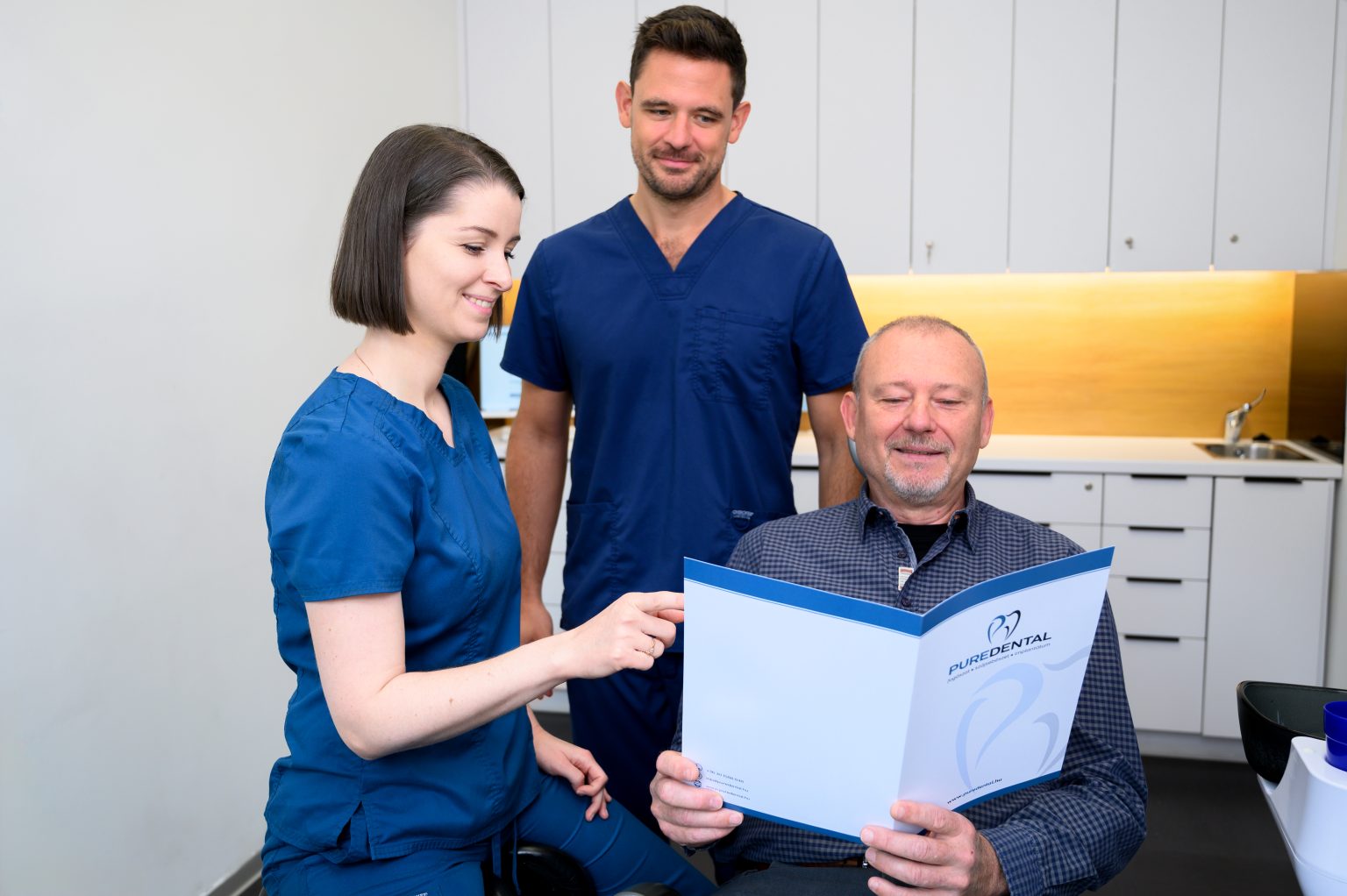
A dentist and patient discussing the options for rebuilding the tooth after root canal treatment
After treatment

A fully functional, strong and durable tooth after root canal treatment

Root canal treatment in itself serves to eliminate the inflammation and seal the root canals. For the tooth to function well in the long term, a proper final restoration is needed after the root canal treatment.

A root-treated tooth often involves greater loss of tooth structure than a tooth with a simple filling. That is why it is important that the final restoration is not only aesthetic but also protects the tooth from fracture.

Aesthetic filling

With smaller loss of tooth structure, the root-treated tooth can also be rebuilt with an aesthetic, tooth-coloured filling. This can be suitable if enough of your own tooth structure is left and the tooth is not under excessive chewing load.

Read more: Aesthetic fillings – PureDental

Inlay, onlay or overlay

With greater loss of tooth structure, an inlay, onlay or overlay may be justified. These are precisely fitting tooth inserts made in a laboratory, which can help restore the root-treated tooth in a more stable and durable way.

Read more: Inlay, onlay, overlay – PureDental

Dental crown

For root-treated back teeth exposed to heavy chewing forces, and in case of significant loss of tooth structure, a crown is often recommended. The crown surrounds and protects the tooth, so it can reduce the risk of fracture and give a more stable solution in the long term.

Read more: Dental crowns and bridges – PureDental

Questions and answers

Frequently asked questions

We have collected the questions patients ask most often about microscopic root canal treatment, root fillings, retreatment and the final restoration of a root-treated tooth.

Dr. Bíborka Csegöldi Content reviewed by: Dr. Bíborka Csegöldi, aesthetic dentist, microscopic dentistry.

When is microscopic root canal treatment justified?

Microscopic root canal treatment may be justified if the pulp is inflamed or dead, inflammation is visible around the root tip, the tooth causes severe or recurring pain, or an earlier root canal treatment was unsuccessful.

It can be especially useful with narrow, curved, branching canals, extra root canals, a broken instrument, removal of an earlier root filling, or retreatment of a root canal treatment.

How many visits does root canal treatment need?

This depends on the type of tooth, the number of canals, the extent of the inflammation and the complexity of the treatment. In simpler cases one visit may be enough, while with molars, heavy infection or retreatment two or three visits are often needed.

The exact treatment plan can be determined on the basis of the examination and the images.

Why does a tooth need root canal treatment if it doesn’t even hurt?

A tooth can be dead or inflamed even if it causes no pain. Chronic inflammation around the root tip is often symptom-free and is only visible on an X-ray or CBCT scan.

In this case the aim of treatment is to eliminate the infection, prevent the inflammation from spreading and preserve the tooth. So being free of complaints does not always mean the tooth is healthy.

What happens to the tooth after root canal treatment?

After root canal treatment the root canals of the tooth are sealed. The tooth then has to be permanently rebuilt so that it can be used and loaded again.

How it is rebuilt depends on how much of your own tooth structure is left. With a smaller defect a filling may do; with a larger one an inlay, a fibreglass post or a crown may also be needed.

What are the signs that a root-treated tooth needs to be treated again?

A root-treated tooth can stay symptom-free for years, but inflammation can return later. Watch out for the following signs:

pain that returns, especially when biting or tapping,

a small, pimple-like swelling (fistula) on the gum near the tooth, from which fluid occasionally drains,

swelling of the gum or the face,

darkening or discolouration of the tooth,

a loosened or broken filling or crown, along which bacteria can enter the canal.

Often there are no symptoms at all, and the inflammation is only shown around the root tip by a control X-ray or CT scan. That is why regular check-ups are important. With us the first-year check-up CT is part of the discount package. Retreatment under the microscope can be carried out successfully in most cases.

How much does root canal treatment cost?

The price of root canal treatment depends on which tooth is treated, how many root canals it has, how complex the canal system is, whether it is a first treatment or a retreatment, and what final restoration will be needed.

We always give the exact price on the basis of the consultation and the treatment plan.

You can find our current prices here: PureDental price list

What additional treatments may be needed for root-treated teeth?

Root-treated teeth may need:

  • an aesthetic filling,
  • an inlay, onlay or overlay,
  • a fibreglass post build-up,
  • a dental crown,
  • internal whitening for a discoloured front tooth,
  • a control X-ray or CBCT scan.

The aim is for the root-treated tooth to be not only free of inflammation but also functionally and aesthetically stable to restore.

Does a fibreglass post really strengthen the tooth?

A fibreglass post does not “strengthen” the tooth by itself, but it can give a stable base for rebuilding the tooth if a significant part of the crown portion of the tooth is missing. It may be needed if the remaining tooth structure is not enough to hold a filling, inlay or crown securely.

It is important that a fibreglass post is an indication-based solution. Not every root-treated tooth needs a post, and a post does not replace a proper final restoration.

Can a root-treated tooth hurt later?

Yes, it can happen. A root-treated tooth can later become sensitive or painful if the inflammation returns, if a crack develops, if bacteria get in along the crown or filling, or if the tooth is overloaded.

In such cases an examination, an X-ray or a CBCT scan may be needed to find out whether retreatment, resection, bite correction or another solution is necessary.

Can a badly root-treated tooth be saved?

In many cases yes. One important area of microscopic root canal treatment is the retreatment of teeth that were previously treated unsuccessfully. In this case we remove the old root filling, find the missed or infected canals, clean the canal system and then place a new root filling.

The chance of success depends on how much tooth structure is left, whether there is a crack, what the bone around the root is like, and whether the earlier filling, post or obstruction can be removed safely.

When is a crown needed after root canal treatment?

A crown may be necessary after root canal treatment if a lot of your own tooth structure is missing, the tooth walls have weakened, there was a large filling in it, or the tooth is exposed to heavy chewing forces. This is especially common with back molars.

The purpose of the crown is to surround and protect the weakened tooth, reducing the risk of later fracture.

Consultation

Request an appointment for a consultation!

The aim of microscopic root canal treatment is to save your own tooth, eliminate the inflammation and restore the tooth in the long term. If you experience severe toothache, sensitivity to biting or recurring inflammation, or a tooth that was previously root-treated causes problems again, it is worth booking an examination as soon as possible.

At the PureDental clinic in District II we carry out root canal treatments with microscopic magnification, rubber dam isolation and a personalised treatment plan.

Call us, or book an appointment online!

  • Microscopic root canal treatment in Budapest, District II
  • Consultation and treatment plan
  • A treatment approach that aims to save your own tooth
  • A painless procedure with modern anaesthesia
  • Rubber dam isolation and modern root canal technology
  • Personalised treatment plan and a transparent quote
  • Final restoration of the tooth with a filling, inlay or crown
  • Hundreds of successful tooth-saving procedures at PureDental