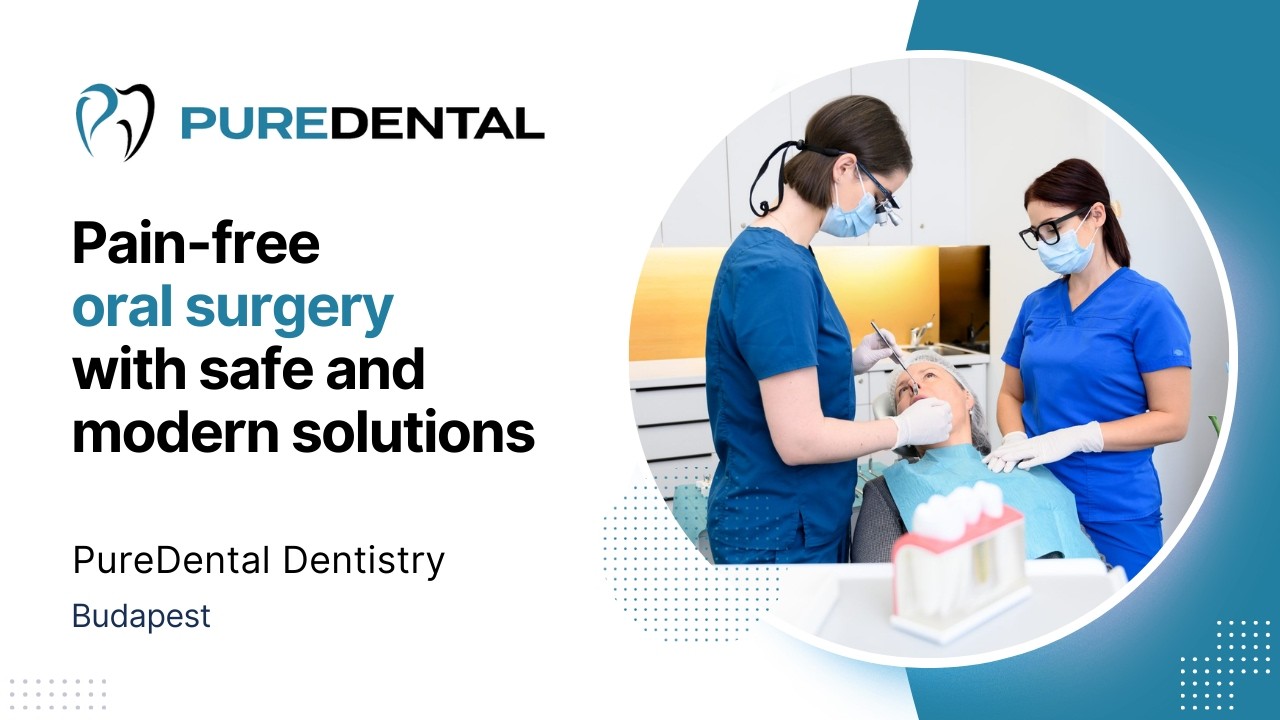
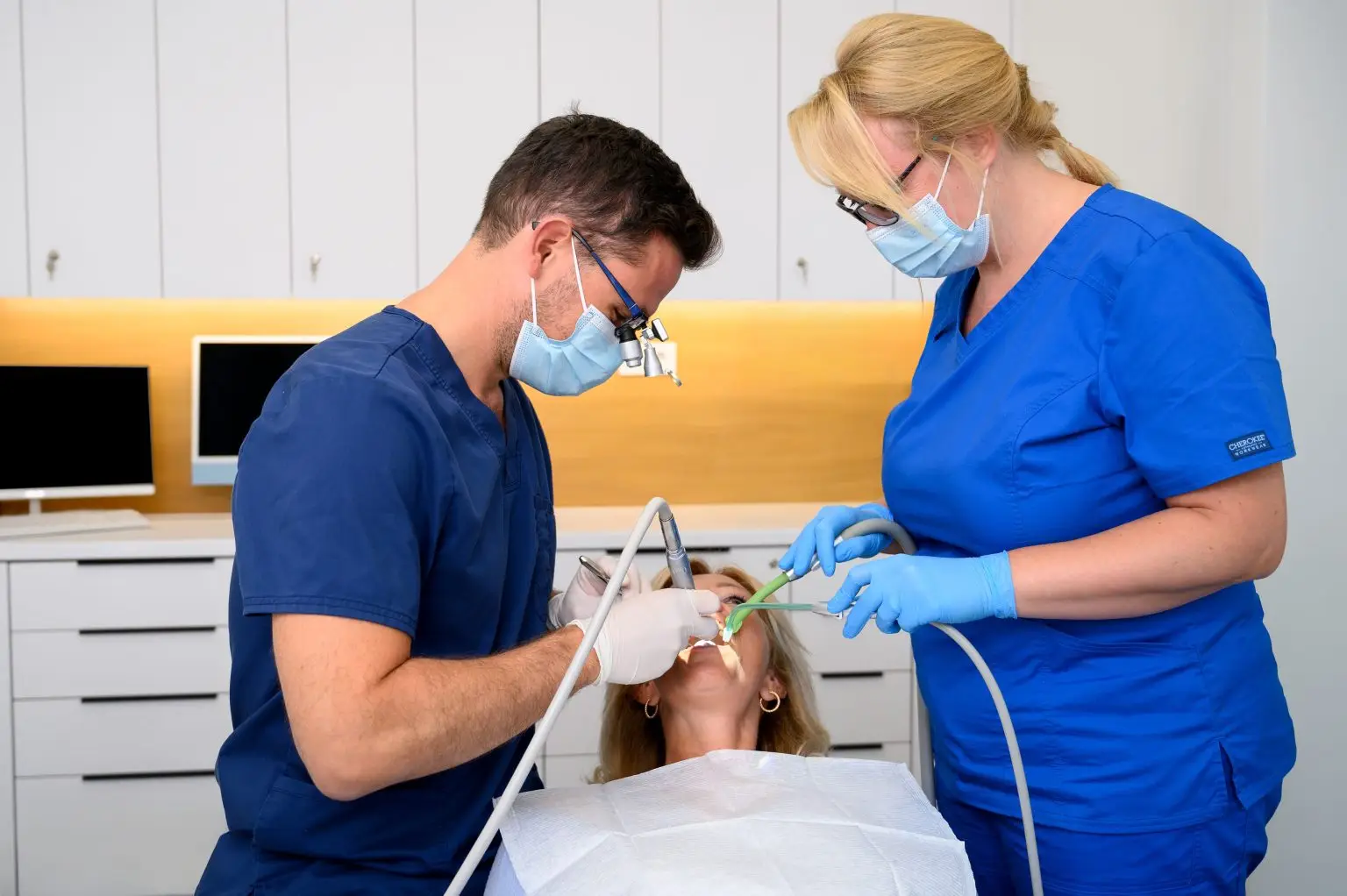
Oral surgery procedure at the PureDental clinic in Budapest
3DCBCT planningbefore every procedure
Pain-free treatmentwith modern anesthesia
Oral surgery

Oral surgery

Pain-free, safe oral surgery with fast healing

A problematic wisdom tooth, a stubborn root tip infection or a tooth that has to come out? At the PureDental oral surgery department we use modern diagnostics, modern anesthesia and empathetic specialists so that the procedure is gentle and healing is fast.

  • 3D CBCT-based digital planning
  • Pain-free treatment with the most modern anesthetics
  • Fast healing
  • Personalized aftercare
5stepsfrom consultation to follow-up, transparently
30–90minduration of the procedure, depending on type
7–10dayslater: free check-up and suture removal
3D CBCTbased digital planning in every case
The basics

What is oral surgery?

Oral surgery is the surgical specialty of dentistry that deals with the surgical treatment of the teeth, the oral cavity and the jawbones. It includes complicated tooth extraction, wisdom tooth removal, root tip removal (apicoectomy), the treatment of cysts, and preparation for dental implants (e.g. bone grafting, sinus lift).

Available at PureDental – specialist dentoalveolar surgeon

Training as a dentoalveolar surgery specialist means 3 years of specialist training after the dental degree.

Video · 2:18

Pain-free oral surgery. Get to know the process!

Many people fear oral surgery, yet with the right specialist background, modern technology and an attentive approach, treatment today can be a far calmer and more predictable experience.

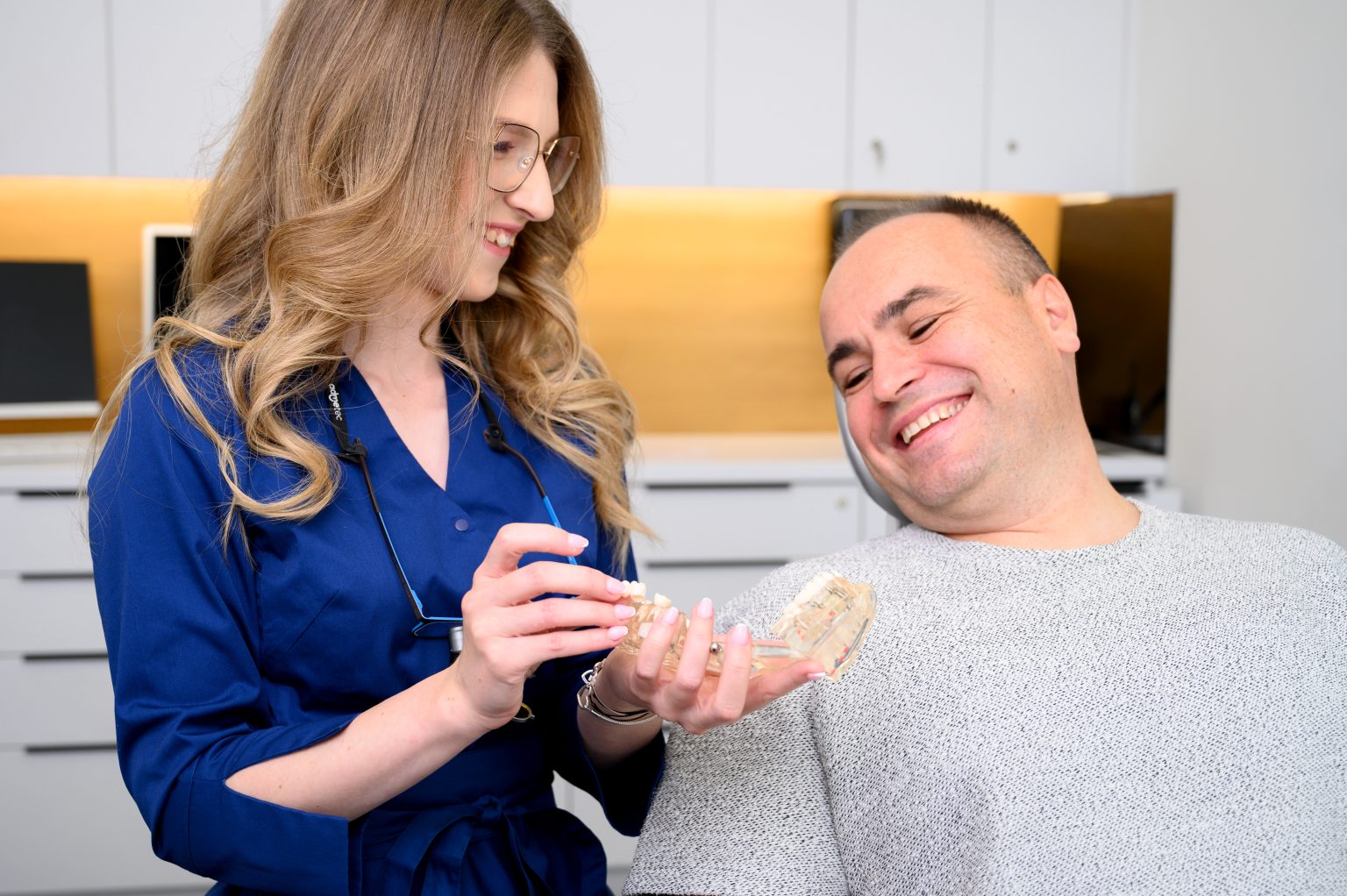
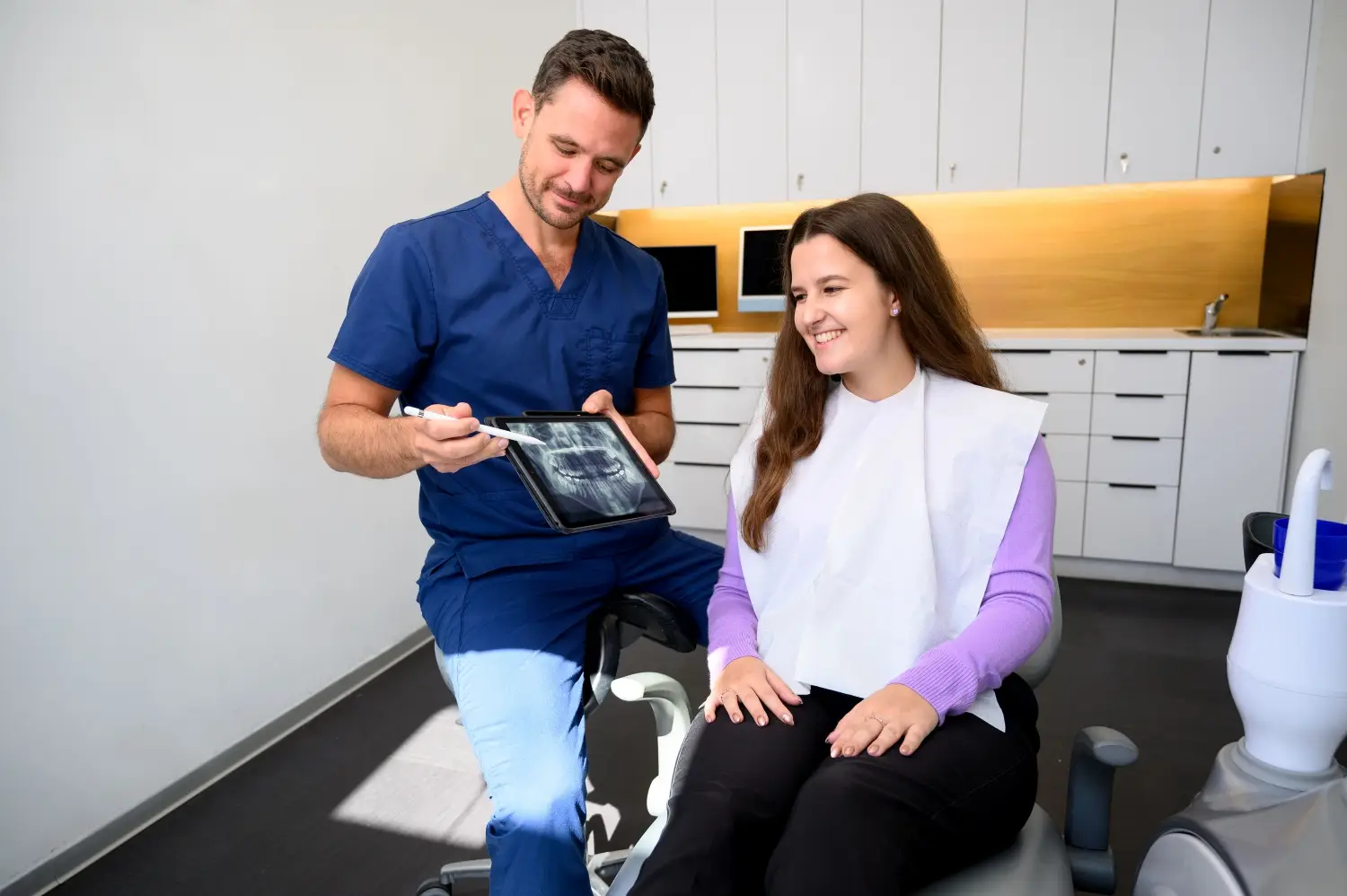
A dentist explains the course of an oral surgery procedure to the patient
When you need a specialist

When should you see an oral surgeon?

Usually your treating dentist refers you to an oral surgeon, but there are a few situations where it is worth asking for a specialist consultation straight away.

These are the most common reasons:
  • Problematic wisdom tooth – if it grows at an angle, has only partly erupted, the gum around it repeatedly becomes inflamed, or it presses on the neighbouring tooth.
  • Complicated tooth extraction – if the crown of the tooth has broken off, the root has stayed in the bone, or the tooth lies close to the nerve canal. Forceps alone are not enough then; a surgical approach is needed.
  • Infection or abscess that does not go away – persistent throbbing pain, facial swelling, gum swelling, a bad taste in the mouth, possibly fever.
  • Recurring root tip infection after unsuccessful root canal treatment – surgical removal of the infected root tip (apicoectomy) may save the tooth.
  • Cyst or other change – a shadow seen on an X-ray, or a lump or tissue growth on the oral mucosa that does not go away.
  • Preparing for a dental implant – if there is not enough bone for the implant, bone grafting or a sinus lift is needed.

When is it urgent? If swelling from an infection spreads towards the neck or the eye socket, if you have trouble swallowing or opening your mouth, or if you have a fever – this cannot wait for the next free appointment. Call us directly; during opening hours we do our best to give you an appointment out of turn. → Emergency dentistry

How the procedure works

How does an oral surgery procedure work?

In brief

An oral surgery procedure takes place in 5 clearly separated steps, from the consultation to the follow-up check – transparently and within a predictable timeframe.

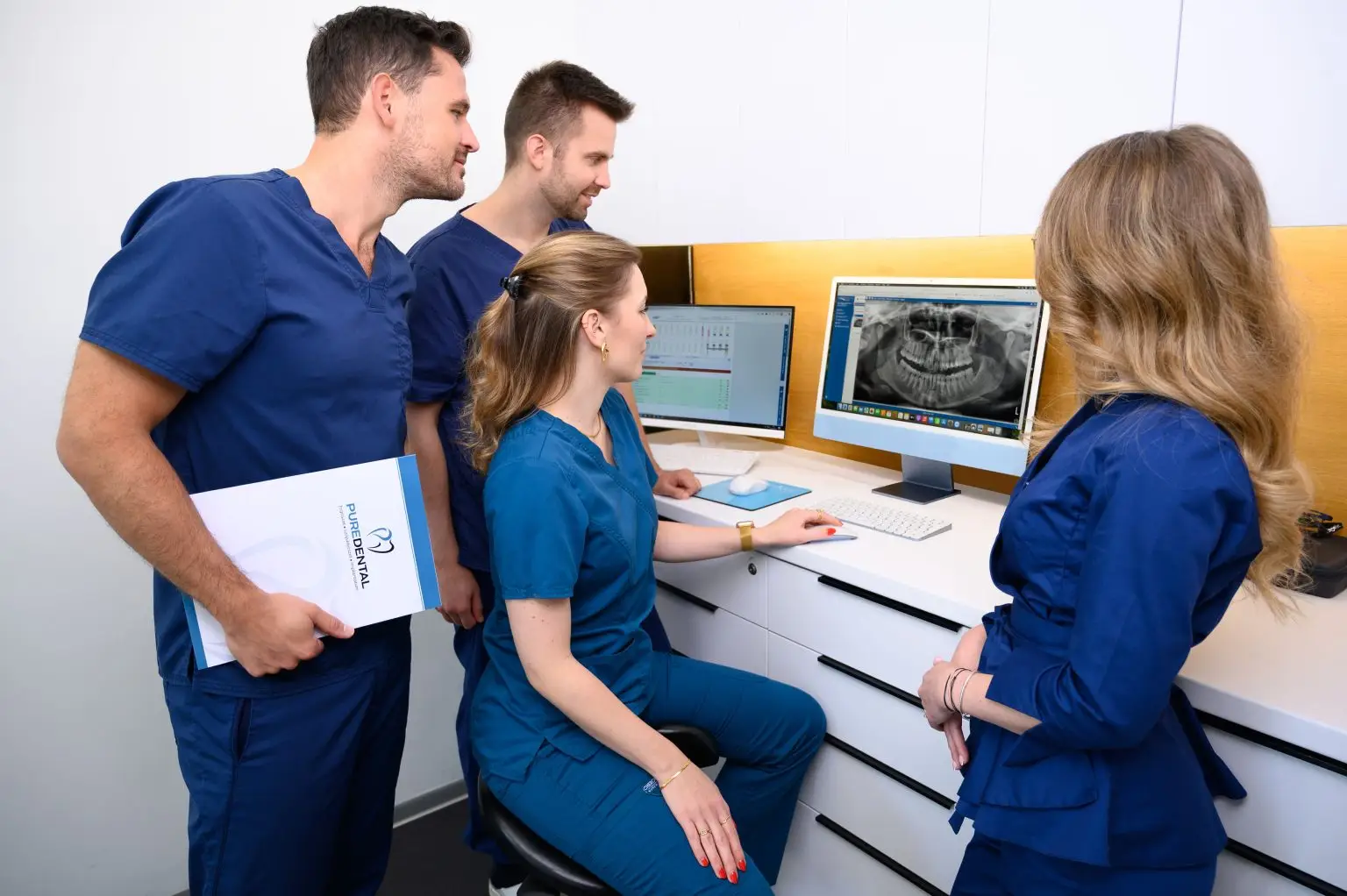
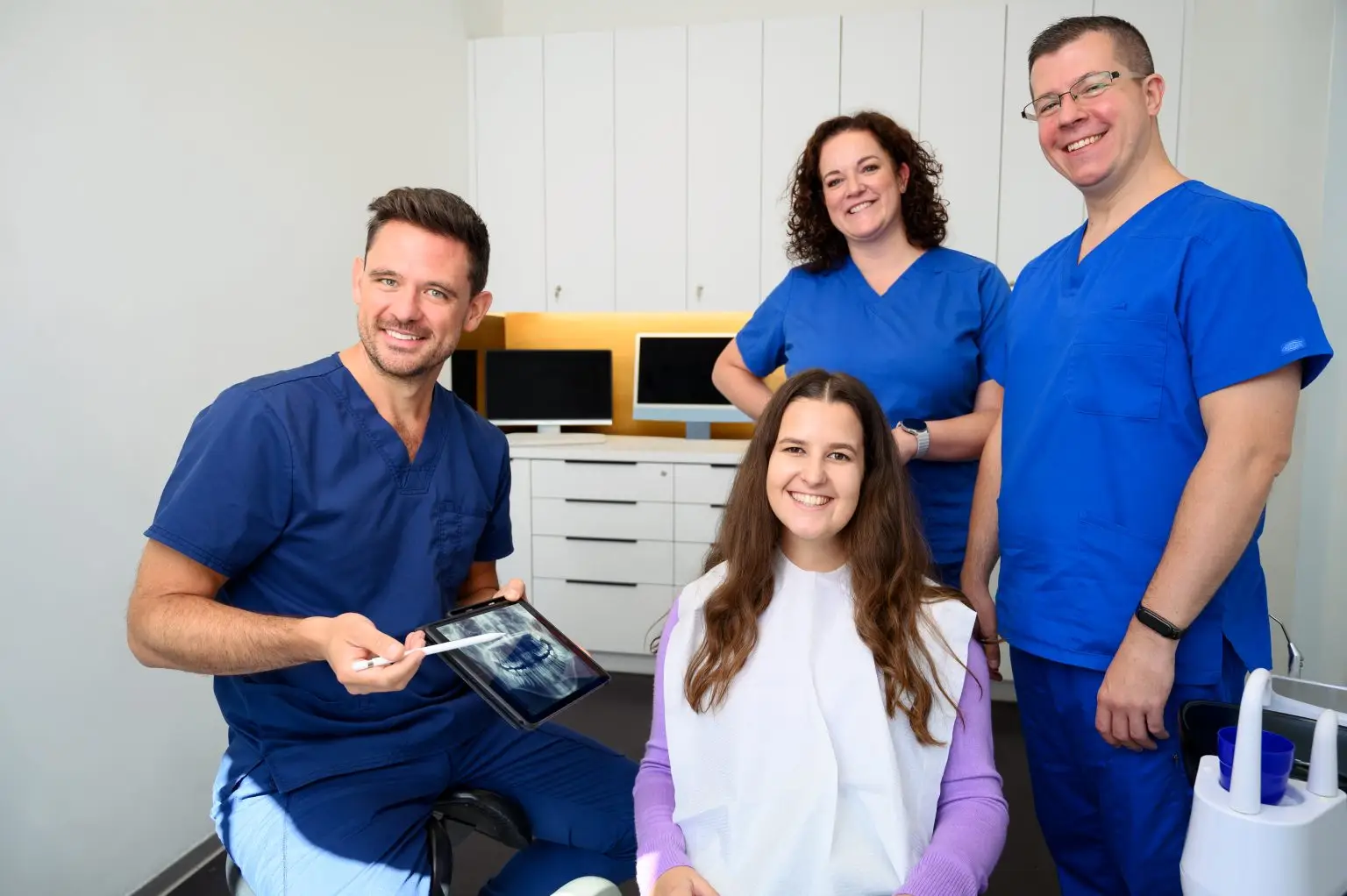
A dentist plans the oral surgery procedure based on a 3D CBCT scan
1–2Preparation

Consultation, 3D CBCT and treatment plan

130–45 minutes

Consultation and 3D CBCT scan

At the first visit we discuss your complaint, examine your mouth and take a 3D CBCT scan. We can see exactly the condition of the roots, the nerve canal, the sinus and the bone, so the procedure can be planned in advance.

215–20 minutes

Treatment plan and information

The specialist explains in writing the steps of the procedure, its expected duration, its cost and the course of healing. We are happy to go through your questions.

Oral surgery procedure under a sterile protocol at the PureDental clinic
3–5The procedure and afterwards

From the day of surgery to the check-up

330–90 minutes depending on type

The day of the procedure

We use local anesthesia or – on request – conscious sedation or general anesthesia. The surgery takes place under a sterile protocol, with microscopic or magnified vision. A simple tooth extraction takes 20–30 minutes, a deeply lying wisdom tooth 45–60 minutes, complex oral surgery procedures 60–90 minutes.

415 minutes

Immediate aftercare and instructions

You receive written post-operative instructions: cooling, eating, brushing, medication. We also give you an on-call phone number for the healing period. In addition, a recovery pack helps our patients get back on their feet as soon as possible (soft-bristle toothbrush, ice pack, mouthwash, etc.). Where needed we also provide the medication, so that after oral surgery you do not have to go to the pharmacy as well.

57–10 days later

Check-up and suture removal

We check the wound healing and, if needed, remove the stitches (the clinic provides this free of charge). We also answer any further questions.

We can always tell you the exact duration based on the 3D CBCT planning and the type of procedure.

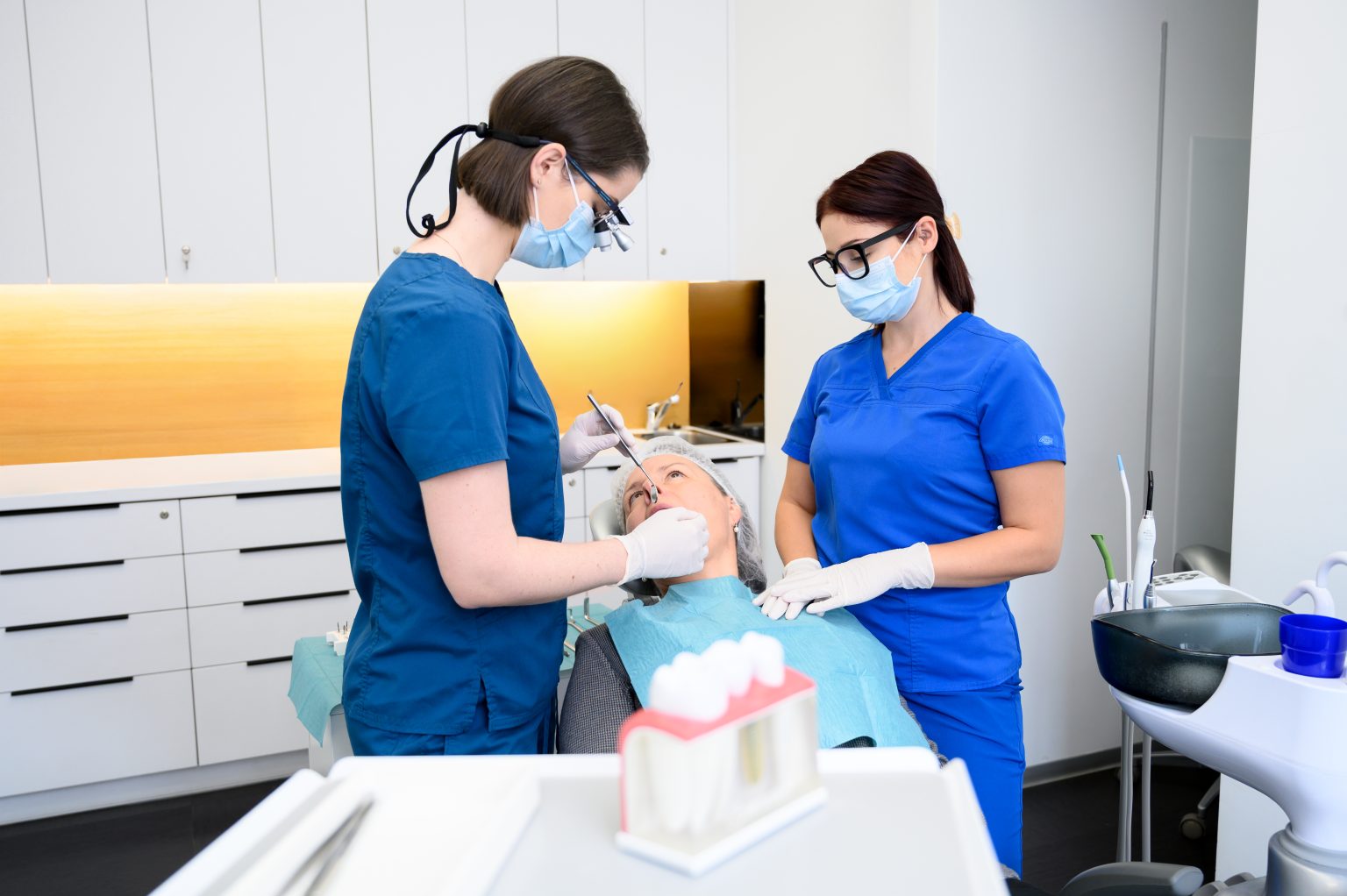
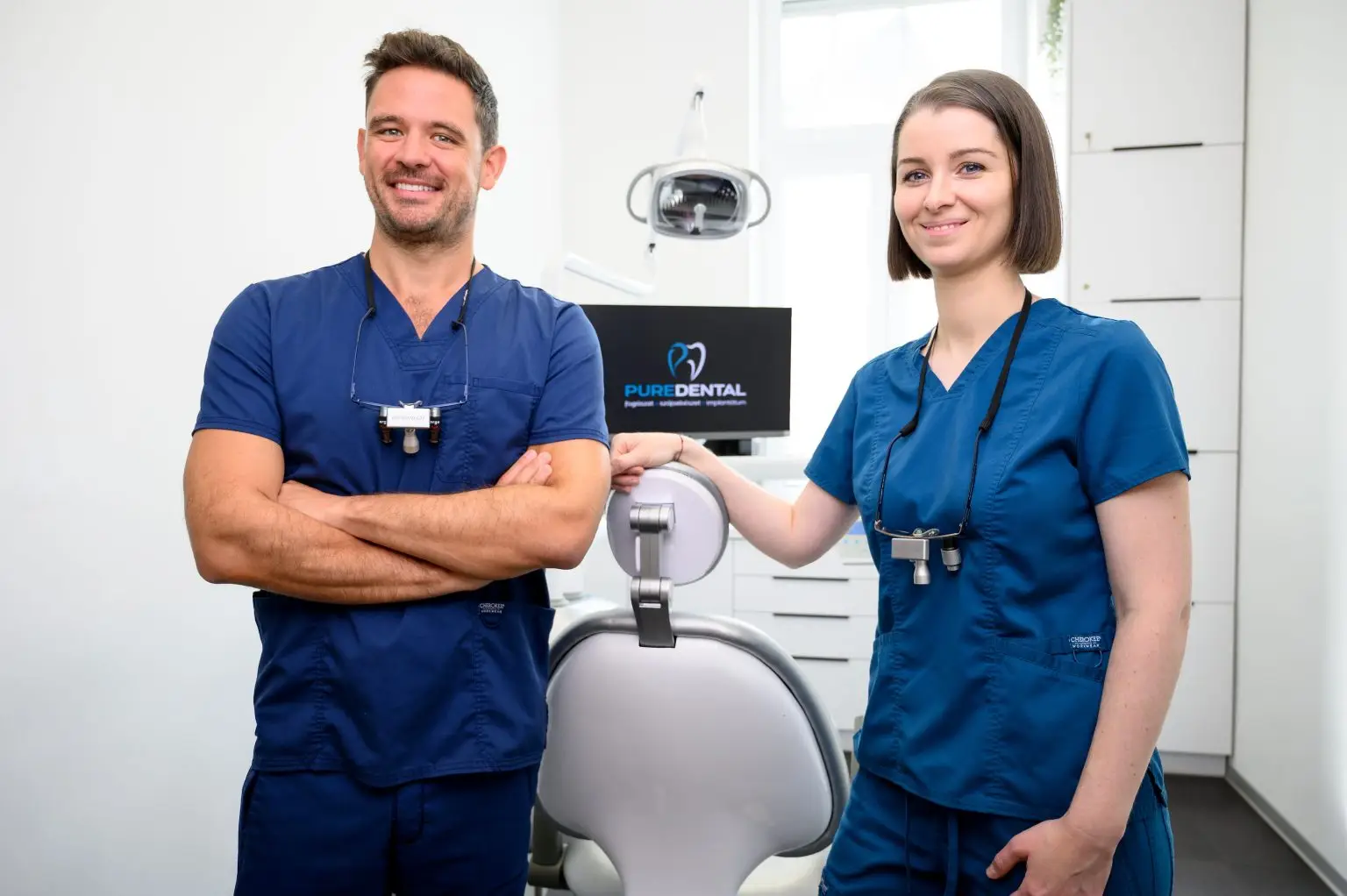
A specialist and an assistant at the PureDental clinic
The PureDental difference

Why choose PureDental oral surgery?

With modern technology, experienced specialists and personalized aftercare we make sure the surgery is safe, fast and successful in the long term.

The 4 pillars of PureDental oral surgery

01

Precise planning for maximum safety

Thanks to our 3D CBCT-based planning we see exactly where the roots and nerves are, so treatment can be planned in advance and is safe.

02

Pain-free procedure

With modern anesthesia our treatments are completely pain-free and recovery is quick.

03

Transparent treatment plan

You know every step, cost and duration in advance, so you can be confident about the process.

04

Complete aftercare

With a written to-do list and a phone contact we accompany you through the whole healing process.

Dr. Nóra Boka – dentoalveolar surgeon, implantologist, the oral surgeon of PureDental
Expert hands

Our oral surgery specialist – Dr. Nóra Boka

Oral surgery procedures are performed by Dr. Nóra Boka, dentoalveolar surgeon and implantologist. She has practised for 15 years and has performed several thousand oral surgery procedures. Her specialties are wisdom tooth removal, complicated tooth extraction, root tip resection and preparation for dental implants (bone grafting, sinus lift).

  • Wisdom tooth removal
  • Complicated tooth extraction
  • Root tip resection
  • Bone grafting, sinus lift
Featured treatments

Featured oral surgery treatments

Tooth extraction at the PureDental clinic

Tooth extraction, tooth removal

At our clinic we do everything to preserve teeth, but if a tooth can no longer be saved – for example after a deep fracture, severe decay or an unsuccessful root canal treatment – extraction is a quick and pain-free procedure. If needed it can also be used for children and milk teeth.

→ More about the procedure
An oral surgery specialist explains the wisdom tooth removal process to a patient

Wisdom tooth removal

Wisdom tooth removal is one of the most common dental procedures. Wisdom teeth often cause pain, crowding, infection or cysts. Our clinic's professional oral surgeons remove wisdom teeth completely pain-free, with maximum empathy and attention, modern diagnostics and a gentle technique.

→ More about the procedure

More common oral surgery cases and procedures

You may need more than a tooth extraction or wisdom tooth removal. Our oral surgeons also help with other problems:

  • Apicoectomy (root tip removal) – when root canal treatment is not enough
  • Sinus closure – after removing an upper molar, to prevent infection
  • Cyst removal – safe removal of an inflammatory or pathological lesion
  • Fibroma removal – quick and pain-free treatment of a benign tissue growth
Aftercare

Healing – what to expect after the procedure?

The timeline below helps you see what counts as a normal healing process and when it is worth calling us.

Healing timeline

  1. First 24 hours

    Slight bloody oozing, facial swelling and numbness are normal. External cooling is necessary (ice pack, 20 minutes cold / 20 minutes break). Avoid rinsing, spitting and drinking through a straw – this can dislodge the blood clot, which may lead to further bleeding and infection. Avoid dairy and foods with small seeds.

  2. Days 2–3

    Swelling is usually strongest on the second or third day, then goes down. You can start gentle rinsing with lukewarm salt water. Avoid coffee, alcohol, dairy, hot and spicy foods, and smoking (nicotine slows healing and increases the risk of dry socket).

  3. Days 4–7

    Swelling and discomfort ease considerably. Soft, lukewarm foods can gradually be reintroduced. Brush gently around the surgical area. Physical exertion (sport, sauna) should still be avoided.

  4. Days 7–10: suture removal

    Check-up and free suture removal, if needed – in most cases we use absorbable sutures at our clinic. The dentist or oral surgery specialist checks the wound healing.

  5. Weeks 2–3

    Soft tissue healing is completed. The deeper layer of bone healing takes 4–6 months, but this no longer affects everyday life.

Call us if any of these occur: severe throbbing pain beyond day 3, fever, foul-smelling discharge, persistent bleeding.

A calm, empathetic consultation at PureDental oral surgery
Without anxiety

Oral surgery under anesthesia or sedation

When is it worth doing it under anesthesia or sedation?
  • In case of dental anxiety or panic reactions
  • When removing several wisdom teeth at once
  • For complex, longer (90+ minutes) procedures
  • In case of a particularly sensitive gag reflex

What is the difference?

Conscious sedation

It is carried out with the help of an anesthetist, using intravenous sedative medication – as the name says, you stay awake: you can react and cooperate, but you are calm and relaxed, and usually barely remember the procedure. Local anesthesia is applied around the teeth.

General anesthesia

Full anesthesia led by an anesthesiologist team – you sleep and feel nothing of the procedure. Only when justified.

What to expect with surgery under anesthesia?
  • Preliminary anesthesiology consultation and blood test
  • On the day of surgery: 6 hours without food and 2 hours without drinks
  • After the surgery 1–2 hours of recovery monitoring at the clinic
  • Do NOT drive that day, someone should accompany you
Transparent prices

Oral surgery prices in Budapest

The exact price always depends on the type and complexity of the procedure. After the 3D CBCT-based consultation we give you a written quote – with no hidden items.

Oral surgery consultation€50
3D CBCT scan€89
Simple tooth extractionfrom €102
Surgical extraction / broken rootfrom €135
Wisdom tooth removal (partially erupted)€135
Wisdom tooth removal (impacted)€161–€193
Apicoectomy (root tip removal)from €171
Sinus closure€113
Cyst removalfrom €156
Conscious sedation surcharge (first hour)from €321
General anesthesia surcharge with anesthesiologist (first hour)from €725

*Prices are indicative. Payable with a health fund card; 10% discount for pensioners.

Questions and answers

Frequently asked questions

We have collected the answers to the questions our patients ask most often before oral surgery procedures.

Dr. Nóra Boka Professionally reviewed by Dr. Nóra Boka Dentoalveolar surgeon, implantologist

How painful are oral surgery procedures?

You do not need to fear pain. We use modern anesthesia, a sterile protocol and 3D planning, so the procedure is comfortable and safe.

Does tooth extraction hurt?

No. Thanks to modern anesthesia the treatment is completely pain-free; at most you may feel pressure.

What should I pay attention to after a tooth extraction?

After the procedure we give you detailed post-operative instructions so that healing is quick and trouble-free. Avoid smoking, alcohol, dairy, and hot food and drinks for 3–4 days. Cooling from the outside is recommended in the first 24 hours.

When is wisdom tooth removal justified?

It is definitely recommended in case of pain, infection, crowding, suspected cyst, or a partially erupted or misaligned tooth.

What is an apicoectomy and when is it needed?

If root canal treatment is not enough, we remove the infected root tip surgically.

What is a sinus closure?

When upper molars are removed, the sinus may rarely be opened. We close it immediately, preventing infection and sinusitis.

When do I need an oral surgeon instead of a dentist?

When the procedure goes beyond general dentistry, e.g. a root left in the bone, an impacted (not erupted) wisdom tooth, root tip removal (apicoectomy), removal of a cyst, fibroma or mucosal lesion, sinus lift, bone grafting before an implant. The oral surgeon is a specialist dentoalveolar surgeon who completed 3 years of additional specialist training after the dental degree.

How long does an oral surgery procedure take?

A simple tooth extraction takes 20–30 minutes, a surgical extraction or one-sided wisdom tooth removal 30–45 minutes. A deeply lying, impacted wisdom tooth takes 45–60 minutes. A complex apicoectomy or sinus lift takes 60–90 minutes. We can tell you the exact time after the 3D CBCT planning.

Consultation

Request an appointment and take the first step towards ending the pain!

Our experienced specialists use modern technology to solve your problem quickly and without pain. Call now or apply online, and we will contact you within 3 hours during opening hours.

  • 3D CBCT-based digital planning
  • Painless procedure with modern anaesthesia
  • Fast healing
  • Personalized aftercare